
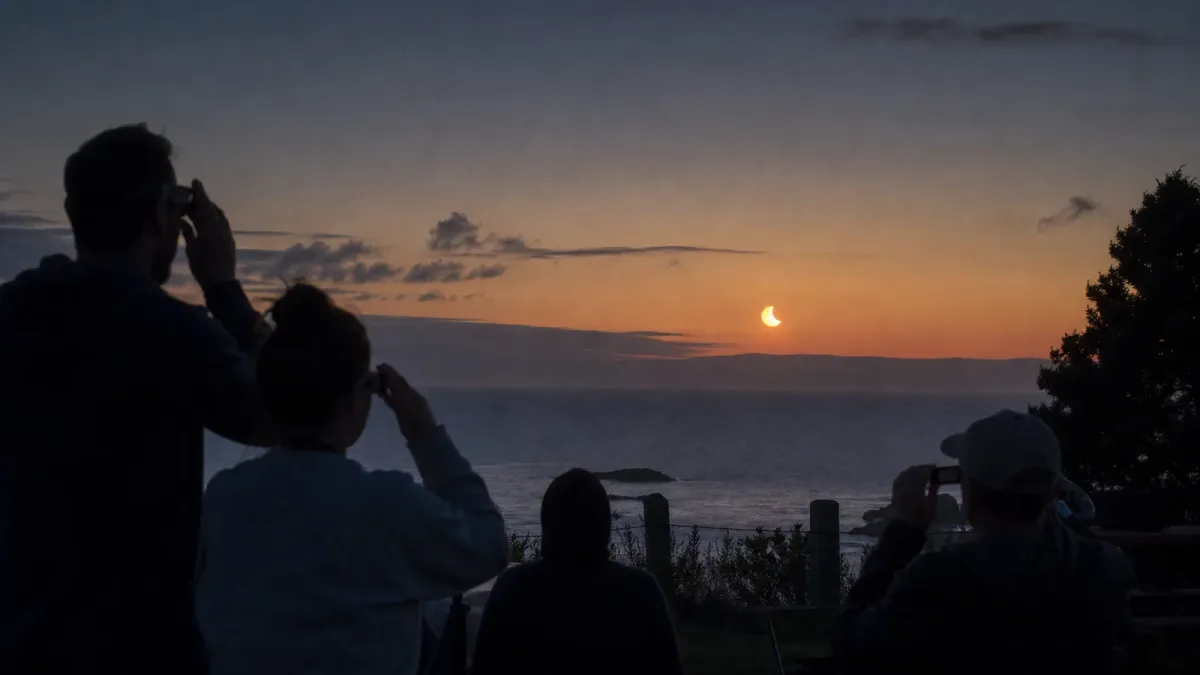
The August 12, 2026, total solar eclipse is close enough that travelers and casual skywatchers should stop treating it as a someday event. NASA says totality will cross Greenland, Iceland, northern Russia, the Atlantic Ocean, Spain and a small corner of Portugal, while a partial eclipse will be visible across much of the Northern Hemisphere, including parts of the northern United States and most of Canada and Europe.
The short version: check whether you are in the path of totality before booking or gathering a group, and plan for eye protection even if your city will see only a partial eclipse. Totality is the only brief period when viewers in the narrow path can look without solar filters; everywhere else and every partial phase requires certified eclipse glasses, a safe handheld viewer or an indirect method.
Interest is already building. NASA published its dedicated 2026 eclipse map in June, mainstream science and travel posts are circulating again in July, and Threads searches for "2026 solar eclipse" show recent posts from news and astronomy accounts. That makes this a practical planning window rather than a same-day viewing reminder.
The short answer
If you want darkness, you need the narrow path. NASA's map places that path across Greenland, Iceland, the North Atlantic and Spain, with a small corner of Portugal also included. Cities listed by NASA include Leon, Reykjavik, Valencia and Zaragoza in totality, with local totality lasting roughly a minute or two in those examples.
If you are in the United States, expect a partial eclipse, not totality. NASA lists partial viewing for northern U.S. cities including Anchorage, Bangor, Boston, New York, Philadelphia, Portland, Maine, and Washington, D.C. Coverage varies sharply by location, from a modest bite in many U.S. cities to much deeper coverage across parts of Europe and northwestern Africa.
How it works
A total solar eclipse happens when the Moon lines up between Earth and the Sun and fully covers the bright solar disk for observers inside the Moon's central shadow. The geography is unforgiving: move outside that narrow track and the same event becomes partial, even if the Sun is mostly covered.
For this eclipse, the timing also matters. NASA says Greenland and Iceland will see the Sun go dark in the late afternoon or early evening, while Spain and the northwestern tip of Portugal get totality shortly before sunset. Along much of the western side of the path, the Sun will set while it is still partially eclipsed, which could make local horizon conditions and weather more important than usual.
That low-sun setup is part of the appeal, but it is also a planning problem. Hills, buildings, haze, marine cloud layers and wildfire smoke can block a low horizon. Anyone traveling for the event should pick backup viewing spots with open western views and should not rely on one crowded overlook.
Why it matters
The practical difference between total and partial is not subtle. In totality, the sky darkens and the Sun's outer atmosphere can become visible. Outside the path, even a dramatic partial eclipse is still bright enough to require eye protection and will not deliver the same total-eclipse experience.
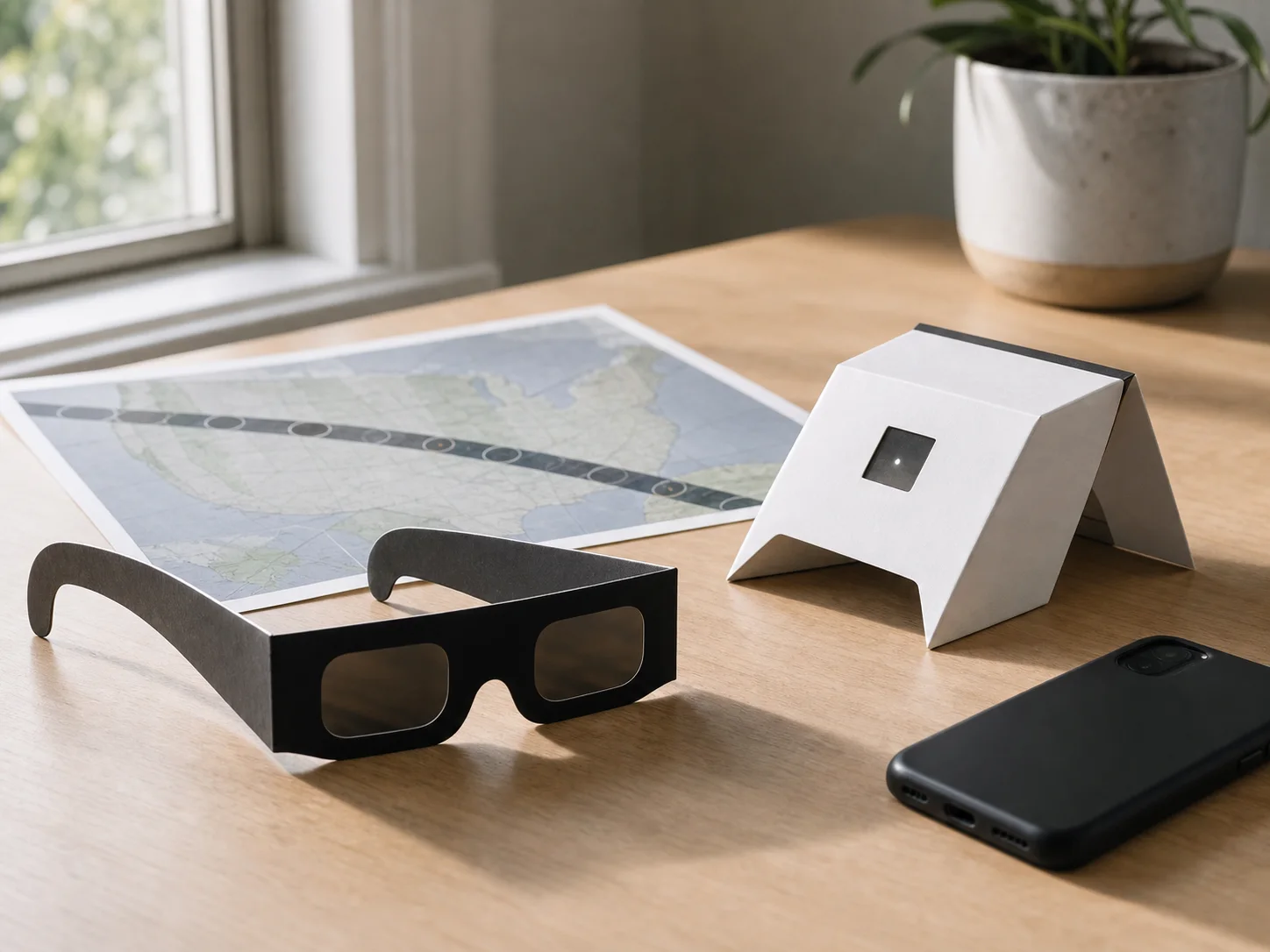
Safety is the non-negotiable part. NASA and the American Astronomical Society both warn that ordinary sunglasses are not safe for direct solar viewing. Eclipse glasses and handheld viewers should comply with the ISO 12312-2 international standard, and damaged filters should be discarded. Cameras, binoculars and telescopes need proper front-mounted solar filters; eclipse glasses worn by the viewer are not enough when optics concentrate sunlight.
If you do not have a safe solar viewer, use an indirect method. A pinhole projector, a colander or even light filtering through leaves can project crescent shapes onto another surface. The rule stays the same: do not look through the pinhole at the Sun.
What to watch
Start with location. Use NASA's map or another reputable eclipse map to confirm whether a city is in totality, near the edge or partial only. A hotel advertised as "near the eclipse" may still sit outside the totality line, and a few miles can change the experience.
Then check local timing in the days before August 12. NASA's city table gives sample local times, but travelers should confirm the exact schedule for their viewing spot, especially in Spain and Portugal where sunset can cut off the final partial phase.
Finally, keep the plan simple. Have certified eclipse glasses for the group, a pinhole backup, water, offline directions, a battery pack and a second viewing location. The best eclipse plan is one that still works if traffic, clouds or a closed road force a last-minute adjustment.


