
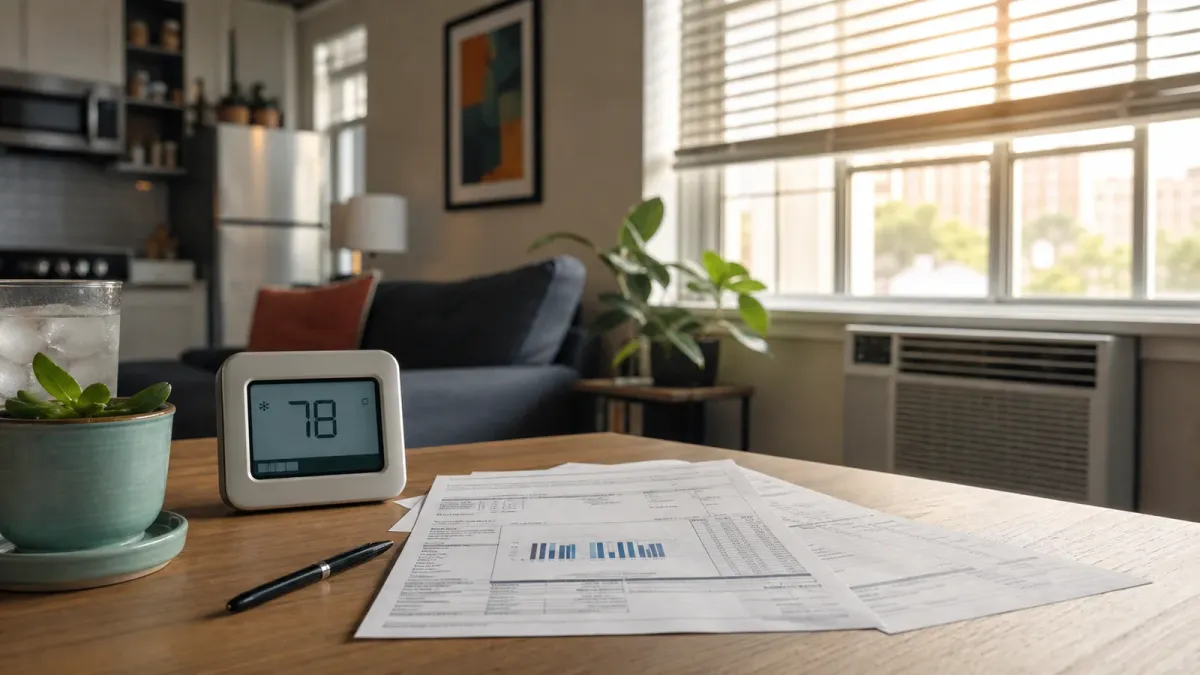
Summer cooling bills are becoming a real household-budget problem, not just a seasonal annoyance. The National Energy Assistance Directors Association and the Center for Energy Poverty and Climate projected on June 8, 2026, that the average U.S. household will spend about $792 on electricity this summer, up 10.5% from 2025.
The timing matters because dangerous heat is not fading quickly. NOAA's Climate Prediction Center lists additional extreme-heat risk for parts of Texas, the Lower Mississippi Valley, the Southeast, the Central Plains, the Mid-Atlantic, California's Central Valley and interior Washington during the July 22-28 outlook period.
The search for practical advice also got more confusing on July 15, when The Guardian reported that more than 1,600 Department of Energy webpages tied to utility-bill savings and energy efficiency had gone dark. The useful part for readers is simpler: there are still well-supported steps that reduce waste without pretending air conditioning is optional during dangerous heat.
Do this first
- Set the thermostat as high as is comfortable. DOE guidance has long said the smaller the gap between indoor and outdoor temperatures, the lower the cooling bill. Its archived public advice says running air conditioning at 78 F instead of 72 F can save roughly 6% to 18% on cooling costs.
- Use fans for comfort, not empty rooms. A ceiling or portable fan can make a room feel more comfortable, which may let you raise the thermostat. Turn fans off when people leave because fans cool people, not rooms.
- Check the filter. ENERGY STAR advises checking filters monthly during heavy-use months and replacing a dirty filter, with three months as the minimum interval. A dirty filter slows airflow and makes the system work harder.
- Block solar heat before it enters. Close blinds or curtains on sunny windows in the hottest part of the day. If you can safely cool the home overnight or early in the morning, do it before the afternoon peak.
- Move heat-making chores. Run ovens, dryers and dishwashers outside the hottest hours when possible. That will not fix a high bill by itself, but it reduces the heat your AC has to remove.
Do not make the house unsafe
Heat savings have a limit. The World Health Organization warns that prolonged hot days and nights create cumulative stress on the body and can raise illness and death risks, especially for older adults, infants, people with health conditions and people without reliable cooling.
That means a high thermostat setting is not a contest. If anyone in the home feels dizzy, confused, faint, unusually weak or overheated, cooling comes before savings. Use a cooling center, public library, mall, community center or a neighbor's working AC if the home cannot stay safe.
Check the bill, not just the thermostat
If your utility offers time-of-use rates, find the expensive peak window and shift laundry, dishwashing, EV charging and pool pumps away from it. If the bill suddenly jumps, compare daily usage, weather, rate changes and fees before assuming the AC is the only cause.
For households already behind, check local utility assistance and LIHEAP availability early. Waiting until a shutoff notice arrives leaves fewer options, and heat waves can make a billing problem a health problem fast.


