
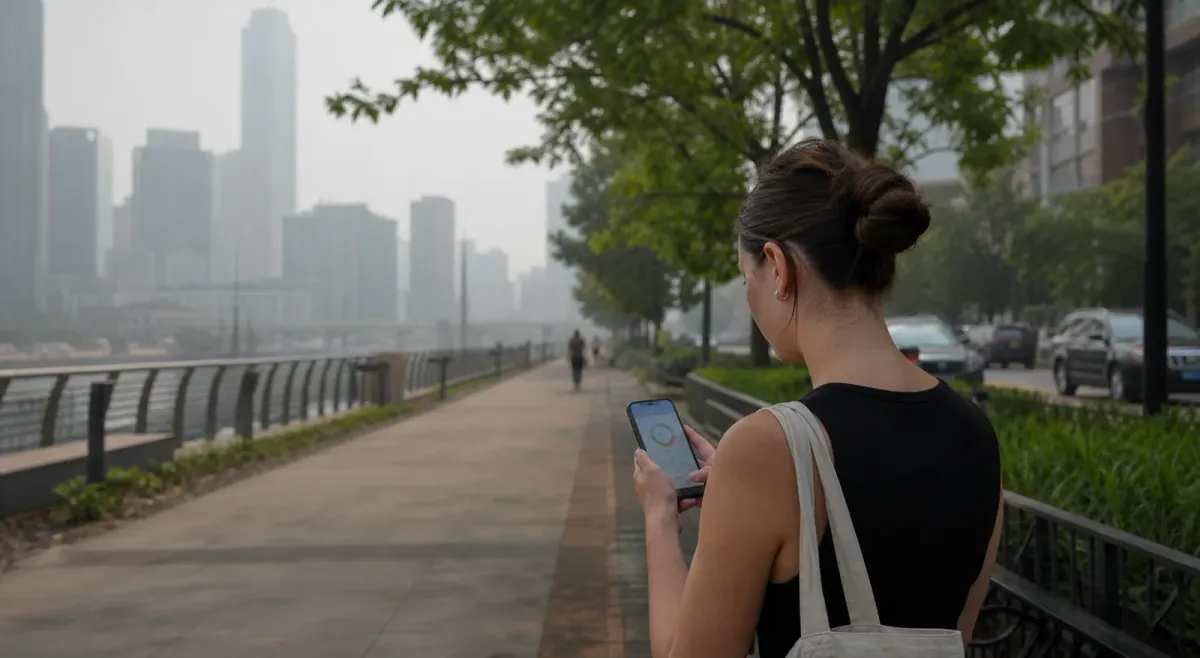
An air quality alert can be easy to ignore until the sky looks hazy, your throat feels scratchy or a child has practice scheduled outside. The useful number to check first is the Air Quality Index, or AQI, because it turns changing pollution levels into a color-coded health guide.
The short answer: green and yellow days are usually manageable for most people, orange means sensitive groups should take extra care, and red or worse means everyone should think harder about outdoor exertion. That simple scale matters during wildfire smoke, summer ozone episodes and stagnant weather patterns.
As of July 12, 2026, AirNow still lists wildfire smoke impacts in multiple states on its public air quality site, while the National Weather Service continues to relay local air quality alerts from state and local agencies. The point is not to panic. It is to check the number before you commit to a run, a long errand or several hours outdoors.
The short answer
The AQI runs from 0 to 500. AirNow groups the scale into six main colors: green from 0 to 50, yellow from 51 to 100, orange from 101 to 150, red from 151 to 200, purple from 201 to 300 and maroon from 301 and above. The higher the number, the greater the health concern.
For most people, the biggest planning change starts at orange. AirNow labels that level unhealthy for sensitive groups, which can include children, older adults, people who are pregnant and people with asthma, heart disease, chronic lung disease or other conditions that make polluted air harder to tolerate. At red, the concern broadens because the air is unhealthy for everyone.
How it works
The CDC says the AQI covers major pollutants regulated in the United States, including ozone and particle pollution. Those two are the summer troublemakers many people notice. Ozone can build on hot, sunny days, especially in and around metro areas. Fine particles can rise when wildfire smoke, combustion or stagnant air affects a region.
An air quality alert is different from a forecast number on an app. The National Weather Service describes an Air Quality Alert as a way to relay non-routine information issued by state and local air quality agencies. In plain English, it usually means local officials expect pollution levels high enough that people should adjust plans, especially if they are in a higher-risk group.
Start with your exact location, not a regional headline. Air quality can vary across a metro area, near a wildfire plume, along a highway corridor or between valleys and higher terrain. Check AirNow, your state or local air agency, and the forecast in the weather app you already use. If the sources disagree, treat the worse reading as a reason to look closer before strenuous outdoor activity.
What to do first
If the AQI is orange, sensitive groups should reduce long or intense outdoor activity. That does not always mean canceling everything. It can mean shortening a run, moving practice indoors, choosing a less busy road for a walk, taking more breaks or shifting yard work to a cleaner part of the day.
If the AQI is red, make the indoor option the default for hard exercise and long exposure. Everyone can feel effects at that level, and people in sensitive groups should be more cautious. If the AQI reaches purple or maroon, treat the air as a serious health signal and follow local instructions closely.
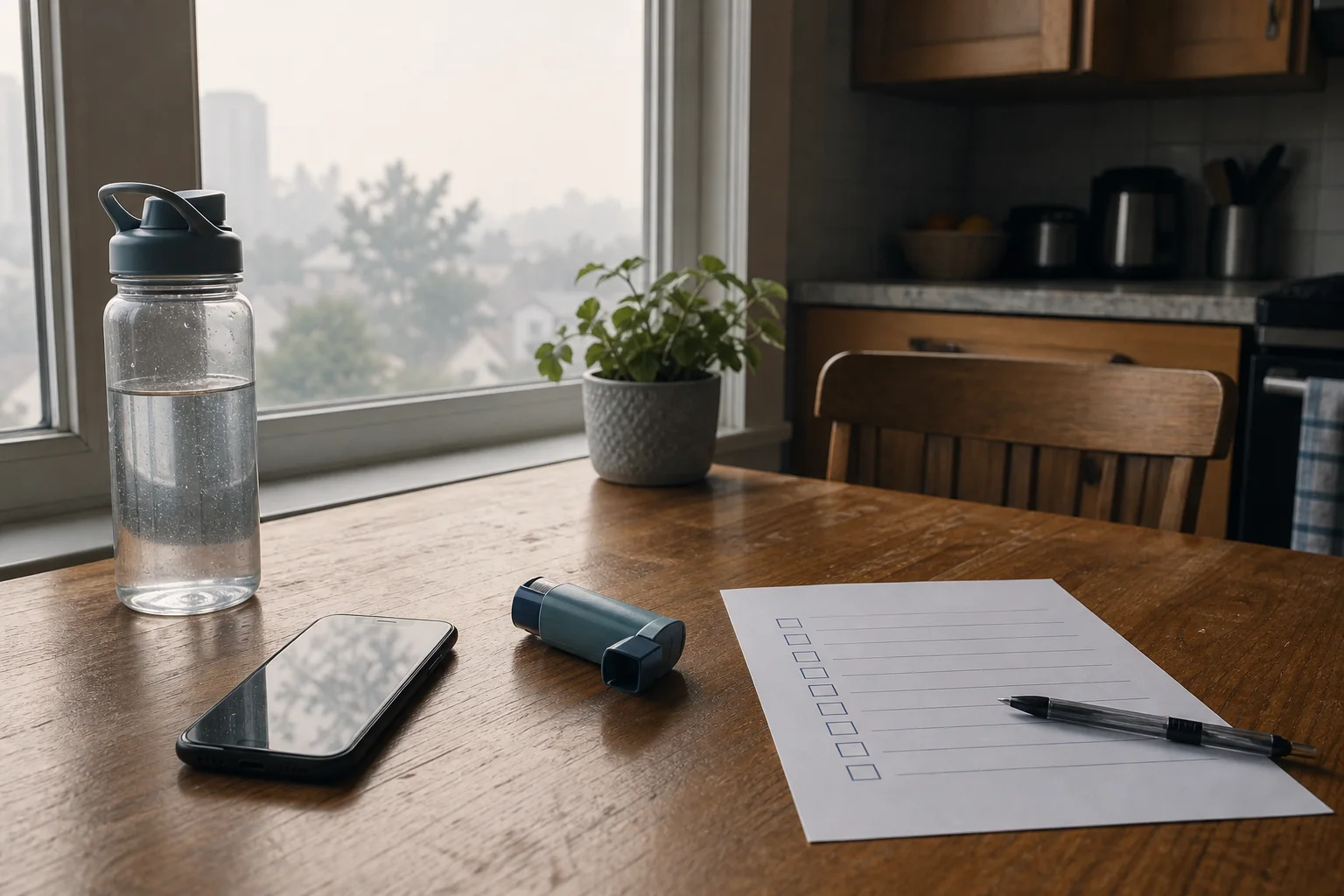
Use symptoms as a backstop, not the main tool. Coughing, chest tightness, wheezing, unusual shortness of breath, eye irritation and worsening asthma symptoms are reasons to stop, get inside and follow a clinician's plan if you have one. People with known heart or lung conditions should use their personalized medical guidance over a generic rule of thumb.
Common mistakes
The first mistake is checking only the sky. Smoke and ozone do not always look the same. A day can look clear and still have elevated ozone, while a smoky-looking sky can vary in ground-level particle levels from one neighborhood to the next.
The second mistake is treating a daily forecast as fixed. AQI can change through the day as wind shifts, smoke mixes down, storms move through or sunlight drives ozone formation. If your outdoor plan is several hours away, check again before leaving.
The third mistake is focusing only on masks. A well-fitting respirator can help reduce particle exposure when smoke is the problem, but it does not solve every air quality issue, does not work well if it leaks and is not a substitute for moving strenuous activity indoors on very poor air days. For ozone, reducing exertion and timing exposure usually matters more.
What to watch
Watch the pollutant listed with the AQI. Particle pollution and ozone call for similar caution at high levels, but the best adjustments can differ. Smoke-heavy days put more emphasis on windows, filtration and avoiding particle exposure. Ozone-heavy days often require paying attention to hot afternoon periods when levels can be worse.
Also watch local school, workplace, event and recreation guidance. AirNow and CDC guidance can help you read the risk, but local officials decide whether to change outdoor activities, open clean-air shelters or issue more specific instructions. The practical habit is simple: check the AQI before the plan, check it again if conditions are changing, and make the indoor option easy before the air gets worse.


