
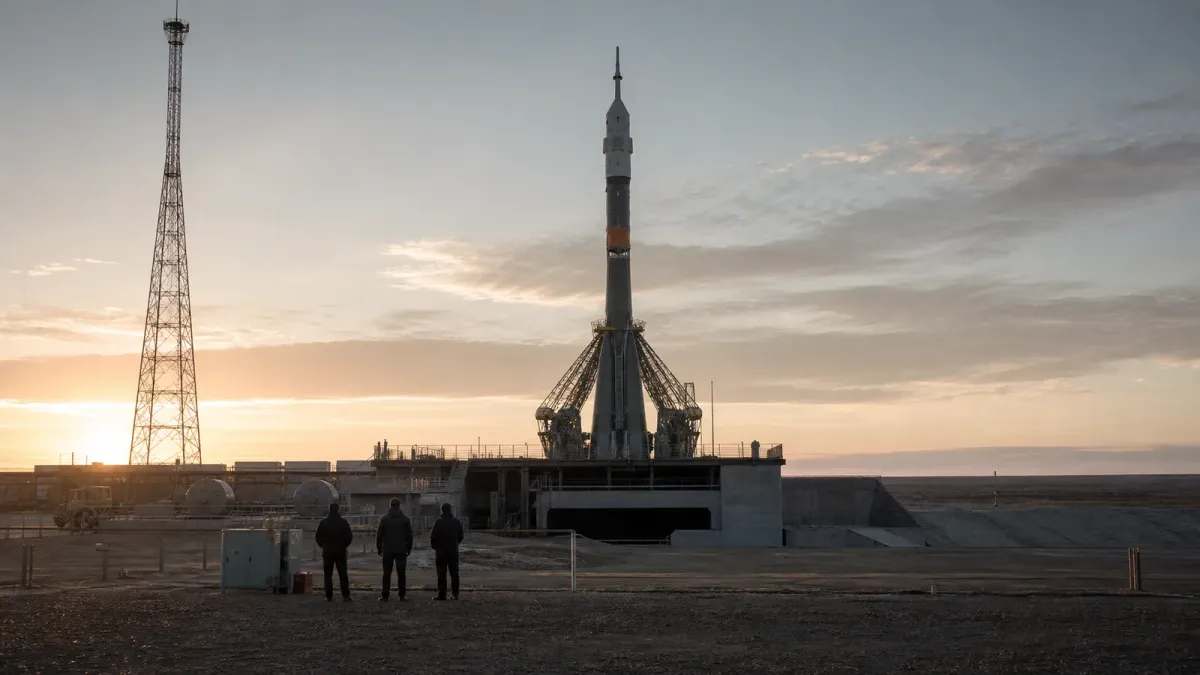
NASA astronaut Anil Menon is scheduled to make his first trip to space on Tuesday, July 14, aboard Russia’s Soyuz MS-29 spacecraft. He will launch with Roscosmos cosmonauts Pyotr Dubrov and Anna Kikina from the Baikonur Cosmodrome in Kazakhstan, then travel to the International Space Station for a long-duration mission.
NASA says its live launch broadcast begins at 9:45 a.m. EDT on NASA+, with liftoff targeted for 10:27 a.m. EDT. Coverage of docking and hatch opening is scheduled to resume later Tuesday, although exact times can move as mission controllers update the flight plan.
The flight is notable both as Menon’s first spaceflight and as another U.S.-Russian crew rotation at a time when the two countries continue their decades-long partnership aboard the station. The launch remains subject to weather and final technical checks.
The schedule
- Launch coverage: Tuesday, July 14, at 9:45 a.m. EDT on NASA+.
- Targeted liftoff: 10:27 a.m. EDT from Baikonur Cosmodrome.
- Destination: The International Space Station.
- Crew: Anil Menon, Pyotr Dubrov and Anna Kikina.
NASA’s event page is the best place to check shortly before the broadcast. Spaceflight schedules can change because of weather, spacecraft readiness or range conditions, so viewers should confirm the latest target time on launch day.
Who is Anil Menon?
Menon is an emergency physician, engineer and U.S. Space Force colonel who joined NASA’s 2021 astronaut candidate class. Before becoming an astronaut, he worked as a NASA flight surgeon and served as SpaceX’s first flight surgeon, helping develop medical operations for human spaceflight.
NASA lists him as a flight engineer for the mission. His medical and engineering background is particularly relevant on the station, where crew members conduct research, maintain complex systems and prepare for emergencies far from immediate ground support.
What happens after launch?
After Soyuz reaches orbit, the crew will complete a series of engine burns to catch up with the station and prepare for docking. Once pressure and leak checks are complete, hatches will open and the new arrivals will join the astronauts and cosmonauts already living aboard the orbiting laboratory.
Menon, Dubrov and Kikina are expected to support station research and operations over an extended stay. NASA’s May 2026 flight plan described Soyuz MS-29 as a long-duration crew mission, part of the rotating international presence that keeps the station continuously staffed.
What to watch
The first decision point is the final launch readiness review and any same-day change to the targeted liftoff time. After launch, the next milestones are orbital insertion, docking and hatch opening. NASA normally updates its broadcast schedule if those events shift.
For viewers, the simplest plan is to open NASA+ before 9:45 a.m. EDT on July 14 and keep NASA’s mission page handy for real-time schedule updates. If the launch is delayed, NASA will publish a revised target rather than continue with the original timetable.
Sources
Mission timing and crew details come from NASA’s July 2026 launch coverage announcement and NASA’s International Space Station flight plan. The public launch schedule was also cross-checked against Spaceflight Now.


