

Bimini can look unusually simple from South Florida: turquoise water, regular air and ferry links, and vacation properties within roughly 50 miles of Miami. Buying and operating a short-term rental there, however, is an international real-estate transaction and a hospitality business on a small island. The purchase price is only the first number that matters.
The sound approach is to confirm that the property may legally be used as a vacation rental, price every acquisition and operating cost, and build an on-island team before making a nonrefundable commitment. Buyers should use an independent Bahamian attorney, accountant, surveyor or inspector, insurance broker and property manager. This guide is general information, not legal, tax or investment advice.
The short answer
Non-Bahamians may buy real estate in The Bahamas. Under the International Persons Landholding Act, a foreign buyer generally registers the acquisition of a condominium or a property intended as a single-family dwelling. A purchase outside those categories requires a permit from the Investments Board. The distinction matters for an investment property: official VAT rules specifically contemplate nonresident-owned residential accommodation whose landholding permit says it will be used for rental purposes. Have Bahamian counsel determine the correct approval before closing; do not assume that a certificate suitable for a personal second home also authorizes a commercial vacation-rental plan.
Every short-term rental property must also be registered with the Bahamas Department of Inland Revenue. Registration is separate from the landholding approval, tax declarations, insurance, and any restrictions imposed by a condominium declaration, homeowners association or resort operator.
Do this before signing a binding contract
- Hire your own Bahamian real-estate attorney. The attorney should search title, identify liens or unpaid real property tax, confirm the seller can convey good title, determine the required foreign-buyer filing, review the conveyance and explain how funds and closing documents will move.
- Make the offer conditional on due diligence. Include satisfactory title, inspection, survey where appropriate, financing, insurance availability, rental authorization, condo-document review and required government approval. Deadlines and deposit-refund terms should be written clearly.
- Verify short-term rentals in writing. Read the declaration, bylaws, house rules and management agreement. Check minimum stays, occupancy caps, guest registration, resort fees, revenue-sharing, approved managers, blackout periods, pet rules and the board's power to change rental policies.
- Inspect for island risks. Go beyond finishes. Examine roof and shutters, elevation and drainage, flood and wind exposure, corrosion, concrete spalling, air-conditioning, plumbing, electrical capacity, generator or backup power, water storage, internet reliability and evidence of mold or prior storm damage.
- Get real insurance quotations before the contingency expires. Ask for windstorm, hurricane, flood, contents, public liability, business interruption and short-term-rental use. Compare exclusions, named-storm and percentage deductibles, replacement-cost limits, vacancy provisions and whether loss-of-income coverage survives a long islandwide disruption.
Understand the purchase structure and closing bill
Most individual buyers choose personal ownership or a company after advice on liability, succession, financing, reporting and home-country tax. A company is not automatically cheaper: the published Bahamian transfer-tax schedule has treated transfers to a company or other entity differently from transfers to an individual. Ask counsel for a current transaction-cost sheet based on the buyer, price and intended use.
Budget for the government tax on the conveyance, legal work, recording, foreign-buyer registration or permit fees, inspection and survey costs, bank or currency charges, insurance, furnishings, repairs and prepaid condo or resort assessments. Confirm in the contract whether buyer and seller split a transfer tax or whether one party bears it; market custom is not a substitute for the agreement. If financing is involved, add appraisal, lender legal fees, mortgage recording and life or property insurance requirements.
Title diligence is especially important. Match the legal description to the unit, lot, parking space, dock slip and storage area being sold. Obtain current real property tax and condo-account statements. For a condo, review audited or recent financials, reserve funding, insurance, pending litigation, special assessments and storm-repair obligations. A low monthly fee can simply mean reserves are inadequate.
Register and account for the rental business
The Department of Inland Revenue says all short-term rental properties must be registered through its portal. Its vacation-rental guidance also tells non-Bahamian second-home owners to ensure the property is recorded with the Registrar General, submitted for the applicable VAT stamp, declared with the department and updated for ownership or improvements.
Short stays can fall within the Bahamian rules for hotel or similar accommodation and commercial rental establishments. Tax treatment can depend on the property, owner, turnover, services and booking channel. Airbnb's own terms say hosts remain responsible for understanding, reporting and paying applicable taxes even when a platform collects or remits some amounts. Before taking a booking, obtain written advice on VAT registration, invoicing, platform collection, expense records, annual filings, real property tax classification and taxation in the owner's country of residence.
Build a conservative Bimini operating model
Do not underwrite from the highest nightly rate visible on a holiday weekend. Request 12 to 24 months of property-level booking statements when available and reconcile them to platform payouts, owner statements and bank deposits. Separate owner stays and complimentary nights from genuine vacancy.
Model monthly occupancy and average daily rate, then deduct every cost required to deliver a stay: platform fees, manager or co-host commission, cleaning and laundry, guest supplies, utilities, internet, pest control, landscaping, pool or dock costs, condo and resort fees, maintenance, accounting, licenses, insurance, real property tax and a replacement reserve. Include ferry or air travel for owner visits and the cost of shipping furniture, appliances and parts to Bimini. Test a slow year, not just a base case.
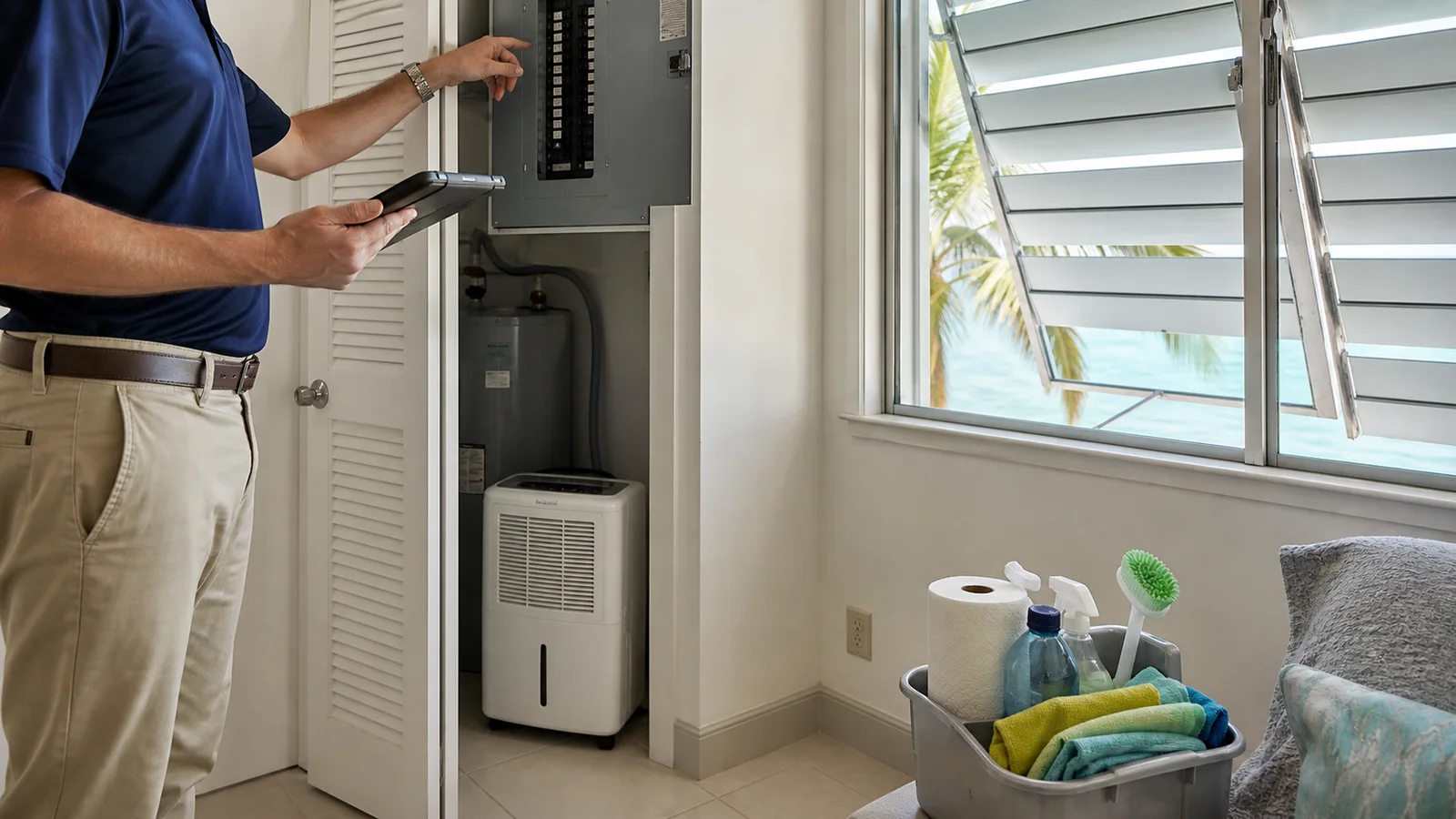
Small-island logistics make local execution decisive. Your manager should be able to answer guests, coordinate airport or ferry arrivals, inspect after checkout, supervise cleaners, hold spare linens and parts, collect contractor documentation, prepare for storms and enter the unit after a power, water or air-conditioning failure. Put response times, purchasing authority, reporting, emergency duties and termination rights in the management agreement.
Common mistakes
- Buying the view before checking the rules. A desirable condo can still prohibit or constrain short stays.
- Treating gross Airbnb revenue as profit. Cleaning charges, platform payouts and occupancy screenshots do not show the full expense base.
- Using ordinary homeowners insurance. The carrier must know about short-term rental activity and the property's wind and flood exposure.
- Assuming the platform handles every tax. Platform collection does not eliminate the owner's registration, reporting or home-country obligations.
- Skipping reserves. Salt, humidity, storms and freight delays accelerate wear and make emergency replacements expensive.
- Relying on verbal assurances. Rental rights, dock access, parking, fees and resort privileges should be documented.
A practical go-or-no-go checklist
Proceed only when your attorney confirms title and foreign-buyer approval; the governing documents permit the planned rental use; the property passes inspection; insurance is available at a modeled cost; taxes and registration are mapped; and a credible local manager agrees to operate the home. The investment should still meet your return target after a vacancy shock, a large insurance deductible and a special assessment.
Bimini's proximity to Florida and established tourism can support a compelling vacation home or rental. But the durable advantage is not simply owning near clear water. It is buying the right legal asset, at a fully loaded price, with enough liquidity and local operating depth to keep guests safe and the property functioning when island conditions are less than perfect.


