
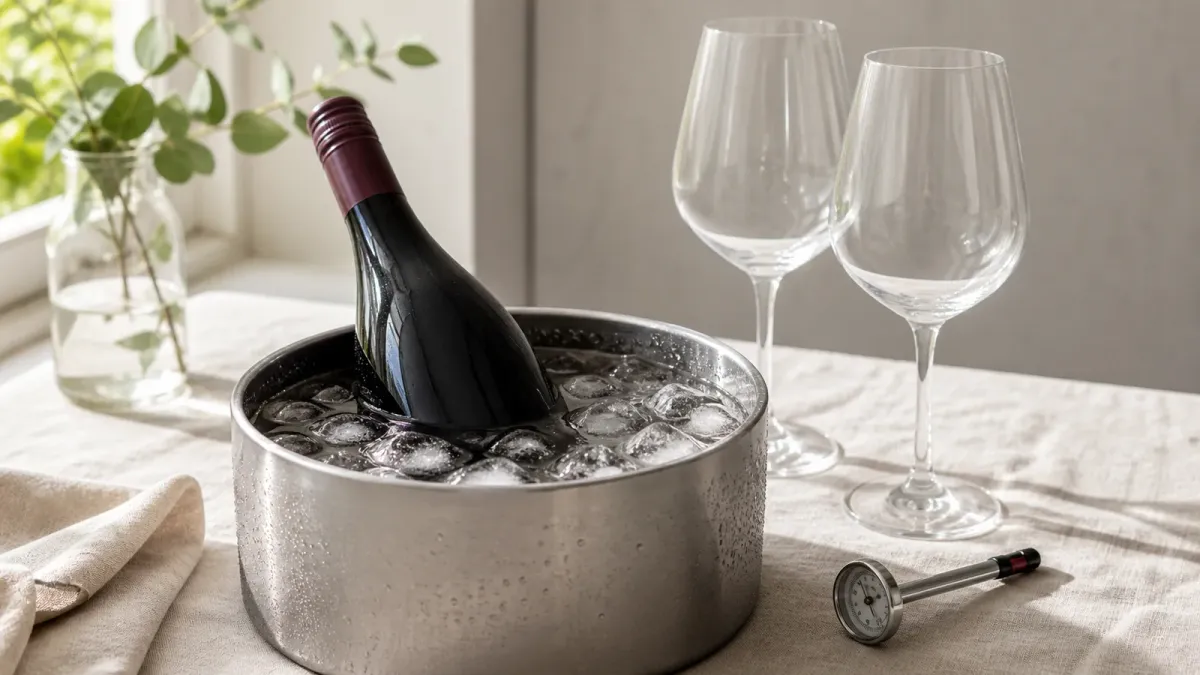
Chilled red wine is having a summer moment. Google Trends' Summergeist report, published June 23, 2026, says searches for both Sancerre and "chilled red" recently reached peak interest, which explains why more people are asking whether a bottle of red belongs in the refrigerator before dinner.
The short answer: sometimes. Chilling can make light and medium-bodied reds taste fresher in hot weather, but over-chilling a powerful, tannic red can make it seem harder, thinner or less expressive.
The Short Answer
A good target is cool, not icy. The Wine & Spirit Education Trust notes that what wine service calls room temperature is closer to 59-64 degrees F than a modern warm room. The Wine Society gives a similar practical range, suggesting medium-bodied reds at 16 C or below and fuller reds at 16-19 C.
That means many reds benefit from a short chill before serving, especially if the bottle has been sitting in a kitchen or dining room above 70 degrees F. A refrigerator chill of about 20 to 30 minutes is often enough for lighter reds; an ice-water bath works faster because water surrounds the bottle and transfers heat better than ice alone. Start modestly, because a small temperature change can be easier to correct than an over-chilled bottle.
Which Reds Work Best
Reach first for lighter, brighter reds: pinot noir, gamay, Beaujolais-style wines, cabernet franc, grenache, frappato, schiava, some valpolicella and other bottles with lower tannin and fresh fruit. These are the reds that can taste more refreshing when served cellar-cool.
Be more cautious with cabernet sauvignon, syrah, malbec, zinfandel and heavily oaked reds. They can still be served slightly below a warm room, but a deep chill can emphasize tannin and mute the aromas that make those wines feel generous.
Do This First
- Put the bottle in the refrigerator for 20 minutes, then taste a small pour.
- If it still feels warm or boozy, give it another 10 minutes.
- If it tastes muted, pour a glass and let it warm in the glass for a few minutes.
- For a faster chill, use an ice bucket with both ice and water, not dry ice cubes alone.
Common Mistakes
Do not judge the bottle straight from a very cold refrigerator. A red that tastes closed at first may open up after five minutes in the glass, especially if it has more structure or oak. It is also worth avoiding freezer shortcuts unless you set a timer; a forgotten bottle can leak, pop its cork or lose balance.
Do not assume color alone tells you what to do. A pale red can still have grip, and a dark red can be fruit-forward. The better clues are body, tannin, oak and alcohol. If the wine feels light, juicy and fresh, try it cooler. If it feels dense, drying or built for aging, keep the chill gentler.
The point is control. Chilled red wine is not a new category so much as a serving choice: cool the bottle enough to sharpen fruit and freshness, then let the wine move slowly toward the temperature where it tastes best.


