

The first wave of AI coding tools helped engineers move faster at the keyboard. The next wave is changing the workflow around the keyboard. OpenAI's Codex is a useful signal of that shift: it is no longer just a way to autocomplete a function, but a system for assigning work, inspecting changes, running tests, reviewing diffs and supervising multiple software tasks in parallel.
For engineering and product organizations, that distinction matters. The productivity gain does not come from asking an AI model to write more code. It comes from redesigning the path from idea to verified release so that AI handles narrow, reviewable units of work while humans keep ownership of product judgment, architecture, risk and accountability.
OpenAI has described Codex as a cloud-based software engineering agent that can work on multiple tasks in parallel, write features, answer questions about a codebase, fix bugs and propose pull requests for review. More recent Codex updates have expanded the workflow across local tools, IDEs, cloud tasks, mobile review and enterprise controls. The direction is clear: coding agents are becoming part of the engineering system, not just an extra text box beside it.
The useful question is not 'Can AI code?'
Most teams get stuck on the least useful debate: whether AI-generated code is good or bad. The better question is operational: which parts of the engineering process can be made smaller, more observable and easier to verify with an AI agent in the loop?
That is where Codex-style workflows are strongest. A well-scoped task can include a repository, a branch, existing tests, project instructions, coding conventions and a clear definition of done. The agent can explore the codebase, make a change, run commands, surface failures and produce a reviewable diff. The human reviewer then judges the change in context rather than starting from a blank file.
This works best when organizations stop treating AI as a general-purpose replacement for engineers and start treating it as a parallel execution layer. Product managers define smaller slices of value. Engineers turn ambiguous work into explicit tasks and constraints. QA teams turn risk into checklists, fixtures and acceptance tests. DevOps teams define what an agent can run, where it can run and which actions still require approval.
AI for QA: move from late inspection to continuous verification
QA is often the best place to begin because quality work is already structured around scenarios, expected behavior and regression risk. Codex can help QA teams convert bug reports, support tickets and product requirements into reproducible test cases. It can inspect a repository to identify likely edge cases, propose unit or integration tests and explain which existing tests cover a behavior and which do not.
The main mistake is to ask AI to 'test the app' in a vague way. A stronger workflow asks it to do specific verification work: find missing boundary tests for a date parser, add coverage for a failed payment retry path, reproduce a crash from a log, or compare a new implementation against documented acceptance criteria. The output should be a test, a failing reproduction, a short risk note or a proposed fixture, not a vague assurance that everything looks fine.
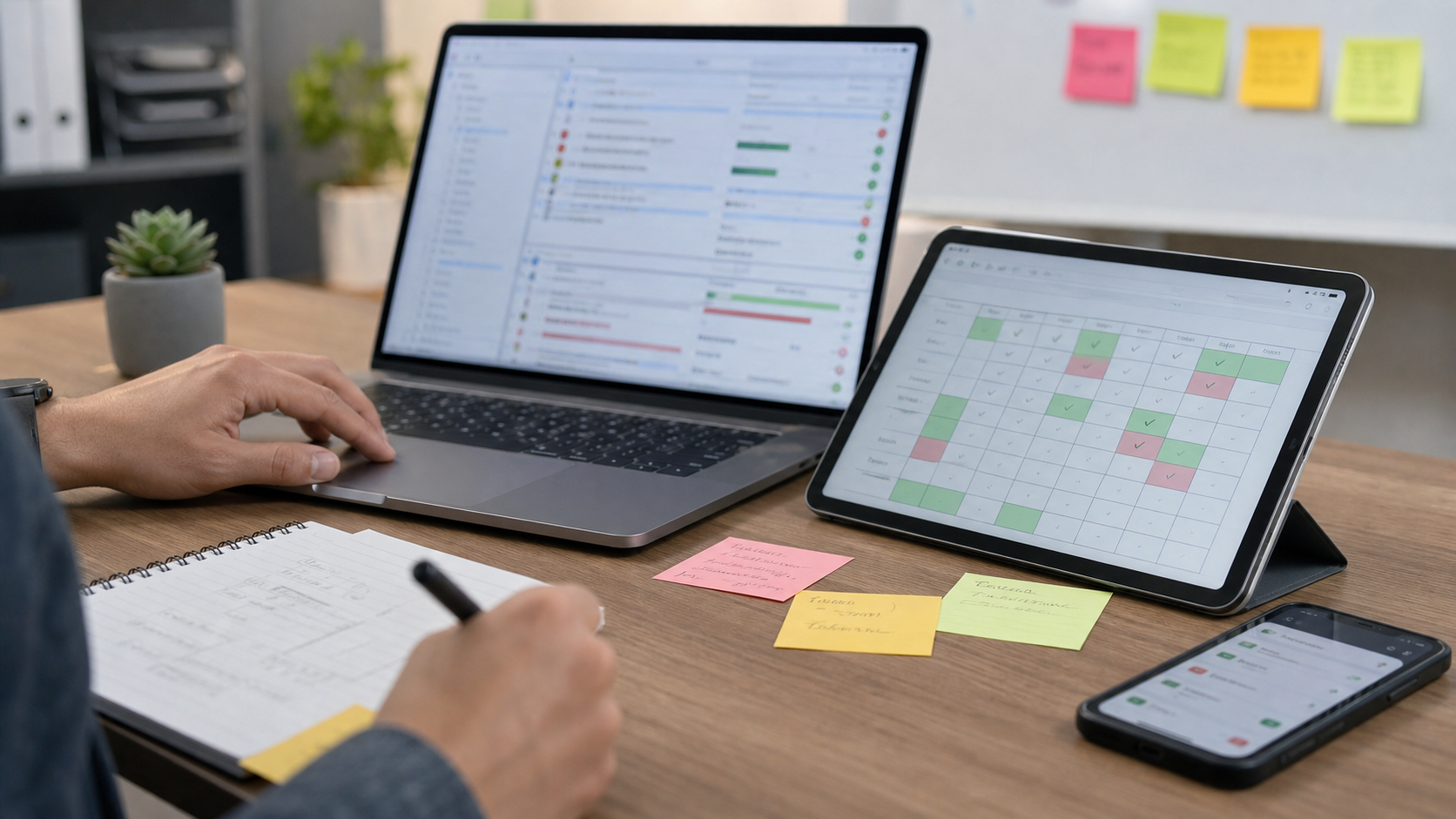
For product organizations, this changes the role of QA from gatekeeper to verification designer. QA leads can build libraries of prompts, examples and test templates for common risks: permissions, checkout flows, onboarding, migrations, localization, accessibility, offline behavior and error recovery. Codex can then be assigned to generate or update tests as features change, while QA reviews whether those tests actually express the product risk.
There is also a useful feedback loop for bug triage. When a bug report arrives with logs, screenshots or reproduction steps, an agent can search the codebase for likely causes, identify the owning module, create a minimal reproduction and suggest a patch. The patch should still go through normal review, but the team starts from a concrete investigation rather than a handoff that says only 'please look into this.'
AI does not remove the need for manual exploratory testing. It makes exploratory work more focused. Human testers can spend more time on ambiguous product behavior, usability, accessibility and real-world combinations that are hard to encode, while agents maintain the growing regression net around the parts of the system that should never surprise anyone again.
AI for software engineers: delegate work, not responsibility
For engineers, Codex is most useful when the task is real but bounded. Good examples include updating an API client after a schema change, refactoring a component without changing behavior, adding validation around a known edge case, writing tests for an uncovered domain rule, migrating a deprecated dependency or explaining how a legacy module fits together.
Those are not trivial tasks. They are exactly the kind of work that clogs engineering calendars because it requires context switching, repository navigation and careful repetition. Codex can take on the first pass while the engineer supervises the result. The review burden remains, but the engineer is reviewing a diff, a test run and a written explanation instead of assembling every step by hand.
The teams that benefit most will be the ones that write better instructions. A repository-level instruction file, such as the kind Codex can read from project guidance, becomes part of the engineering interface. It should describe architecture boundaries, test commands, naming conventions, security rules, branch expectations and areas where an agent should ask before changing behavior. In practice, this is useful for humans too: if a new engineer cannot infer the rules, an AI agent will struggle as well.
Clean architecture also becomes more valuable, not less. If business rules are isolated from UI, storage, platform APIs and deployment scripts, an agent can make narrower changes with clearer tests. If logic is scattered across controllers, view code and infrastructure scripts, the agent has to infer intent from side effects. AI rewards systems that are already understandable.
Engineers should also change how they split work. A ticket that says 'improve onboarding' is too broad. A ticket that says 'add server-side validation for duplicate team names, return the existing error envelope, add tests for empty, duplicate and case-insensitive names, and do not change the client yet' is a Codex-ready task. The sharper the task, the easier it is to review.
Pairing still matters. The new pattern is not just human plus AI in one editor. It is human supervision across several small threads: one agent investigates a bug, another drafts tests, another updates docs, and another tries a refactor behind a branch. The engineer's job moves toward orchestration, review and final integration. That is a senior engineering skill, not an abdication of engineering.
AI for DevOps: controlled automation around fragile systems
DevOps teams should approach AI workflows with more restraint because the blast radius is higher. A coding agent that edits a test file is one thing. An agent that changes infrastructure, deploys a service or rotates credentials is another. The right model is not autonomous production control. It is controlled assistance around diagnosis, preparation and review.
Codex-style agents can still help a great deal. They can summarize failed CI logs, identify the commit that likely caused a build failure, draft a rollback checklist, compare deployment manifests, update runbooks, write health-check tests, or generate a proposed infrastructure change for review. During incidents, they can collect relevant logs and recent diffs, build a timeline and propose hypotheses while humans make the operational calls.

The key is permission design. Agents should operate in sandboxes, ephemeral branches and non-production environments by default. Access to secrets, customer data, production consoles and destructive commands should be explicitly limited. When a workflow requires elevated access, the approval should be visible, logged and tied to a human owner.
OpenAI's own Codex materials emphasize sandboxing, reviewable diffs and approval flows as part of the model for using coding agents safely. That is the right instinct for engineering organizations. AI can reduce toil, but operational safety depends on boring controls: least privilege, audit trails, environment separation, repeatable rollback, test gates and human approval for irreversible actions.
What product leaders should change
AI workflows are not only an engineering tooling decision. Product teams shape whether the work is delegable. Requirements that are vague, oversized or detached from acceptance criteria create poor AI tasks and poor human tasks. Requirements that include examples, constraints, non-goals and success signals create work that can move faster through both human and AI execution.
A practical product workflow starts with thinner slices. Instead of asking for a broad feature, the team can define a sequence of agent-friendly increments: add the domain rule, expose the API, cover the unhappy paths, wire the UI state, add analytics, update documentation and verify the release checklist. Each slice can be assigned, tested and reviewed.
Product managers should also treat AI as a research and clarification partner. An agent can inspect the current product surface, identify inconsistent labels, compare behavior across platforms, summarize old decisions from issues and pull requests, or draft questions that need human judgment. That does not replace product strategy. It gives the product team a faster map of what the system actually does today.
A practical adoption model
Organizations do not need to transform everything at once. A sane first month is to choose three repeatable workflows: one for QA, one for engineering and one for DevOps. For QA, start with converting every confirmed bug into a regression test. For engineering, start with small maintenance tickets that already have clear acceptance criteria. For DevOps, start with CI failure analysis and runbook updates, not production actions.
Measure outcomes that reflect system health. Track cycle time from ticket to review, review rework rate, escaped defects, flaky test rate, incident follow-up completion and the percentage of AI-generated changes that pass without major rewrite. Do not measure only lines of code or number of agent tasks. More output is not the same as better throughput.
Teams should also define a review standard. Every AI-assisted change should answer four questions: What changed? Why was this the right place to change it? What tests or checks ran? What risks remain? If the agent cannot provide those answers, the work is not ready for review.
The operating principle: AI speeds up explicit systems
The organizations that gain the most from Codex will not be the ones that simply tell everyone to use AI more. They will be the ones that make their engineering systems more explicit: clearer architecture, smaller tasks, better tests, stronger runbooks, visible approvals and cleaner definitions of done.
That is the deeper lesson of AI workflows. Codex can help teams move faster, but it also exposes where the existing process depends on unwritten knowledge. If only one senior engineer knows why a deployment step is risky, the agent will not know. If QA scenarios live only in someone's memory, the agent cannot preserve them. If product acceptance criteria are implied, the agent will optimize for the wrong thing.
AI adoption, then, is partly a documentation and systems-design project. The payoff is not just faster code generation. It is an organization where more work is legible, testable and reviewable. Codex makes that operating model more realistic because it gives teams a way to delegate the repeatable parts while keeping humans in charge of judgment.
The near-term opportunity is straightforward: use AI to turn intent into a draft, risk into tests, failures into investigations and releases into checklists. Keep authority with people. Keep evidence in the workflow. Keep tasks small enough to review. That is how engineering and product organizations can use Codex to work more efficiently without confusing speed for control.