
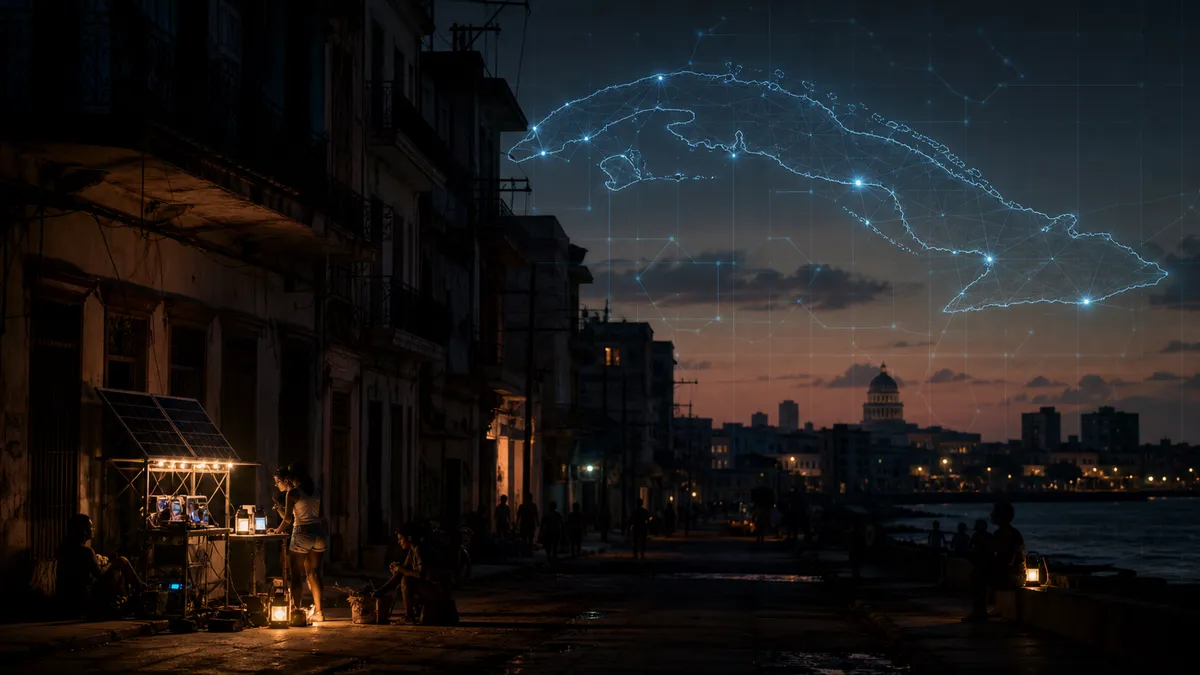
Cuba was hit by an islandwide blackout on Monday, July 6, 2026, after the national electrical grid collapsed, leaving nearly 10 million people waiting for power to return.
The state-run Electric Union announced the outage, and Cuba's Ministry of Energy and Mines said restoration work had begun, according to Associated Press reporting from Havana. CNN, citing Cuban energy officials, reported that emergency microsystems were being activated to power vital services while the cause was investigated.
The outage landed on top of an energy crisis that was already disrupting daily life. Cuba has been dealing with fuel shortages, aging power plants and long scheduled outages, and AP reported that residents in some areas had already been cooking with charcoal or relying on street solar setups to charge batteries.
Why this blackout is different
Ordinary rolling outages are painful but limited. A total grid collapse is more serious because restoration has to happen in stages: power stations, transmission lines, hospitals, water systems and neighborhoods cannot all simply be switched back on at once. That makes the first official updates important not only for when lights return, but for which critical services are stabilized first.
El Pais reported Monday that this was Cuba's eighth total blackout in 24 months and its third in 2026. The newspaper also reported that the day's expected generation was only 935 megawatts against demand of about 3,100 megawatts, a gap that helps explain why even a restart may not immediately mean normal service.
The island's power problem is also a fuel problem. AP reported that Cuba produces about 40 percent of the fuel it needs and has depended on imports to keep plants running. Recent shortages have tightened pressure on transportation, hospitals, food supply and water access, making a grid failure more than an inconvenience.
The uncertainty also matters for travelers, relatives abroad and aid groups trying to communicate with people on the island. During a prolonged blackout, phone charging, mobile networks, airport operations and refrigeration can become practical bottlenecks long before a formal emergency declaration changes.
What to watch next
The most important near-term signal is whether officials can restore enough generation to protect hospitals, water pumping, refrigeration and communications. A partial restart could still leave many neighborhoods under rotating outages if fuel and plant capacity remain short.
For Cuban families, the first hours after a grid restart may still require caution: elevators can be unreliable, food safety depends on how long refrigerators stayed warm, and water pressure may lag if pumps have not fully recovered. Those ordinary details are where a power emergency becomes a household problem.
For readers outside Cuba, the blackout is a reminder that national power grids fail in layers. The headline event is the loss of electricity, but the practical consequences arrive through the systems that depend on it: medicine kept cold, drinking water pumped, phone batteries charged, elevators working, traffic lights operating and food staying safe.
That is why Monday's outage remains a developing story even before a final cause is known. The key question is not only when Cuba restores the grid, but whether the restart can hold in a system already stretched by fuel scarcity and years of underinvestment.