
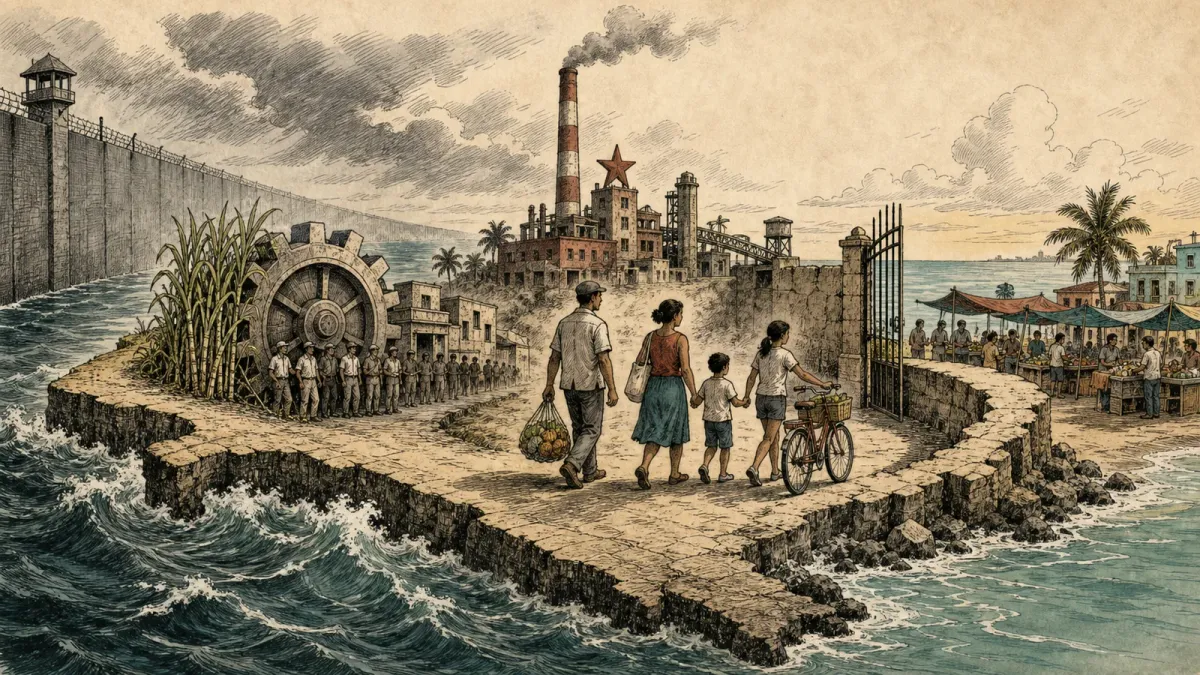
Cuba did not become socialist in a single moment on January 1, 1959. The revolution that removed Fulgencio Batista began as a broad nationalist rebellion. Over the next three years, land reform, nationalization, conflict with Washington, an alliance with Moscow and the elimination of independent political competition turned that revolution into a socialist state.
The system then changed repeatedly without surrendering its political core. Cuba moved from improvised revolutionary rule to Soviet-style planning, survived the loss of Soviet support by admitting dollars, tourism and limited private work, and later expanded small business and foreign investment. Through every phase, the Communist Party remained the superior political authority and organized opposition remained prohibited.
This chronology treats socialism as both a political system and an economic model. It records the revolution’s expansion of literacy, health care and social provision; the repression, imprisonment and exile imposed on critics; the costs of centralized planning; the importance of Soviet and Venezuelan support; and the continuing effects of the U.S. embargo and later sanctions. Those forces interacted. No single one explains the whole Cuban experience.
The short answer
Cuba is still a socialist state in 2026. Its 2019 Constitution calls the socialist system irrevocable and names the Communist Party the leading force of society and the state. Citizens do not choose among competing parties for national power, and independent political organization, expression and protest face extensive restrictions.
But “socialist” no longer means that every legal business is state-owned or every price is centrally fixed. Since the 1990s, and especially since 2011, Cuba has authorized self-employment, private small and medium enterprises, foreign investment, home sales and other market activity. The 176 economic and social measures approved in June 2026 go further, including private banking, more direct foreign trade and wider space for private capital, while the government says the purpose is to preserve socialism rather than replace it.
Before 1959: why revolution found an audience
Pre-revolutionary Cuba was not simply poor or simply prosperous. Havana had modern infrastructure and the country compared favorably with parts of Latin America on some national indicators, but wealth, land and opportunity were distributed unevenly. Rural poverty, seasonal unemployment in the sugar economy, racial inequality, corruption and heavy U.S. commercial influence fed resentment.
Batista’s 1952 coup closed off constitutional politics and his government used censorship, torture and killing against opponents. Fidel Castro’s July 26 Movement drew support from students, workers, farmers, middle-class reformers and anti-Batista nationalists who did not all share a socialist program. That coalition’s diversity is essential to understanding why the revolution’s later Marxist-Leninist direction was a process, not a settled platform from the beginning.
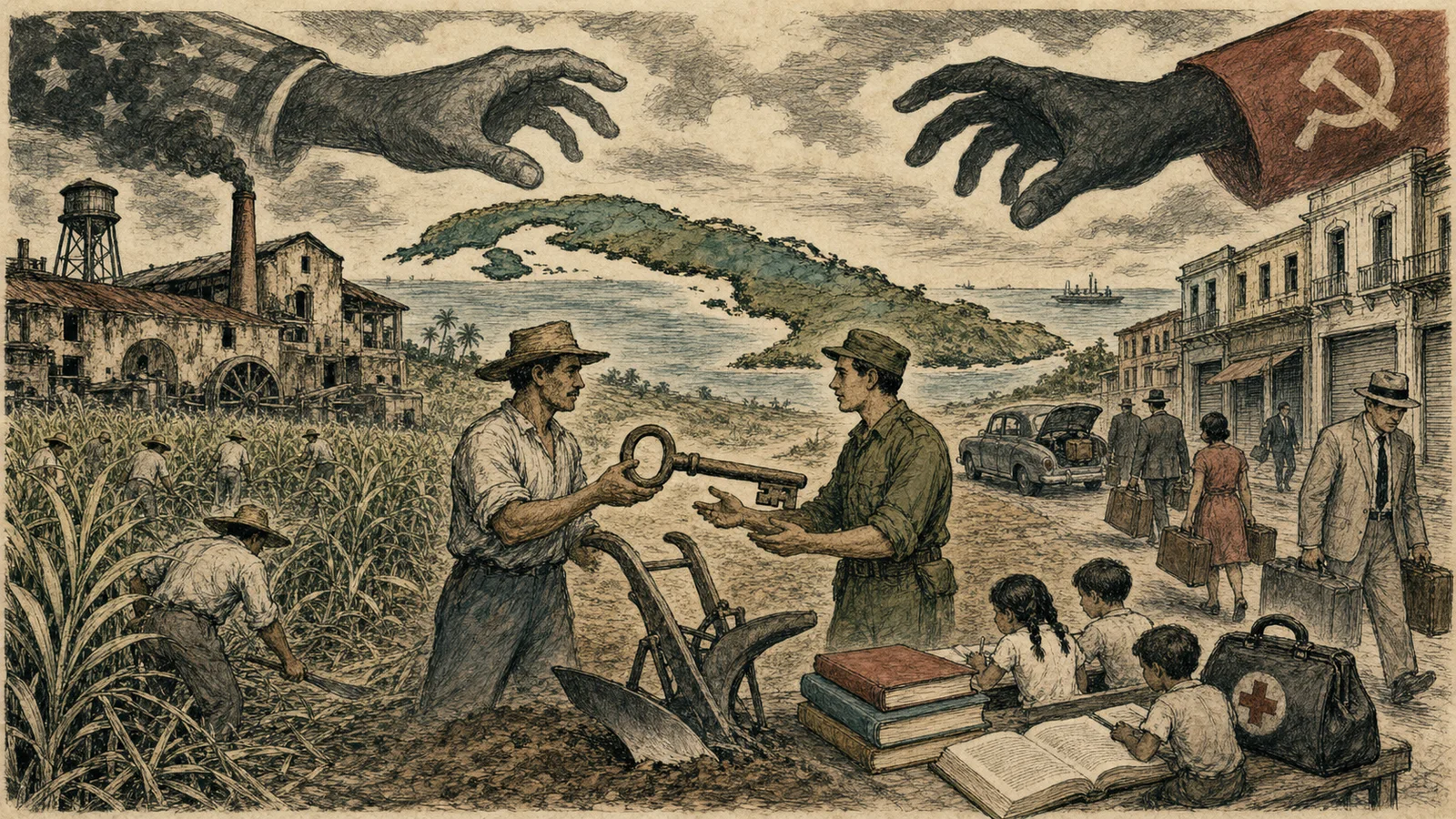
Year by year
1959–1969: revolution becomes a socialist state
- 1959: Batista fled on January 1, and Castro’s rebel movement entered Havana days later. The new government reduced rents, prosecuted and executed officials associated with the dictatorship, and adopted an agrarian reform that limited large estates. Political rivals, former allies and property owners began leaving the island as revolutionary power concentrated.
- 1960: Cuba signed trade agreements with the Soviet Union and nationalized U.S.-owned refineries, utilities, banks and sugar properties, followed by most large Cuban businesses. Washington cut Cuba’s sugar quota and imposed most of a trade embargo. Each side portrayed the other’s action as the cause of the escalating break.
- 1961: The United States severed diplomatic relations. Cuban forces defeated the CIA-backed exile invasion at the Bay of Pigs, strengthening Castro and discrediting armed opposition. Castro publicly declared the revolution socialist, while a mass literacy campaign sent young volunteers across the country and sharply expanded the state’s educational reach.
- 1962: Washington imposed a comprehensive trade embargo. Cuba introduced nationwide food rationing as shortages and economic disruption deepened. In October, Soviet nuclear missiles placed on the island produced a 13-day confrontation; Moscow removed them after the United States pledged not to invade Cuba and secretly agreed to remove U.S. missiles from Turkey.
- 1963: A second agrarian reform reduced the permitted size of private farms and moved more land into state hands. Cuba also refined its planning institutions and expanded universal public services. Armed resistance in the Escambray mountains continued, met by a major state counterinsurgency and population relocations.
- 1964: The Organization of American States pushed most members to suspend trade and diplomatic ties with Cuba, tightening its regional isolation. A long-term Soviet sugar agreement gave Havana a dependable buyer and source of credits, reinforcing an economy built around state planning, sugar exports and preferential exchange with the socialist bloc.
- 1965: The Communist Party of Cuba was formally established from earlier revolutionary organizations, with Castro as first secretary. The party became the central political institution. The Camarioca boatlift and later U.S.-organized Freedom Flights opened another large channel of emigration for Cubans unwilling to remain under the new order.
- 1966: Havana hosted the Tricontinental Conference and promoted solidarity with revolutionary movements abroad. The United States enacted the Cuban Adjustment Act, giving many Cubans who reached U.S. territory a route to permanent residency. At home, education, health and employment guarantees expanded within an increasingly centralized system.
- 1967: Che Guevara was captured and killed while trying to build a guerrilla movement in Bolivia. His death turned him into a global revolutionary symbol, but it also exposed the limits of exporting Cuba’s insurgent strategy. Domestic political and economic authority continued moving toward the state and Communist Party.
- 1968: The “Revolutionary Offensive” nationalized tens of thousands of remaining small private shops, restaurants and services. The move virtually eliminated legal private commerce beyond small farming and made the state the dominant employer and distributor. It marked the high point of Cuba’s attempt to replace market relations with political mobilization.
- 1969: Government attention centered on a campaign to harvest 10 million tons of sugar the following year. Workers, students and soldiers were mobilized into the fields. Other sectors lost labor and investment, making the target a test not only of production but of voluntarist planning and Castro’s political authority.
1970–1979: Soviet-style institutions and global activism
- 1970: The sugar harvest reached a record but missed the 10-million-ton goal. Castro publicly accepted responsibility. The failure encouraged a turn away from improvised mass campaigns toward more conventional Soviet planning, material incentives and professional management, even as sugar dependence and state ownership remained central.
- 1971: Poet Heberto Padilla’s arrest and forced public self-criticism alienated many foreign intellectuals who had supported the revolution. The episode became emblematic of the cultural “gray years,” when ideological conformity narrowed artistic space. Cuba simultaneously deepened institutional, economic and educational ties with the Soviet bloc.
- 1972: Cuba joined the Council for Mutual Economic Assistance, or Comecon. Preferential Soviet prices, credits, oil and machinery stabilized development and funded social programs, while binding the island more tightly to an external patron and a sugar-centered division of labor. The U.S. embargo remained a major constraint outside that bloc.
- 1973: Economic administration became more rule-bound as Cuba adopted Soviet accounting, planning and enterprise methods. The year brought no comparable constitutional turning point, but it mattered as part of the shift from charismatic revolutionary mobilization toward a durable bureaucracy that could govern workplaces, municipalities and mass organizations.
- 1974: The government tested new local organs of “People’s Power” in Matanzas Province. Candidates were selected through neighborhood assemblies rather than competing national parties. The experiment became the model for a later nationwide structure that added regular elections and local representation without permitting organized opposition to the Communist Party.
- 1975: The Communist Party held its first congress and approved a Soviet-influenced economic and institutional blueprint. Cuba sent large combat forces to Angola at the request of the new leftist government, beginning a major international intervention that supporters call anti-colonial solidarity and critics view as armed projection backed by Moscow.
- 1976: A new constitution formally defined Cuba as a socialist state, created national and local Assemblies of People’s Power, and placed the Communist Party above the state as society’s leading force. Fidel Castro became president of the newly structured Councils of State and Ministers, turning revolutionary authority into a permanent legal order.
- 1977: The Carter administration and Havana opened interests sections in each other’s capitals, restoring limited official contact without full diplomatic relations. Cuba remained militarily active in Angola and increased support for Ethiopia. At home, Soviet trade and planning helped sustain employment and broad access to state services.
- 1978: Cuban troops played a significant role alongside Ethiopian and Soviet-aligned forces in the Horn of Africa. Havana also began a dialogue with parts of the exile community and released some political prisoners, permitting family visits. The combination showed tactical flexibility abroad and at home without changing one-party rule.
- 1979: Havana hosted the Non-Aligned Movement summit and Castro became the group’s chair, presenting Cuba as an independent voice of the Global South. Close alignment with Moscow complicated that claim. The revolution’s international stature was near its peak even as its economy relied heavily on Soviet preferences.
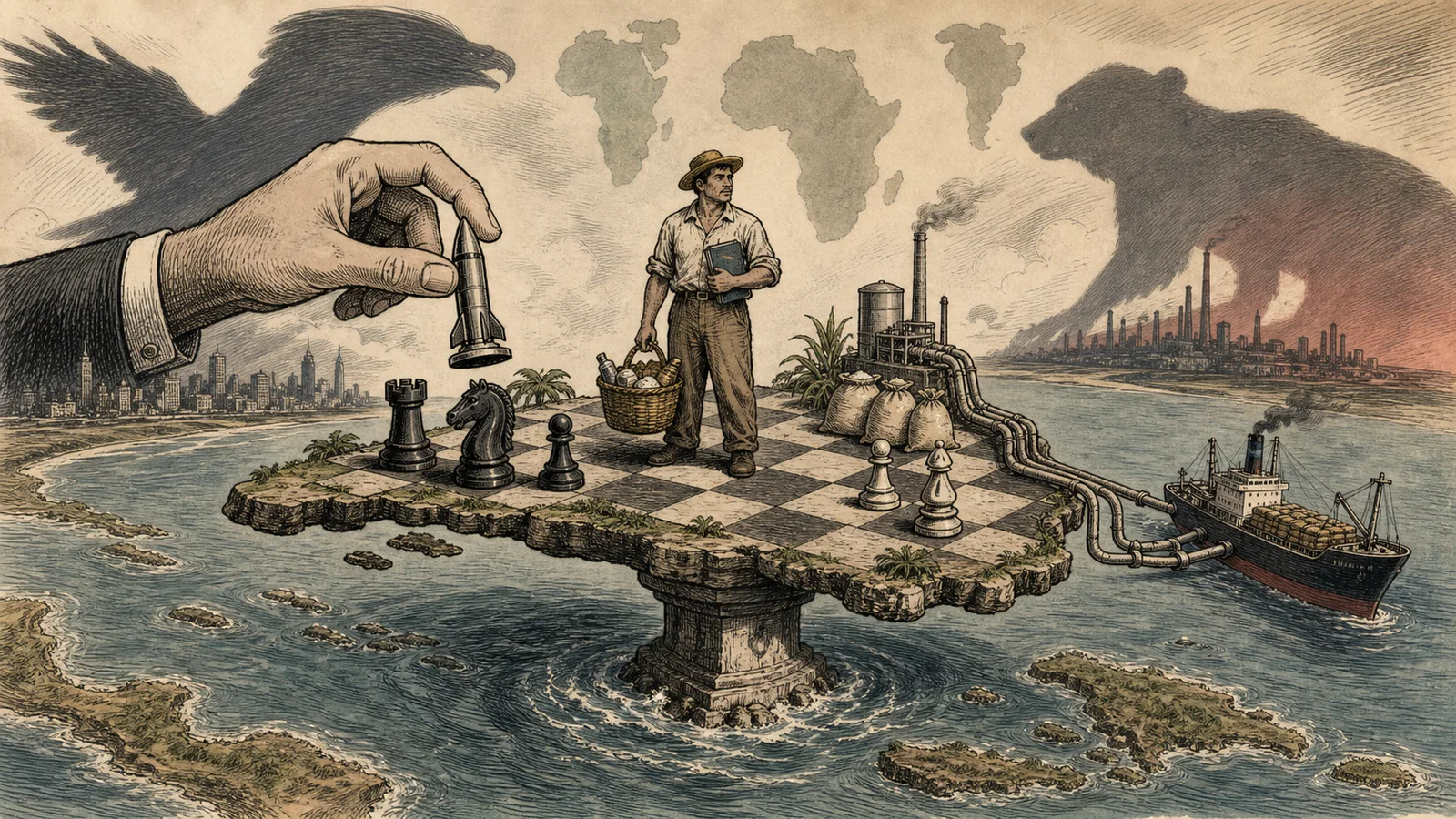
1980–1989: stress inside the Soviet partnership
- 1980: After thousands sought refuge at Peru’s embassy, Castro opened Mariel harbor to departures. About 125,000 people reached Florida in the Mariel boatlift. The government stigmatized many leavers, and some departures were coercive. The exodus revealed deep dissatisfaction despite social guarantees and Soviet-backed stability.
- 1981: Cuba entered the decade with high dependence on Soviet trade and a heavily state-employed workforce. A dengue epidemic strained public health, while Washington under Ronald Reagan adopted a more confrontational posture. The government answered external pressure by emphasizing vigilance, mobilization and revolutionary unity.
- 1982: The Reagan administration placed Cuba on the U.S. list of state sponsors of terrorism, citing support for armed revolutionary movements; Havana rejected the characterization. A broader Latin American debt crisis narrowed Cuba’s options in hard-currency markets, underscoring the protective value and long-term risk of its Soviet economic shelter.
- 1983: U.S. forces invaded Grenada after a violent split within its revolutionary government. Cuban construction workers and military personnel fought U.S. troops, and dozens of Cubans were killed. The episode reinforced Havana’s siege narrative and Washington’s determination to block Cuban influence in the Caribbean.
- 1984: Cuba and the United States signed a migration agreement providing regular visas and the return of some Mariel migrants. The deal showed that practical negotiation could occur beneath ideological hostility. Cuba’s domestic model remained broadly stable: state ownership, rationed goods, universal services and Soviet-supported investment.
- 1985: U.S.-funded Radio Martí began broadcasting to Cuba, which jammed the signal and suspended the migration accord. In the Soviet Union, Mikhail Gorbachev’s reforms hinted at changes Havana distrusted. Cuba’s leaders defended political discipline and warned that imported liberalization could weaken socialism.
- 1986: Castro launched the “Rectification of Errors and Negative Tendencies” campaign. It reversed some decentralizing and market-like mechanisms, criticized private enrichment and revived volunteer labor and moral incentives. The turn distanced Cuba from Gorbachev’s perestroika precisely as its main patron was reconsidering central planning.
- 1987: Economic growth slowed and hard-currency debt remained difficult to service. Cuban forces stayed deeply engaged in Angola, while social programs preserved broad coverage at home. The government continued rectification, prioritizing equality and political commitment even when those goals conflicted with enterprise efficiency.
- 1988: Cuban, Angolan and South African forces fought around Cuito Cuanavale, followed by negotiations that led to Cuban withdrawal and helped clear a path toward Namibian independence. Cuba celebrated the outcome as internationalist success. The settlement also reduced an expensive overseas commitment as Soviet support became less certain.
- 1989: General Arnaldo Ochoa, a decorated officer, was tried and executed for drug trafficking and related crimes in proceedings that remain controversial. Communist governments fell across Eastern Europe, threatening Cuba’s markets and supplies. Havana rejected political opening and prepared to endure the coming loss of its economic lifeline.
By the end of the 1980s, Cuba had built a lasting state with major social capacity, but it had not built an economy capable of replacing the Soviet relationship. That contradiction defined the next decade.
1990–1999: the Special Period and selective market opening
The “Special Period in Time of Peace” was not one policy but a succession of emergency adaptations. Output, imports, transport and calorie availability fell sharply. The government protected the basic architecture of health and education while accepting practices it had once treated as capitalist threats.
- 1990: Castro announced the Special Period as Soviet deliveries and trade began to contract. Fuel shortages reduced transport and electricity, factories slowed, and bicycles became a necessity. The leadership framed sacrifice as defense of sovereignty and socialism rather than an argument for political or economic system change.
- 1991: The Soviet Union dissolved, ending the preferential exchange that had supplied oil, machinery, credit and a protected sugar market. Cuba’s Fourth Party Congress allowed religious believers to join the party and encouraged limited institutional flexibility, but rejected multiparty politics as the economy entered a historic contraction.
- 1992: Constitutional amendments made the state secular, adjusted property language and introduced direct voting for National Assembly candidates, though candidate selection remained controlled and no rival parties competed. The U.S. Cuban Democracy Act tightened sanctions on foreign subsidiaries of U.S. companies, compounding Cuba’s loss of Soviet trade.
- 1993: The government legalized possession and use of U.S. dollars, expanded licensed self-employment, allowed more remittances and restructured state farms into cooperatives. These measures created legal market spaces and new inequalities between people with and without foreign currency, while the state retained control of strategic sectors.
- 1994: A rare anti-government protest known as the Maleconazo erupted in Havana amid shortages and frustrated emigration. Castro again permitted departures, producing the balsero raft crisis. Agricultural markets reopened so farmers could sell surplus at market prices, easing some shortages but widening income differences.
- 1995: A new foreign investment law offered broader joint-venture opportunities, especially in tourism and mining. Cuba and the United States completed migration accords that promised legal visas and returned many migrants intercepted at sea. Tourism, remittances and foreign capital became pillars of survival alongside the state sector.
- 1996: Cuban fighter jets shot down two Brothers to the Rescue aircraft, killing four people. The U.S. Helms-Burton Act codified the embargo and threatened penalties tied to property nationalized after 1959. The law made normalization harder and increased risk for foreign investors Cuba was courting.
- 1997: A series of hotel bombings targeted the tourism industry, killing an Italian visitor and injuring others. The government arrested Salvadoran participants and blamed exile-linked organizers. The attacks strengthened security controls around the very industry generating much of Cuba’s scarce hard currency.
- 1998: Pope John Paul II visited Cuba and called for the world to open to Cuba and Cuba to open to the world. The government permitted a more public role for the Catholic Church and restored Christmas as a holiday. Political pluralism and independent media nevertheless remained tightly restricted.
- 1999: The custody battle over Elián González became a political cause in both Havana and Miami. At the same time, Hugo Chávez’s rise in Venezuela created the prospect of a new strategic partner. Cuba was emerging from the worst contraction but remained dependent on tourism, remittances and rationing.
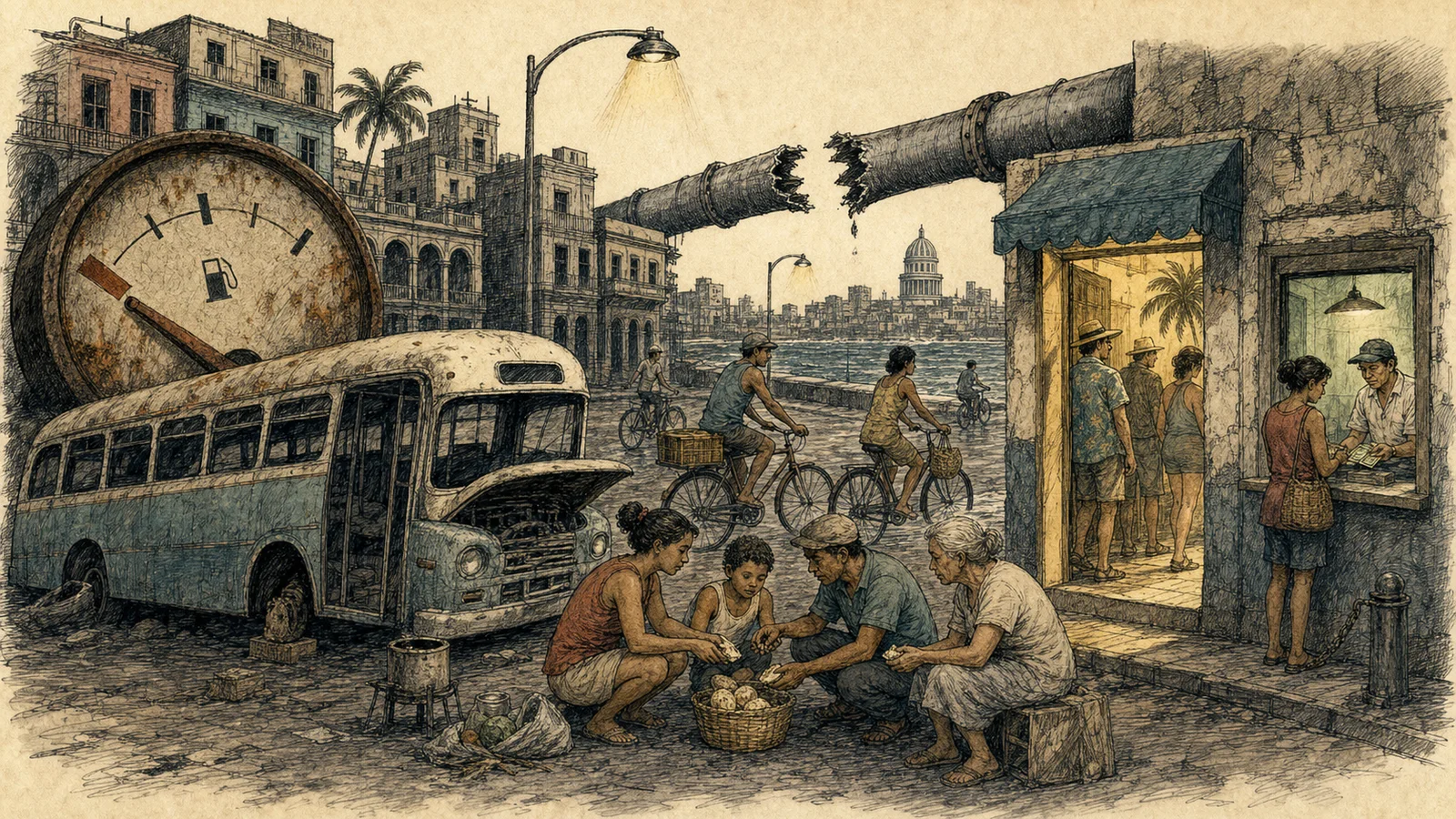
2000–2009: Venezuela replaces part of the lost safety net
Venezuela never duplicated the scale or reliability of the Soviet bloc, but subsidized oil and payment for Cuban professional services gave Havana room to recentralize parts of the economy and restore programs weakened in the 1990s.
- 2000: Cuba and Venezuela signed an oil-for-services agreement. Venezuela supplied oil on favorable terms while Cuba sent doctors, teachers and other personnel. The partnership joined social diplomacy to a new source of external support and became increasingly important under Chávez.
- 2001: Hurricane Michelle caused major damage. Cuba bought U.S. food under a 2000 law allowing cash agricultural sales despite the embargo, demonstrating how humanitarian and commercial exceptions could coexist with broad sanctions. The state continued investing in biotechnology, medicine and education while managing chronic hard-currency scarcity.
- 2002: A citizen initiative called the Varela Project submitted signatures seeking a referendum on civil and economic rights. The government responded with a mass campaign and constitutional amendment declaring socialism irrevocable. The episode showed that limited constitutional mechanisms did not provide a route to competitive system change.
- 2003: During the “Black Spring,” authorities arrested 75 dissidents, independent journalists and activists and imposed long prison sentences after summary proceedings. Cuba also executed three men who hijacked a ferry in an attempted escape. International criticism intensified, including from some longtime left-wing sympathizers.
- 2004: The government ended routine use of U.S. dollars in state shops and imposed conversion charges, channeling transactions through the convertible peso, or CUC. The move centralized foreign-currency capture while preserving a dual economy in which access to remittances and tourism often determined living standards.
- 2005: Cuba launched an “Energy Revolution” to replace inefficient appliances and small generators, partly in response to grid problems. Venezuelan cooperation expanded through the Bolivarian Alliance. Higher external support funded social programs, but it also recreated dependence on a politically aligned oil supplier.
- 2006: Fidel Castro underwent emergency surgery and temporarily transferred power to Raúl Castro. For the first time since 1959, daily authority no longer rested with Fidel. The succession was orderly, demonstrating institutional continuity, but it occurred inside the existing party hierarchy rather than through an open election.
- 2007: Raúl encouraged a nationwide discussion of low wages, food production, transport and excessive prohibitions. Some payments to state workers increased, and officials spoke more openly about structural inefficiency. The debate prepared gradual economic changes while making clear that Communist Party leadership was not under review.
- 2008: Raúl formally became president. His government legalized ordinary access to mobile phones and some consumer electronics, expanded leases of idle state land and reduced selected restrictions. Three hurricanes inflicted large losses. Reform was pragmatic and incremental, aimed at making socialism sustainable rather than designing a political transition.
- 2009: President Barack Obama eased U.S. restrictions on Cuban-American travel and remittances. The OAS lifted Cuba’s 1962 suspension, but Havana declined to rejoin. The island’s economy was hit by the global financial crisis and hurricane costs, reinforcing calls for greater productivity and fewer state subsidies.
The Venezuelan relationship postponed the starkest pressures of the Special Period, but it did not solve low productivity, aging infrastructure, distorted exchange rates or the gap between state wages and hard-currency prices.
2010–2019: market reforms without political competition
Raúl Castro’s reforms, known as the “updating” of the model, explicitly separated markets from capitalism: officials argued that a socialist state could regulate private activity while keeping strategic ownership and party control.
- 2010: The government announced plans to reduce a bloated state payroll and expand self-employment as an alternative. Implementation slowed because the private sector could not absorb workers quickly enough. Even so, the policy acknowledged that universal state employment had become fiscally and economically unsustainable.
- 2011: The Sixth Communist Party Congress approved economic guidelines that expanded self-employment, cooperatives and enterprise autonomy. Cubans gained the right to buy and sell homes and cars. The reforms widened legal private accumulation, but licensing, taxes and administrative discretion kept the sector dependent on the state.
- 2012: The government adopted a migration law, effective the next year, that ended the long-standing requirement for most Cubans to obtain an exit permit. Travel became easier, though the state retained tools to restrict some professionals and critics. Hurricane Sandy caused serious damage in eastern Cuba.
- 2013: Miguel Díaz-Canel became first vice president, marking the planned rise of a leader born after the revolution. The Mariel Special Development Zone opened to attract foreign manufacturing and logistics. Cuba sought investment and productivity without privatizing the political system or its largest strategic enterprises.
- 2014: Raúl Castro and Obama announced that Cuba and the United States would restore diplomatic relations after secret negotiations and a prisoner exchange. Cuba also adopted a new foreign investment law. The thaw created expectations for tourism, remittances and commerce, although the statutory U.S. embargo remained.
- 2015: The United States removed Cuba from its terrorism list and both countries reopened embassies. More U.S. visitors and private rental and restaurant income benefited parts of the emerging nonstate sector. Normalization changed the external climate but did not produce multiparty elections or broad civil-liberties reform.
- 2016: Obama became the first sitting U.S. president to visit Cuba in nearly 90 years and met both Raúl and dissidents. Commercial flights resumed. Fidel Castro died in November. His death closed a symbolic era, while the institutions and political limits built under his rule remained intact.
- 2017: President Donald Trump restricted some travel and transactions with military-linked enterprises, partially reversing the thaw. The United States sharply reduced embassy staffing after unexplained health incidents. Cuba temporarily froze some new private-business licenses, showing reform’s vulnerability to both external policy swings and domestic bureaucratic concern.
- 2018: The National Assembly selected Díaz-Canel as president, the first non-Castro in the office in decades, while Raúl remained party leader. Nationwide mobile 3G internet service expanded access to information and commerce. It also created new channels for activism that the state would later restrict during protests.
- 2019: Voters approved a new constitution recognizing private property and foreign investment and restoring the office of prime minister. The same charter declared socialism irrevocable and the Communist Party the superior political force. Economic plurality was constitutionalized inside, not outside, one-party socialist rule.
By 2019, Cuba had formally accepted a mixed economy but not a mixed political system. That distinction is the most direct way to understand the reforms that followed.
2020–2026: pandemic shock, protest, blackouts and a broader opening
- 2020: COVID-19 collapsed international tourism and remittance channels as tightened U.S. sanctions limited finance and travel. The economy contracted sharply. Cuba deployed medical personnel abroad and developed domestic vaccine candidates, but shortages, queues and power problems deepened pressure on households.
- 2021: Cuba unified its dual currencies through the “Ordering Task,” devaluing the official peso and raising state wages and prices. Inflation surged. Raúl left the party leadership to Díaz-Canel. On July 11, thousands protested shortages, blackouts and political restrictions; authorities arrested many, cut connectivity and later imposed heavy sentences.
- 2022: A referendum approved a new Family Code legalizing same-sex marriage and strengthening protections for varied families, a major social-policy change. At the same time, inflation, shortages and the aftermath of protest repression continued. A record migration wave carried hundreds of thousands of Cubans toward the United States.
- 2023: Díaz-Canel began a second presidential term after selection by the National Assembly. Private micro, small and medium enterprises expanded their role in retail, food and services, often importing what state channels could not supply. Their growth created jobs and goods but also prices far beyond many state salaries and pensions.
- 2024: Fuel shortages, aging plants and weak maintenance contributed to repeated electrical-grid collapses and long nationwide blackouts. Demonstrations over food and electricity occurred in Santiago de Cuba and elsewhere; the government acknowledged grievances while detaining some participants and restricting internet access. Hurricanes added further damage.
- 2025: The second Trump administration restored and intensified hard-line measures after briefly reversed late-Biden steps, maintaining Cuba’s terrorism designation and tightening travel, financial and military-linked restrictions. Cuba’s economy remained below its pre-pandemic level, with shortages, emigration and unreliable electricity testing both households and state capacity.
- 2026: New U.S. pressure targeted oil supplies and worsened an already severe energy crisis. In June, Cuba approved 176 economic and social measures across 23 areas. The package broadens private business, direct trade, private banking, diaspora and foreign investment, enterprise autonomy and market pricing. Officials insist the opening is designed to save the revolution and preserve socialist planning; the one-party constitutional order remains unchanged.
What changed—and what did not
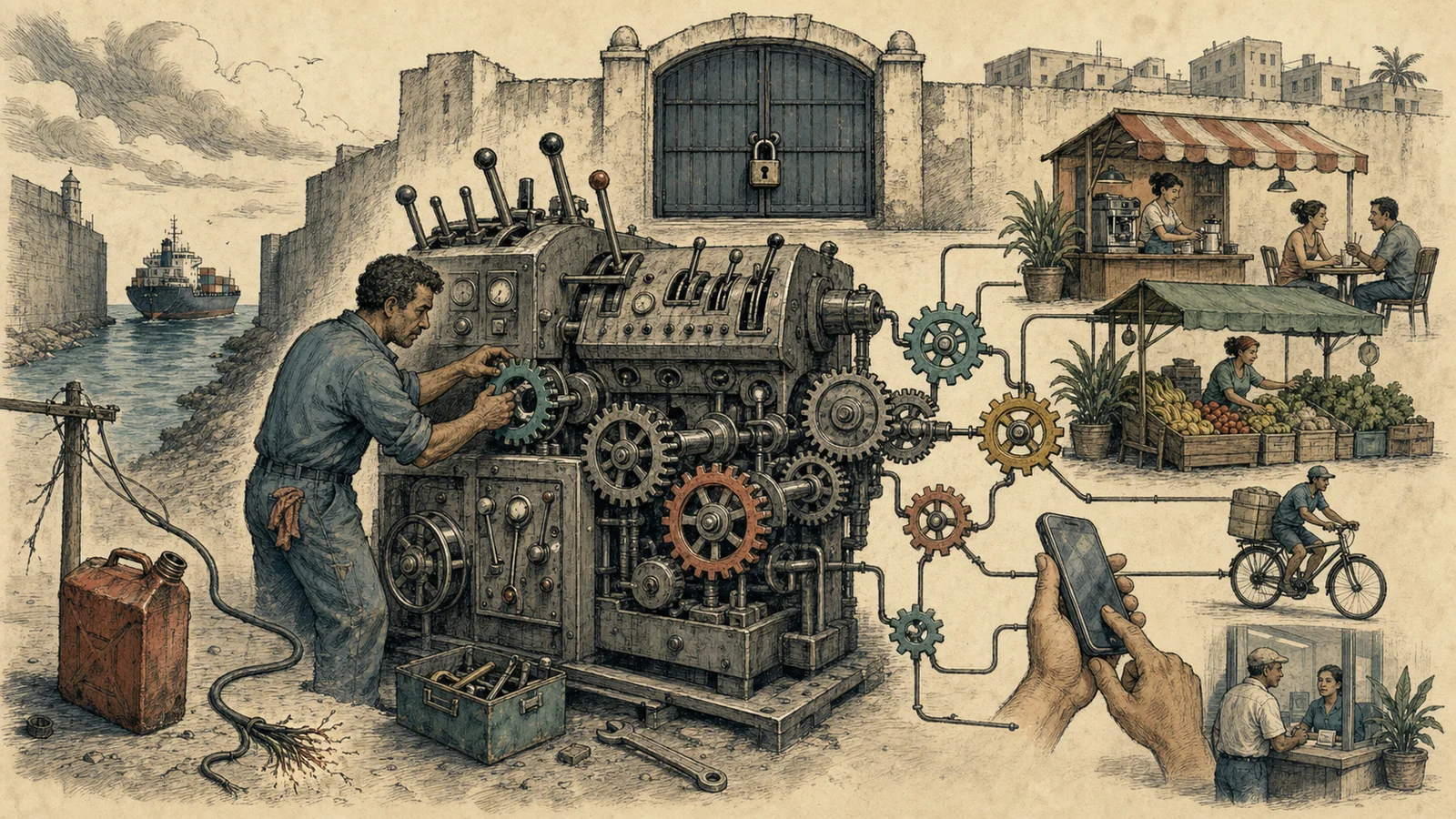
The economic model changed substantially. State ownership went from near-total dominance after 1968 to coexistence with self-employment, private firms, cooperatives, foreign joint ventures, remittances and tourism. The direction was not linear: Cuba opened markets in crisis, recentralized when external support improved, and reopened when fiscal and production problems returned.
The political model changed much less. Leadership passed from Fidel to Raúl to Díaz-Canel, constitutions and state offices were revised, and local nomination mechanisms offered limited participation. Yet the Communist Party retained superior authority, national power did not become contestable by opposition parties, and the government continued using surveillance, detention, censorship and exile pressure against organized dissent.
The balance sheet is inseparable from context. Revolutionary policy produced durable literacy, health and scientific capacity and reduced some pre-1959 inequalities. It also concentrated power, eliminated independent institutions and generated chronic inefficiencies. Soviet and Venezuelan subsidies masked weaknesses; their decline exposed them. U.S. sanctions imposed real trade, finance and investment costs and supplied the government with a permanent external enemy, but sanctions alone do not explain every shortage, policy failure or rights abuse.
The 2026 reforms therefore do not mark a simple end of socialism. They mark the latest attempt to use more markets to keep a socialist state functioning. Whether the measures revive production will depend on implementation, energy, investment, U.S. policy and the government’s willingness to let independent economic actors operate. They do not, by themselves, open the political system.
Sources and methodology
This timeline synthesizes primary legal and government material with independent historical and human-rights reporting. Quiet years are included to show institutional continuity, not to invent a turning point where none occurred. Claims about disputed responsibility are attributed or framed with competing causes.
- Cuba’s 2019 Constitution, including Articles 1, 4 and 5 on the socialist state, irrevocability and Communist Party leadership.
- U.S. Office of the Historian on the Bay of Pigs and the Cuban Missile Crisis.
- Congressional Research Service’s Cuba policy overview and its February 2026 update on sanctions, energy and economic conditions.
- Council on Foreign Relations’ U.S.–Cuba chronology, updated June 30, 2026.
- Human Rights Watch’s documented investigation of the July 2021 crackdown.
- The Cuban government’s publication of the 176 measures and Associated Press reporting on their scope and constraints.


