
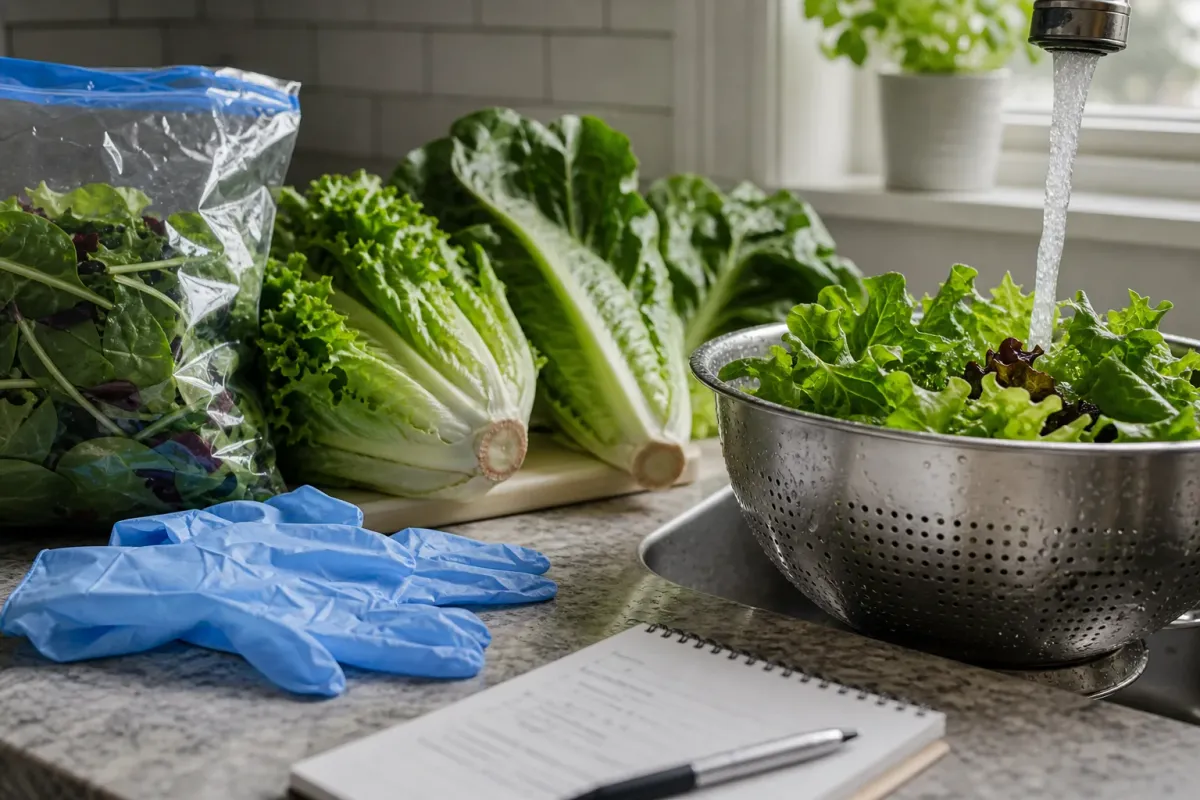
Michigan health officials are now pointing to lettuce or salad greens as a potential source in the state's cyclospora outbreak, a new clue in a fast-moving foodborne illness investigation that has spread well beyond one state.
The Michigan Department of Health and Human Services said on July 14 that it had 3,309 reported cases, with 44 hospitalizations reported as of July 9. The department said no specific type of produce, grower or supplier has been identified.
CDC's national surveillance page listed 1,645 lab-confirmed domestically acquired cases in 34 states as of July 13, plus 141 hospitalizations and no deaths. CDC also said case counts are likely to keep rising because reports can lag illness onset by several weeks.
Cyclospora is a parasite that can cause days or weeks of watery diarrhea, cramps, nausea, appetite loss and fatigue. Symptoms often begin about a week after exposure, so investigators may be tracing meals that happened well before a person became sick.
What changed
The useful update for shoppers is not that all lettuce has been declared unsafe. It is that Michigan's investigation now says lettuce or salad greens may be a potential source, while other foods have not been ruled out.
CDC's July 14 outbreak notice describes a large multistate outbreak in Michigan, Ohio, West Virginia and Kentucky, with more than 400 people reported to CDC in connection with that specific cluster. FDA's active investigations table lists Cyclospora investigations tied to products that are still not identified, with traceback underway.
That uncertainty matters. Without a named brand, lot code or supplier, consumers cannot check a simple recall list. The best guidance is to adjust how higher-risk produce is selected and prepared, especially in areas with active outbreaks.
Do this first
- If you are in Michigan or another affected area, consider buying whole heads of lettuce instead of prewashed bagged lettuce or salad mixes for now.
- Throw away the outer two or three layers of whole-head lettuce and wash the inner leaves under running water.
- Cook leafy greens, cilantro, basil, green onions, raspberries and snow peas when that is practical. Michigan officials say cooking is the safest option for several of those foods.
- Wash hands, cutting boards, knives and counters after handling raw produce, and keep raw produce away from ready-to-eat foods.
- Call a health care provider if you develop watery diarrhea, appetite loss, weight loss, cramping, nausea, fatigue or low-grade fever after possible exposure. Ask whether Cyclospora testing is appropriate.
What remains unknown
Public health officials have not confirmed one contaminated food or one distribution chain. Associated Press reported that Taco Bell temporarily removed limited ingredients at select restaurants as a precaution, but federal officials have not identified a specific vendor or restaurant as the source.
CDC says cyclosporiasis does not usually spread directly from person to person. The investigation now depends on patient interviews, lab analysis and FDA traceback work. Until a source is confirmed, the practical move is caution with raw produce rather than panic or a blanket rejection of fresh food.


