
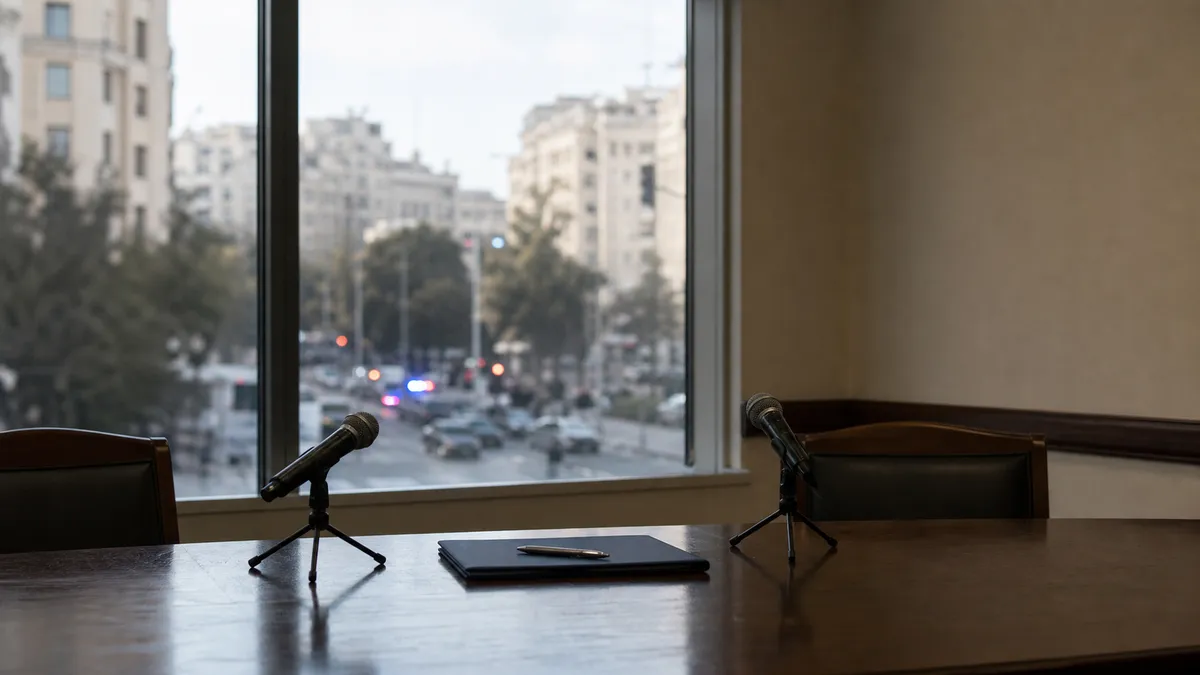
Two explosions in Damascus wounded at least 18 people on Tuesday, July 7, 2026, as French President Emmanuel Macron continued a landmark visit with Syria's new leadership.
Syria's Interior Ministry said the blasts hit central Damascus near government buildings and the hotel area connected to Macron's stay, according to Associated Press reporting. Four police officers were among the wounded. No group immediately claimed responsibility.
French officials said Macron was safe and that his meeting with Syrian President Ahmad al-Sharaa at the presidential palace continued. That detail matters because the visit was already politically significant: Macron is the first major Western leader to visit Syria since Bashar Assad was ousted in late 2024.
Why the timing matters
The attack was not only a security incident. It landed during an attempted diplomatic reset. The Guardian reported that Macron and al-Sharaa agreed to restore ambassadors after years of frozen relations, while the visit also included reconstruction and financial agreements aimed at reopening channels between Syria and Europe.
That makes the blasts a test for al-Sharaa's government. Syria's new rulers are trying to show foreign governments, businesses and aid institutions that Damascus can host diplomatic visits, protect official delegations and keep rebuilding plans on track. A bombing during a presidential visit challenges that message even when the guest is unharmed.
The location also sharpens the concern. Al-Monitor, citing Syria's state news agency and Interior Ministry, reported that the devices were found in a parked car and a trash container near the Ministry of Tourism area. AP reported that Thursday's separate explosion near the Justice Palace killed at least 10 people and wounded more than 20, making Tuesday's blasts the second major Damascus attack in less than a week.
What remains unclear
Investigators have not announced who planted the devices or whether Macron's visit was the intended target. That uncertainty should limit early conclusions. What is clear is that Syria's capital, which had been relatively calm compared with other parts of the country, is now facing a visible security challenge at the same moment the government is asking international partners to return.
For France, the visit signals a willingness to engage Syria's post-Assad leadership despite risk. For Syria, the practical question is whether diplomatic momentum can survive if security incidents keep interrupting reconstruction efforts, embassy reopening plans and investor meetings.
The next useful signals will be official updates on responsibility, arrests, and whether France or other governments change travel, embassy or reconstruction plans after the attack. Until then, the safest reading is narrow: Macron's visit continued, at least 18 people were wounded, and the blasts exposed how fragile Syria's diplomatic comeback remains.