
Fiber is having a search moment. Google said its Summergeist 2026 report found that U.S. searches for dietary fiber reached an all-time high this year, while searches for "fibermaxxing" rose 115% over the previous 90 days.
The trend is useful if it nudges people toward beans, oats, berries, vegetables, nuts, seeds, and whole grains. It is less useful if it turns fiber into another all-or-nothing wellness challenge.
The short version: add fiber steadily, drink enough water, and use real foods as the base before reaching for powders or gummies.
The short answer
Fibermaxxing means trying to raise daily fiber intake on purpose. That can be a good goal because many people do not get enough fiber, but the safer target is consistency rather than the highest possible number.
Mayo Clinic describes fiber as the part of plant foods the body cannot digest. Soluble fiber can help with cholesterol and blood sugar control, while insoluble fiber helps move material through the digestive system.
That means the best version of the trend is not about maxing out one supplement. It is about making the plate more plant-forward in a way your stomach can actually tolerate tomorrow.
Do this first
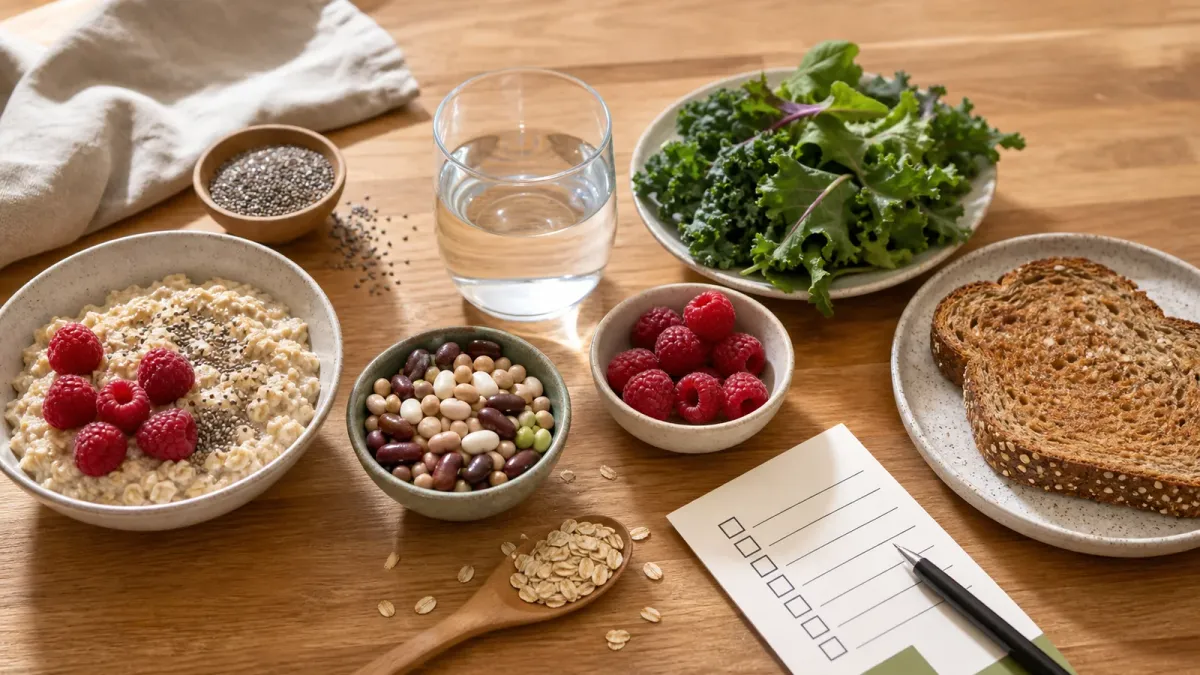
Start with one added fiber choice per day for a week: a serving of beans, lentil soup, oatmeal, raspberries, chia seeds, a baked potato with the skin, or whole-grain bread. If that feels fine, add a second daily choice.
Pair the change with water. UCLA Health notes that jumping from very little fiber to a high-fiber routine can cause gas, bloating, or constipation for some people, especially when fluid intake does not rise with it.
Check labels, but do not rely only on packaged foods. A high-fiber label can help, yet many of the best options have no label at all: produce, legumes, nuts, seeds, and whole grains.
Check these details
If you use a supplement, treat it as backup, not the whole plan. Psyllium or other fiber supplements can be useful for some people, but they do not bring the same full package of vitamins, minerals, and plant compounds that come with fiber-rich foods.
People with irritable bowel syndrome, Crohn's disease, ulcerative colitis, recent gastrointestinal surgery, or a medically restricted diet should be more careful and ask a clinician or registered dietitian before making a large change.
Common mistakes
The first mistake is adding too much too quickly. The second is chasing one hero ingredient while missing the larger pattern. The third is forgetting that fiber is only one part of a meal; protein, healthy fats, and overall calories still matter.
Another mistake is treating digestive discomfort as proof the habit is failing. Often it is a sign to slow the ramp, spread fiber across meals, and choose familiar foods before trying concentrated add-ins.
For most readers, the practical win is modest: make one daily swap that you can repeat, then build from there. Fibermaxxing works best when it stops being a challenge and becomes the normal shape of breakfast, lunch, dinner, and snacks.


