
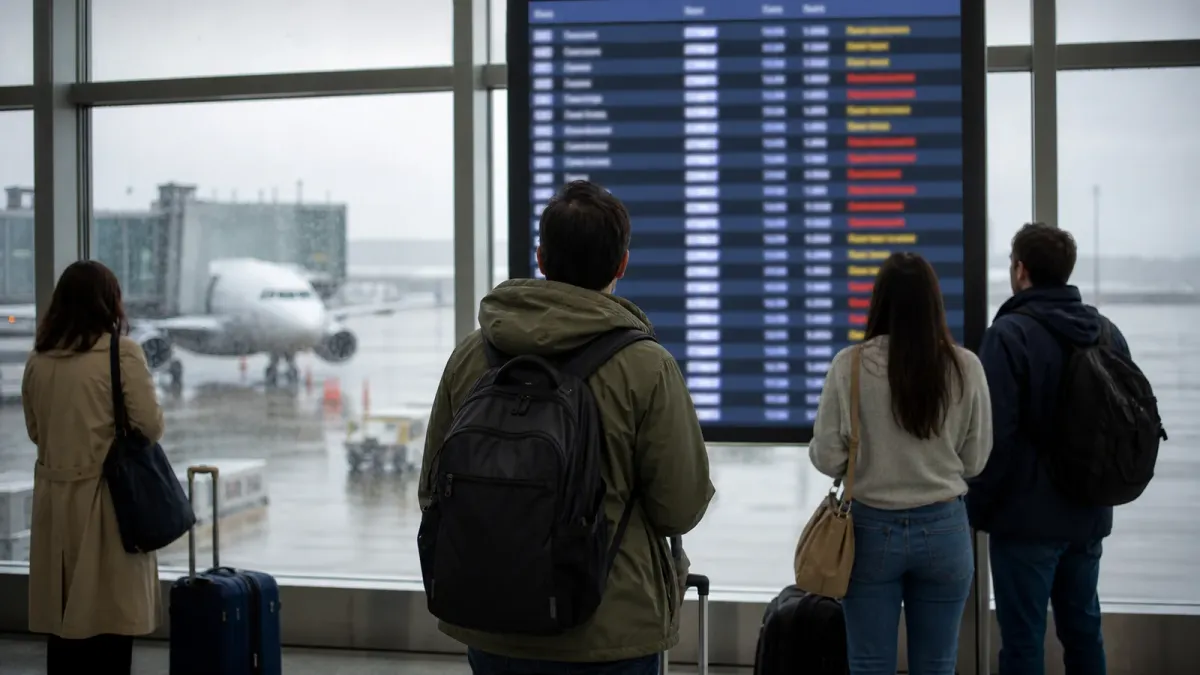
Summer storm delays are back on the travel map. The Federal Aviation Administration's operations plan for July 14, 2026 listed possible ground stops or delay programs for Houston, Atlanta, central Florida, Dallas, Phoenix and other markets, after thunderstorms disrupted Texas airports on July 13.
For travelers, the useful question is not whether every delay comes with a payout. It is which choice preserves a cash refund, when an airline may owe meal or hotel help, and what to document before accepting a new itinerary.
The short answer: a canceled flight, or a significantly delayed or significantly changed flight, can trigger a refund if you choose not to travel and do not accept a rebooking, credit, voucher or other compensation. Extra amenities are a separate question, and they often depend on whether the disruption was within the airline's control.
Do this first
- Check the cause. Look at your airline app, airport alerts and the FAA's National Airspace System Status. Weather, runway programs, air traffic constraints and airline mechanical problems can lead to different options.
- Decide whether you still want to travel. If you accept a new flight and take the trip, you generally keep the trip moving but may give up the cash refund that applies when you do not accept the alternative.
- Save screenshots. Keep the original itinerary, delay notices, cancellation notice, new arrival time, airline offer and any voucher language.
- Ask for the refund before taking a voucher. The U.S. Department of Transportation says airlines must notify travelers of refund rights when a cancellation or significant delay/change applies.
That order matters because a stressful airport decision can become a paperwork problem later. A rebooking may be the right choice if you still need to arrive, but it is different from refusing the changed trip and seeking cash back.
When a refund is the main issue
DOT's refund guidance draws a clear line around the traveler's choice. If an airline cancels a flight, the passenger is entitled to a refund when the passenger chooses not to travel and does not accept a credit, voucher or other offered compensation. The rule applies regardless of the reason for the cancellation.
DOT also says a significant delay or significant schedule change can create a refund right when the traveler declines the changed trip. The agency defines a significant delay to include arriving three hours or more late on a domestic itinerary, or six hours or more late on an international itinerary. A change in origin or destination airport, added connections, involuntary downgrades and certain accessibility-related aircraft or connection changes can also count.
If you booked directly with an airline and reject the alternative, DOT says an automatic refund is due within seven business days for credit-card purchases and within 20 calendar days for other payment methods. If you booked through an online travel agency, check which company is the merchant of record because that can determine who processes the airfare refund.
What meals and hotels depend on
Refund rights are not the same as delay amenities. DOT's airline cancellation and delay dashboard tracks what major U.S. carriers have committed to provide when the disruption is within the airline's control. Those commitments can include no-cost rebooking, meal vouchers after long waits, hotel accommodations for overnight controllable cancellations and ground transportation to and from a hotel.
Weather delays are different. Storms, air traffic restrictions and airport ground stops may leave airlines with fewer legal obligations for meals or hotels than a controllable mechanical or staffing problem. That does not mean you should avoid asking; it means you should be precise. Ask whether the airline is treating the disruption as controllable, what it will provide, and whether accepting that help affects any refund option.
Common mistakes
- Assuming a voucher is the only offer. A voucher can be useful, but it is not the same as a refund to the original payment method.
- Leaving the airport without filing a bag report. DOT says baggage-fee refund rules for significantly delayed checked bags require a mishandled baggage report with the airline.
- Relying on airport boards alone. Boards can lag. Airline notifications and FAA status pages can show different parts of the disruption.
- Deleting alerts after rebooking. Keep notices until the trip is complete and any refund or reimbursement claim is settled.
What to watch next
For same-day travel, check your airline before leaving for the airport and review FAA delay information for the airports in your route, including connections. On July 13, Chron reported Houston's Bush Intercontinental and Hobby airports were placed under thunderstorm ground stops, while FAA planning documents for July 14 still listed several storm-sensitive markets for possible initiatives.
The practical move is to separate two decisions: whether you still want transportation today, and whether the changed itinerary is significant enough that you would rather take a refund. Make that choice before clicking accept on a new flight, and keep the receipts until the airline has either flown you or paid you back.


