
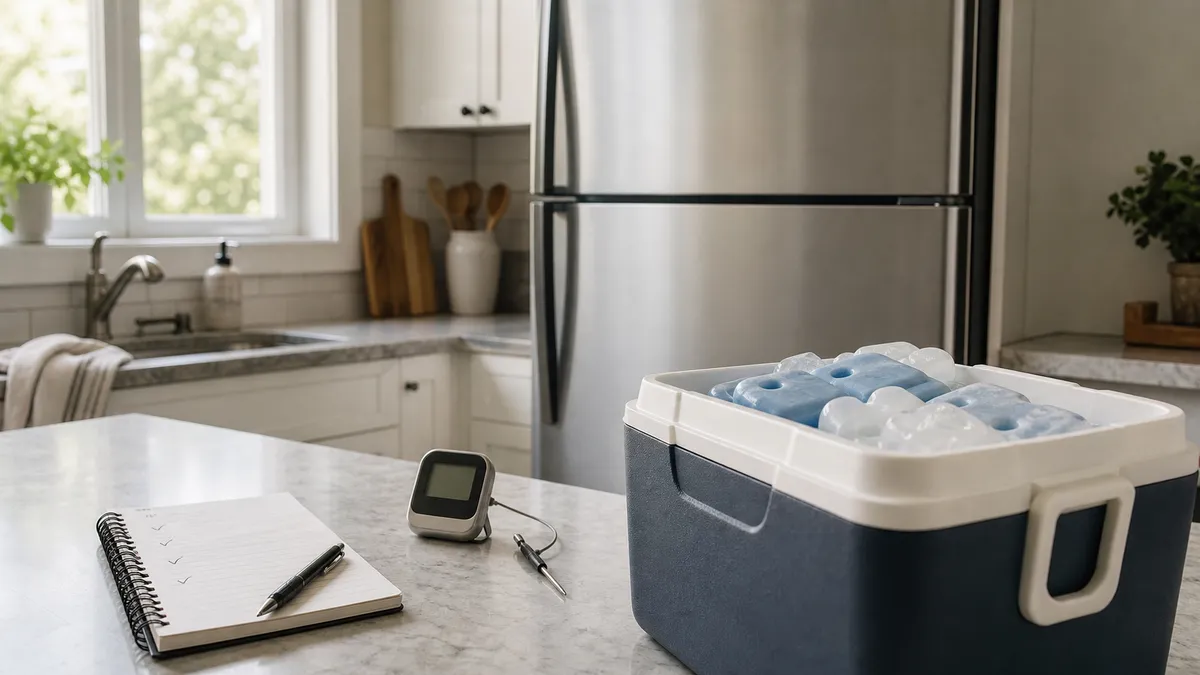
A power outage can turn a full refrigerator into a food-safety decision in a few hours. The key is not whether the food looks normal. It is how long the power has been out, how warm the food became and whether you have a reliable thermometer reading.
Federal food-safety guidance is consistent on the basic numbers. The CDC says refrigerated food should be kept at 40 Fahrenheit or below, and that a closed refrigerator generally keeps food safe for up to 4 hours. A full freezer can hold temperature for about 48 hours if the door stays closed, while a half-full freezer is closer to 24 hours.
That makes the first move simple: keep refrigerator and freezer doors closed unless you are moving food to a cooler with ice or checking a thermometer. Opening the door to inspect everything repeatedly usually shortens the safe window.
The numbers to know
If the power has been out for less than 4 hours and the refrigerator door stayed closed, refrigerated food is usually safe. Once the outage stretches past that point, perishable foods such as meat, poultry, seafood, milk, eggs, cut fruit, cut vegetables and leftovers should be discarded unless they were kept at 40 Fahrenheit or below with ice or another cold source.
For frozen food, look for two things: temperature and ice crystals. The CDC says thawed frozen food can be refrozen or cooked if it still contains ice crystals or stayed at 40 Fahrenheit or below. If it warmed above that threshold, treat perishable items as unsafe.
An appliance thermometer is the best tool because it removes guesswork. If you do not already have one, add refrigerator and freezer thermometers to the same shelf as flashlights, batteries and phone power banks before the next storm season or planned outage.
What to toss first
Start with the most perishable foods. Meat, poultry, fish, shellfish, milk, soft cheeses, eggs, cooked pasta, cooked rice, cut melon, cut leafy greens and leftovers should not be kept after they have spent 4 hours above safe refrigerator temperatures. Do not taste food to decide whether it is safe; harmful bacteria may not change smell, color or texture.
Some foods are less risky because they are shelf stable or tolerate room temperature better. Unopened condiments, whole fresh fruits, whole vegetables, bread, hard cheeses and many sealed pantry items may be fine if they were not contaminated by floodwater and did not show spoilage. When in doubt about a specific item, use the FoodSafety.gov outage chart rather than relying on memory.
How to buy time safely
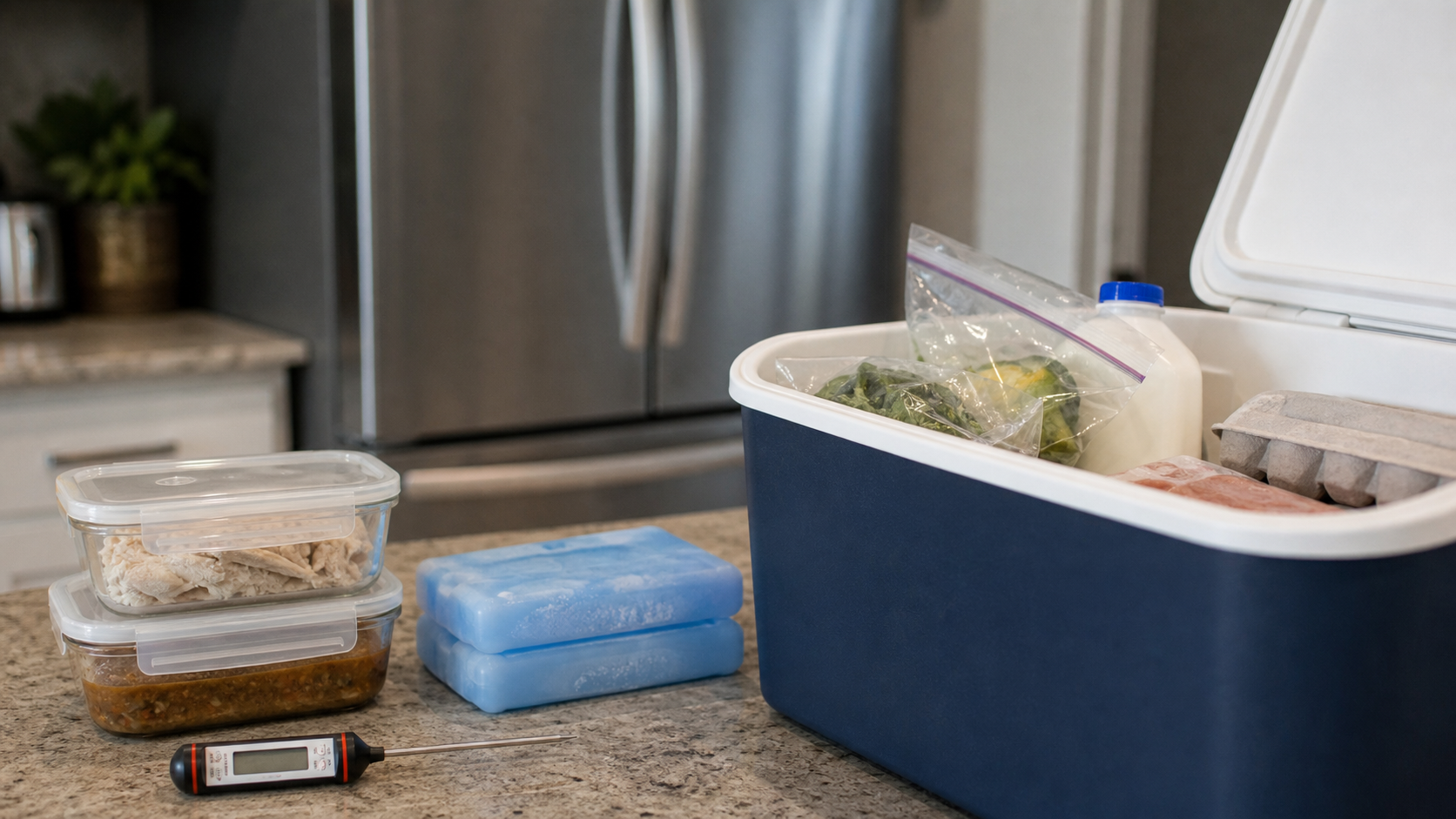
If you expect an extended outage, move the most important perishables into a cooler with ice, frozen gel packs or frozen water containers. The FDA advises planning ahead with coolers and cold sources because dry ice or block ice may be hard to find once a storm or grid failure is already underway.
Keep the cooler closed as much as possible and check temperature, not just whether ice remains. A cooler that still has some ice can still have food sitting above 40 Fahrenheit if it was packed loosely, opened often or left in a hot room.
Ready.gov also recommends having nonperishable food and water available so you do not have to keep opening cold storage while the power is out. That is a small habit that protects both the food and the household plan.
Floodwater changes the answer
Flooding adds a separate risk. The FDA says food that may have contacted floodwater should be discarded, including screw-cap bottles, snap-lid containers, home-canned foods and cardboard boxes of juice, milk or baby formula. These packages are not considered safe to clean and keep after flood exposure.
Undamaged commercially canned foods and retort pouches may be salvageable only if labels are removed, the containers are cleaned, sanitized and relabeled, and there are no leaks, swelling, rust or damage. For many households, the safer and simpler answer is to replace questionable food and keep receipts for any insurance or assistance claim.
The practical rule is this: time and temperature decide most outage food questions, but floodwater overrides the normal clock. Keep the doors closed, measure cold food when power returns, move perishables to ice if the outage is stretching long, and throw away food you cannot verify as safe.