
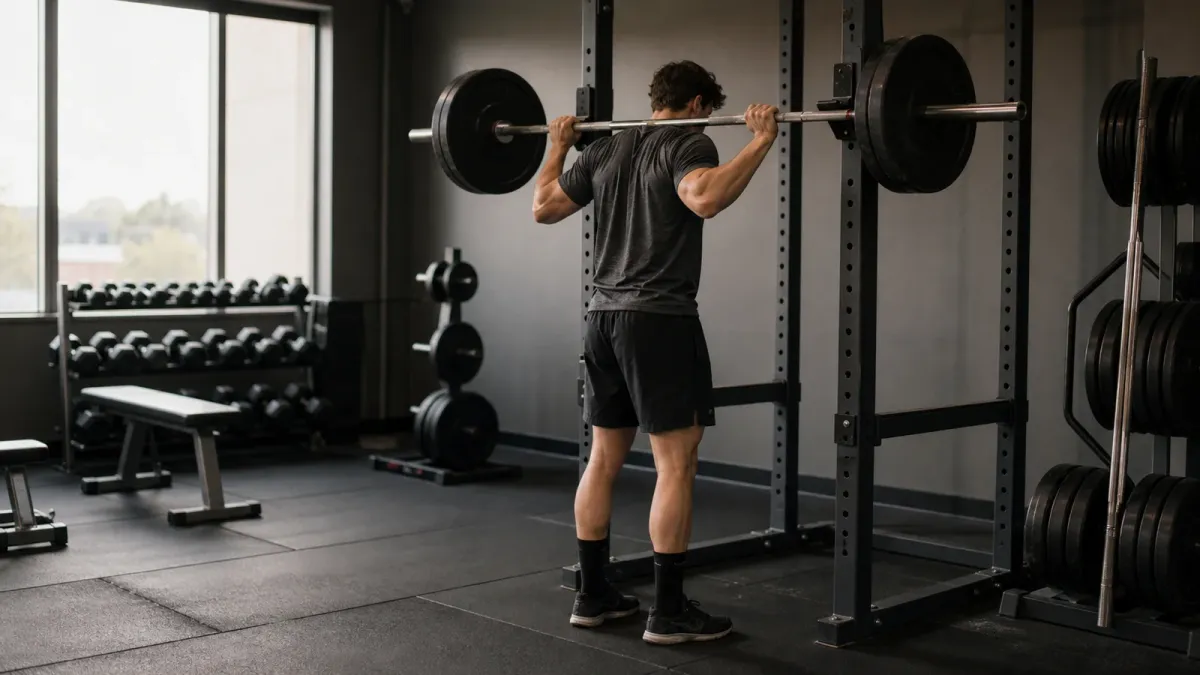
A good hypertrophy program does not need a different exercise for every muscle or an exhausting six-day split. For many healthy adults, three full-body sessions a week can deliver enough quality work to build muscle while leaving recovery days between workouts.
The plan below is a practical starting point, not a medical prescription. If you have an injury, a health condition, are pregnant or are new to lifting, ask a qualified clinician or certified trainer whether the movements and loads are appropriate for you.
The short answer
Train on three nonconsecutive days, use mostly stable compound movements, and finish most working sets with roughly one to three good repetitions still possible. Record the load and repetitions. When you reach the top of a repetition range with controlled technique, add a small amount of weight next time.
The American College of Sports Medicine's 2026 position stand synthesized 137 systematic reviews involving more than 30,000 participants. It found that resistance training improves muscle size and that hypertrophy is enhanced by higher weekly volume—about 10 sets per muscle group. It also found that machines versus free weights, complicated periodization and training to momentary failure did not consistently change outcomes for the average healthy adult.
The three-day routine
Warm up for five to 10 minutes, then do lighter practice sets for the first two exercises. The listed sets are working sets. Rest about two to three minutes after demanding compound lifts and one to two minutes after smaller isolation movements.
Workout A
- Back squat or leg press: 3 sets of 6–10 repetitions
- Flat dumbbell or machine chest press: 3 sets of 8–12
- Chest-supported row: 3 sets of 8–12
- Romanian deadlift: 2 sets of 8–12
- Lateral raise: 2 sets of 12–20
- Cable curl: 2 sets of 10–15
Workout B
- Trap-bar deadlift or hip thrust: 3 sets of 6–10
- Lat pulldown or assisted pull-up: 3 sets of 8–12
- Seated dumbbell or machine shoulder press: 3 sets of 8–12
- Bulgarian split squat: 2 sets of 8–12 per leg
- Leg curl: 2 sets of 10–15
- Cable pressdown: 2 sets of 10–15
Workout C
- Hack squat or front squat: 3 sets of 8–12
- Incline dumbbell press: 3 sets of 8–12
- Seated cable row: 3 sets of 8–12
- Back extension or hip thrust: 2 sets of 10–15
- Calf raise: 3 sets of 10–20
- Reverse fly: 2 sets of 12–20
How to progress
Choose a load that lets you complete the low end of the range with consistent form. Keep the same load until every working set reaches the top of the range. Then increase by the smallest practical amount and begin near the bottom again. This is called double progression.
A repetition should look similar from start to finish. Stop a set if technique changes sharply, pain appears or you can no longer control the weight. Muscle effort and temporary burning are normal; sharp or escalating pain is not.
For the first two weeks, beginners can perform two working sets instead of three on the main lifts. Add the remaining sets only when soreness and performance are manageable. More work is useful only when you can recover from it.
Recovery and nutrition
Muscle grows between sessions, so protect sleep and avoid turning every set into a test. Keep at least one rest day between these workouts. Light cardio and normal daily activity can fit on other days, but reduce extra work if strength, motivation or joint comfort declines for several sessions.
Total daily protein matters more than a perfect post-workout minute. The International Society of Sports Nutrition says 1.4 to 2.0 grams of protein per kilogram of body weight per day is sufficient for most exercising people seeking to build or maintain muscle. That is about 0.64 to 0.91 grams per pound. People with kidney disease or another condition affected by protein intake should follow their clinician's advice.
Common mistakes
- Changing exercises every week: Keep the main movements long enough to measure improvement.
- Adding weight before earning it: Complete the repetition range with control first.
- Taking every set to failure: It is optional, not a requirement for growth.
- Ignoring local equipment: A stable machine substitute is fine when a barbell movement is unavailable or uncomfortable.
- Adding volume too quickly: Start recoverably and adjust after several weeks, not one workout.
What to watch
Judge the routine over eight to 12 weeks. Useful signs include more repetitions with the same load, more load with the same repetitions, stable technique and gradual changes in measurements or photos taken under similar conditions. If progress stalls for several weeks, first check sleep, food intake and consistency before adding more exercises.
The best hypertrophy routine is not the most punishing one. It is the one that supplies enough challenging weekly work, allows recovery and stays simple enough to repeat.


