
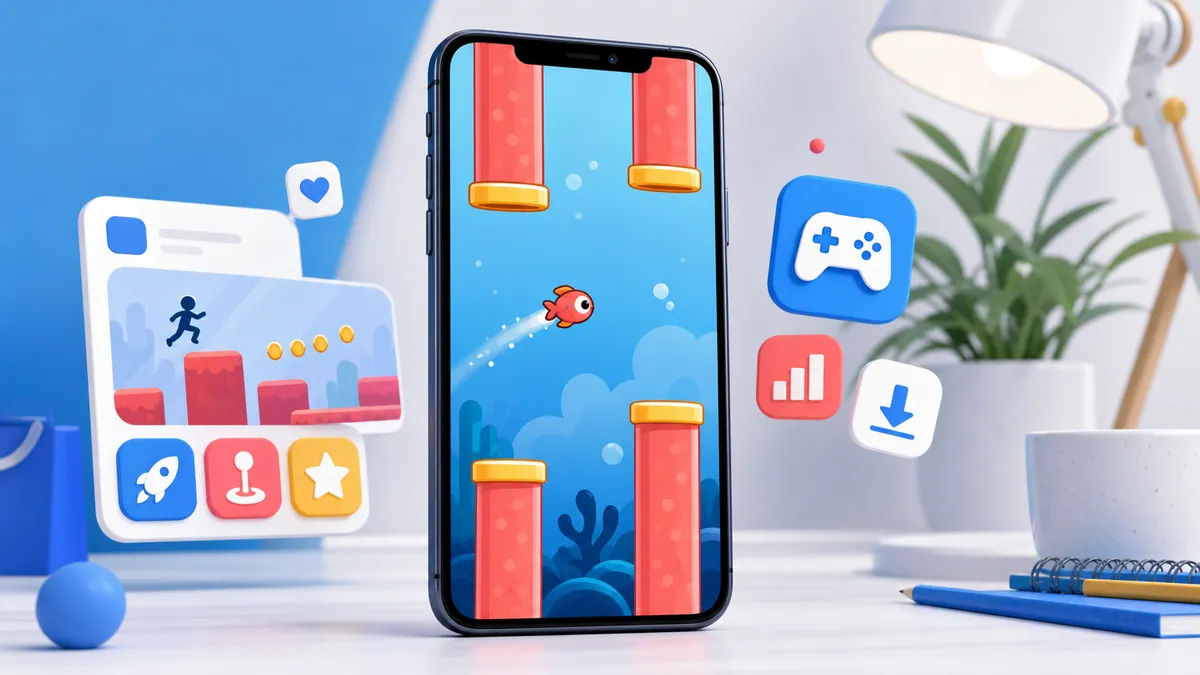
Games like Flappy Bird endure because they make the whole bargain clear in seconds: tap, survive, miss by a pixel, restart. There is no long tutorial, inventory screen or story gate between the player and the interesting part.
That simplicity is the genre's advantage. The player understands the input almost immediately, but the timing curve keeps producing small failures that feel fixable. A good run can end in five seconds or five minutes, which makes the next attempt feel cheap enough to start and meaningful enough to chase.
Flappy Bird became the shorthand for this format after its sudden rise in early 2014, when Dong Nguyen's minimalist mobile game topped app-store charts and then disappeared from major stores. The Verge reported at the time that the game was no longer available on Apple's App Store or Google Play after Nguyen said he would remove it.
What makes a Flappy-like work
The core pattern is usually narrower than people remember. A character moves forward automatically. The player controls one repeated action, usually a flap, jump, boost or float. Obstacles arrive in readable patterns. Scoring rewards distance, gaps cleared or collectibles reached. Failure is immediate, but restarting is even faster.
That loop creates a specific kind of pressure. The player is not solving a sprawling puzzle; they are trying to make one clean decision at the exact right time. The best games in this lane keep the screen legible, make collisions feel fair and avoid hiding the reason a run ended.
There is also a strong design constraint behind the fun: one-tap games need strong feedback. The tap should feel responsive, the character should move with a readable arc and the obstacles should teach rhythm without feeling mechanical. If the input is mushy or the hit boxes feel unfair, the whole experience collapses.
FishTank Runner brings the loop underwater
FishTank: Infinite Runner, an iPhone game by Abel Duarte, is a clean example of the Flappy-like formula translated into an underwater arcade runner. The App Store listing describes it as a fast-paced underwater game inspired by classic tap-to-fly play, with a fish swimming through tricky gaps, quick sessions and a best-score chase.
That framing matters because the appeal is not only nostalgia. A fish fits the input naturally: each tap can feel like staying afloat, fighting gravity and drifting through a changing lane. The underwater setting also gives the format a softer visual identity than pipes, spikes or industrial hazards, which can make repeated failure feel less harsh.
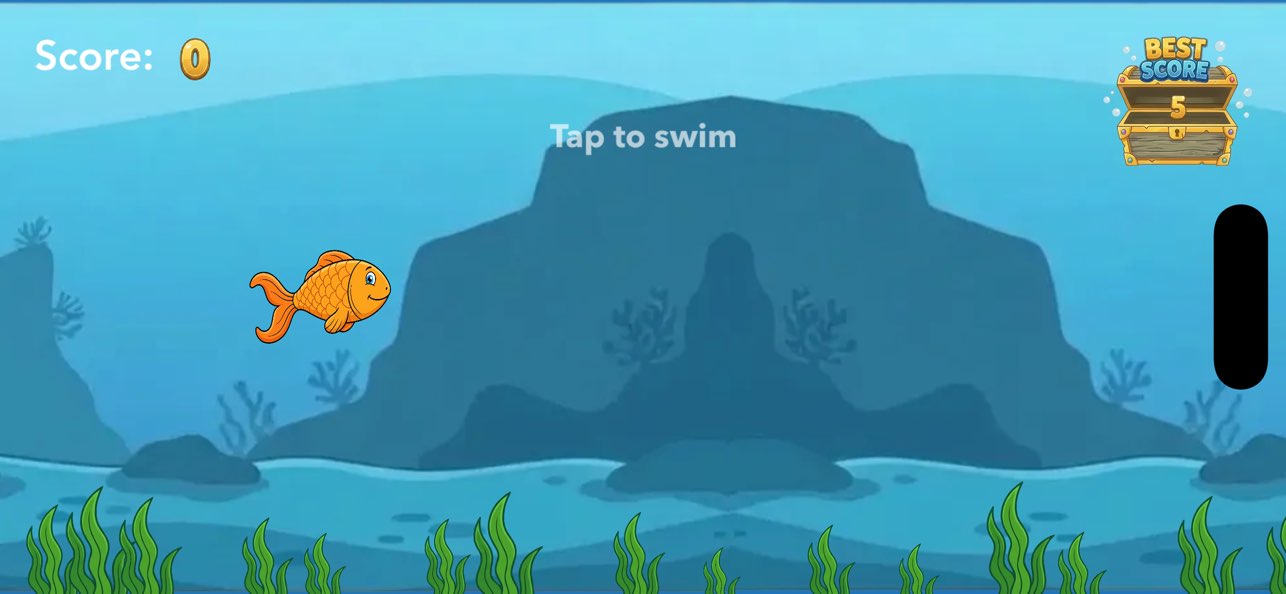
For players looking for games like Flappy Bird, FishTank Runner belongs in the same practical category: easy to understand, quick to retry and built around improving one tiny skill. The App Store page lists Abel Duarte as the developer, places the game in Casual, marks it as designed for iPhone and notes that the developer does not collect data from the app.
How to choose a good one-tap runner
Look first at restart speed. A one-tap runner should let a failed attempt turn into a new attempt almost instantly. If menus, ads or rewards interrupt every run, the design starts working against the reason people play these games in the first place.
Next, watch the first thirty seconds of play. The best entries teach the rhythm without explanation: tap too early and the character rises into danger; tap too late and it drops out of position. The screen should make that cause and effect obvious.
Finally, check whether the game gives you a reason to come back without demanding a long session. High scores, clean controls, readable obstacles and a strong theme usually matter more than a long upgrade tree. The genre works when the player can say, honestly, that one more try might be better.
Why the format keeps returning
Mobile games compete for fragmented attention. A player may have a minute in line, a few minutes on a train platform or a short break between tasks. One-tap runners fit those spaces without asking for a full commitment.
They also create a clean social hook. A score is easy to compare because everyone understands what it represents: how long you survived under the same simple rule. That is why the format keeps resurfacing even after the original Flappy Bird moment faded. It is not just a copycat structure; it is a durable answer to mobile play habits.
The best games like Flappy Bird respect the player's time and reflexes. They make the first tap obvious, the last mistake understandable and the next run tempting. That is still enough.