
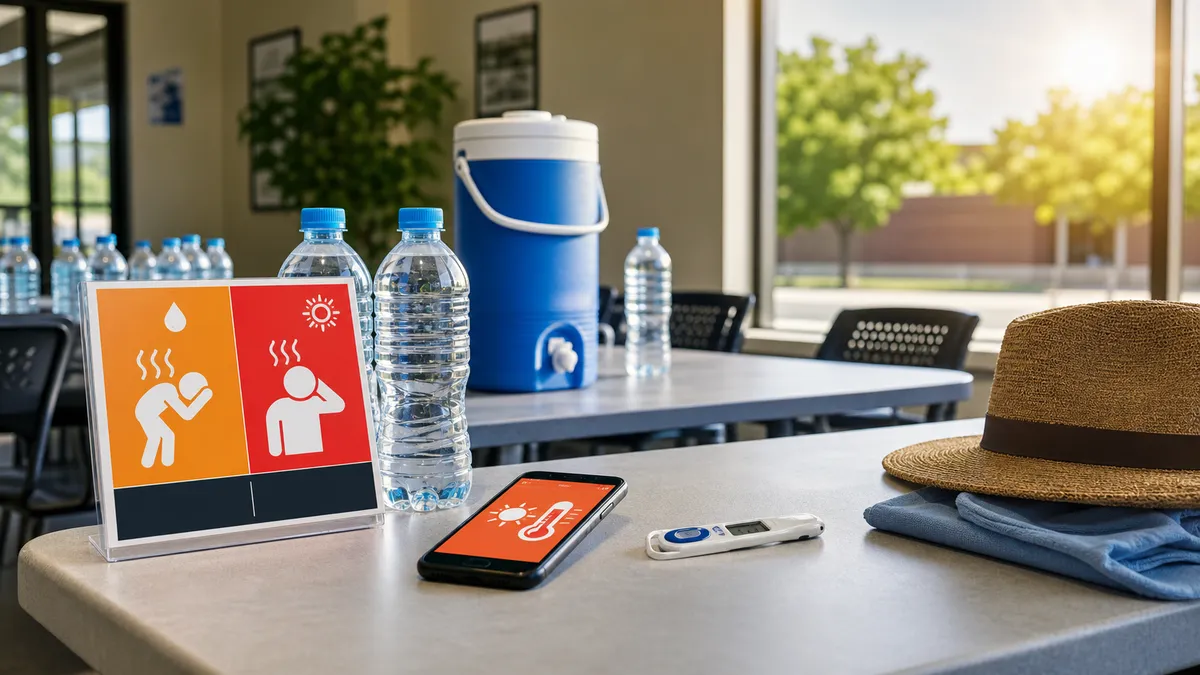
Heat illness can start quietly: a headache after yard work, dizziness at a ball field, a coworker who stops sweating normally or a parent who seems confused after too much time outside. During July heat advisories, the practical question is not whether the day feels uncomfortable. It is whether someone is sliding from heat stress into a medical emergency.
As of Monday, July 6, 2026, National Weather Service active alerts included Heat Advisories for parts of California, the Carolinas, South Florida, Puerto Rico and nearby islands. NWS says a Heat Advisory means dangerous heat is expected or occurring, even if warning-level criteria are not met, and people should consider rescheduling outdoor activity, drinking water and taking shade breaks.
The simple rule: heat exhaustion is serious and needs cooling now; heat stroke is life-threatening and needs 911 now. The line between them can move fast, especially for older adults, children, outdoor workers, athletes, people without reliable air conditioning and anyone taking medications that affect fluid balance or body temperature.
Heat exhaustion: the body is losing ground
CDC/NIOSH describes heat exhaustion as the body's response to losing too much water and salt, usually through heavy sweating. Common warning signs include headache, nausea, dizziness, weakness, irritability, thirst, heavy sweating, elevated body temperature and decreased urine output.
For heat exhaustion, the first move is to stop the activity and get the person out of the heat. A cool indoor space is best; shade is better than staying in direct sun. Loosen or remove unnecessary clothing, offer frequent small sips of cool water if the person is awake and able to drink, and use cold compresses or cool water on the head, face and neck.
Do not treat improvement as permission to restart the same activity. Heat exhaustion is a warning that the body is already struggling. NWS guidance says to seek immediate medical attention if symptoms worsen, the person vomits or symptoms last longer than one hour. CDC/NIOSH also says to get medical evaluation and call 911 if medical care is not available.
Heat stroke: call 911 first
Heat stroke is different because the body's cooling system is failing. CDC/NIOSH calls it the most serious heat-related illness and says it can cause permanent disability or death without emergency treatment. Warning signs include confusion, altered mental status, slurred speech, loss of consciousness, seizures, very high body temperature and hot, dry skin or profuse sweating.
The clearest red flag is mental status. If someone is confused, fainting, hard to wake, speaking strangely or having a seizure after heat exposure, treat it as heat stroke. Call 911, move the person to a cooler shaded area, remove outer clothing and start rapid cooling while waiting for emergency medical services.
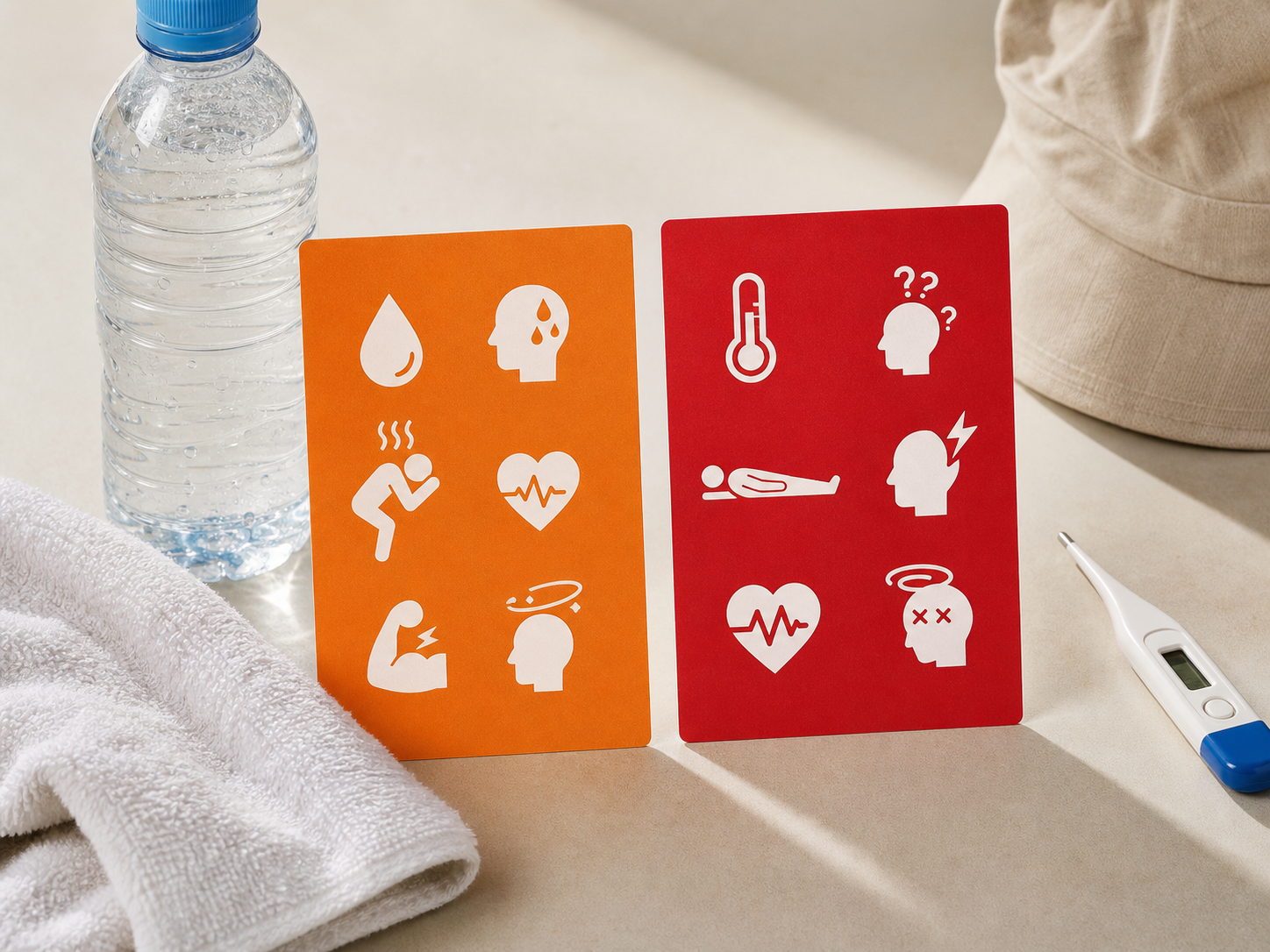
Rapid cooling can mean wetting the skin, using cold wet cloths or placing ice or cold packs around the head, neck, armpits and groin. If a cold-water or ice bath is available and can be used safely, CDC/NIOSH lists it as a fast cooling method. Stay with the person until help arrives.
What to do before symptoms start
Prevention is less dramatic but more reliable. Move hard outdoor work, exercise and errands away from the hottest part of the day when possible. Build in shade or air-conditioning breaks before anyone feels ill. Drink water regularly, but do not force fluids on someone who is confused, vomiting, unconscious or unable to swallow safely.
Check local alerts before long outdoor plans. A Heat Advisory is not just a comfort note; NWS uses it when heat conditions can make people sick. If a local office issues an Extreme Heat Warning, the agency's message is stronger: avoid outdoor activity during peak heat, stay in air conditioning as much as possible and check on family and neighbors.
The takeaway is deliberately blunt. Heavy sweating, dizziness and weakness mean stop and cool down. Vomiting, worsening symptoms or symptoms that last more than an hour mean get medical help. Confusion, fainting, seizures or loss of consciousness after heat exposure mean call 911 first, then cool the person aggressively until help arrives.