
Dangerous heat is not just a temperature problem. On July 12, 2026, the National Weather Service Weather Prediction Center said heat from the Great Basin to the northern Plains was expected to peak through Tuesday, with triple-digit highs common and some all-time records possible. For anyone planning a run, practice, shift, camp day or long afternoon outside, the useful question is not only how hot the air will be. It is which heat number fits the activity.
The short answer: use the heat index for ordinary shade-based plans and use wet bulb globe temperature, often shortened to WBGT, for full-sun, strenuous or organized outdoor activity. HeatRisk can help you judge how unusual and health-relevant the heat is for your location over the next several days.
The short answer
The heat index combines air temperature and humidity to estimate how hot conditions feel to the body. It is the number many weather apps and local forecasts use when they say it will feel like 103F. The National Weather Service notes that heat index values were designed around shady, light-wind conditions, and that full sunshine can make the apparent heat much worse.
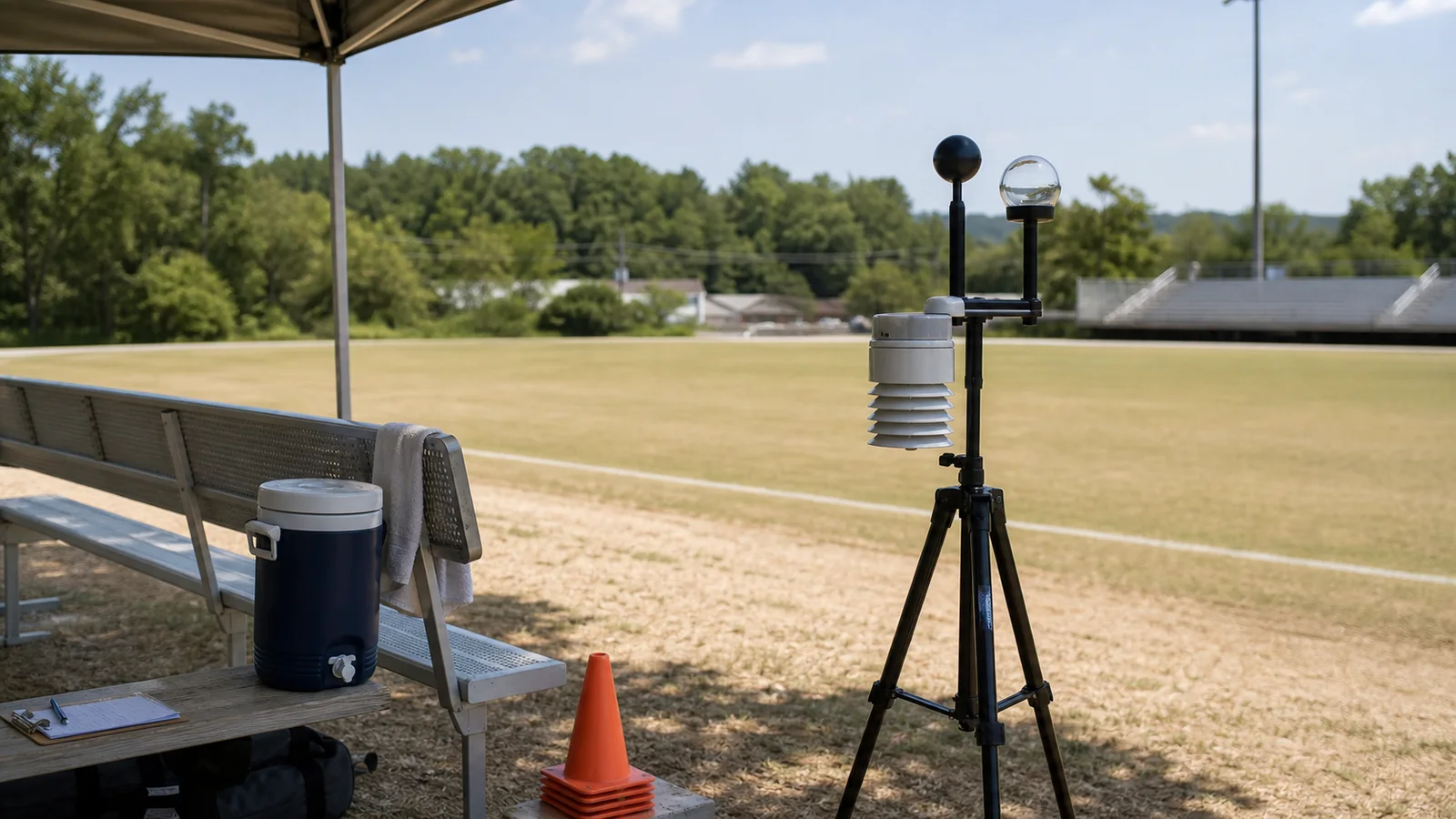
WBGT goes a step further. The National Weather Service describes it as a tool for estimating heat stress in direct sunlight, using temperature, humidity, wind and solar radiation. That matters because a breezy 95F afternoon on a partly cloudy field is not the same body load as a still 95F afternoon on turf, pavement or a worksite with radiant heat.
For a walk to the store, a shaded commute or checking whether the patio will be tolerable, the heat index usually tells you enough. For soccer practice, marching band, outdoor labor, a race, a roof job or any hard exertion in the sun, WBGT is the more relevant number to check.
What each number is good for
NWS heat forecast tools divide the problem into several signals. Heat index is familiar and easy to find. WBGT is more specialized, but it is aimed at active people and outdoor workers. HeatRisk adds another layer by comparing forecast heat with local norms, the time of year, how long the heat will last, overnight relief and health thresholds.
That means no single number answers every question. A family deciding whether to move a cookout under shade may start with the heat index. A coach deciding whether to shorten practice should look for WBGT guidance or local athletic rules. A manager planning outdoor shifts should treat weather-app numbers as a screening tool, then use workplace heat guidance when the job involves exertion, protective gear, pavement, roofs or direct sun.
Use this quick rule
Start with your activity. If you will mostly be in shade, moving lightly and able to cool off, check the heat index and local heat alerts. If you will be in direct sun, exercising, carrying loads, wearing heavy clothing, standing on hot pavement or supervising kids who may not slow down on their own, check WBGT or local activity-modification guidance.
The Centers for Disease Control and Prevention's NIOSH page says heat index can be a viable alternative when WBGT is not available, especially for many outdoor work environments without extra radiant heat sources. But it also says NIOSH recommends WBGT-based limits for hot environments when those resources are available. That is the practical hierarchy: WBGT when you can get it, heat index when you cannot, and local official guidance whenever alerts are active.
OSHA's heat guidance explains why the distinction matters at worksites. Heat stress depends on air temperature, humidity, radiant heat and air movement, plus workload, clothing and individual risk. Weather stations may not capture conditions inside a building, in direct sun, near hot equipment, on reflective surfaces or in spaces where wind is blocked. For a worksite, field or event, the forecast is a starting point, not the entire risk assessment.
Do this before outdoor plans
- Check the local heat alert, heat index and, when available, WBGT forecast before committing to the hottest part of the day.
- Move strenuous activity earlier or later when the forecast shows high heat stress.
- Build in water, shade and rest before people feel sick, not after symptoms start.
- Watch overnight lows during multi-day heat. Warm nights reduce recovery time and can make the next day harder on the body.
- For teams, camps and outdoor jobs, follow the stricter rule between local policy, league guidance, employer policy and official heat alerts.
Common mistakes
The first mistake is treating air temperature as the whole story. Humidity can make sweating less effective, sunlight can add radiant heat, and low wind can remove one of the body's cooling advantages. The second mistake is assuming a number from a shaded weather station describes a turf field, roof, parking lot or construction site. The third is waiting for a formal warning before adjusting plans. The Weather Prediction Center noted on July 12 that record heat and repeated hot days were already enough to warrant hydration, breaks and limiting outdoor activity where possible.
Another mistake is using WBGT as if it were a universal stoplight with one national cutoff. The National Weather Service says WBGT guidance can vary by region because people acclimatize differently and normal summer conditions differ. Local athletic associations, employers, event organizers and emergency managers may set specific thresholds for breaks, reduced intensity or cancellation.
Bottom line
If you only remember one thing, make the number match the setting. Heat index is the everyday feels-like check. WBGT is the outdoor exertion check. HeatRisk is the planning signal for how unusual and health-relevant the heat may be over several days. During a dangerous heat wave, checking all three is not overkill. It is the difference between knowing the forecast and knowing what to change about the day.


