
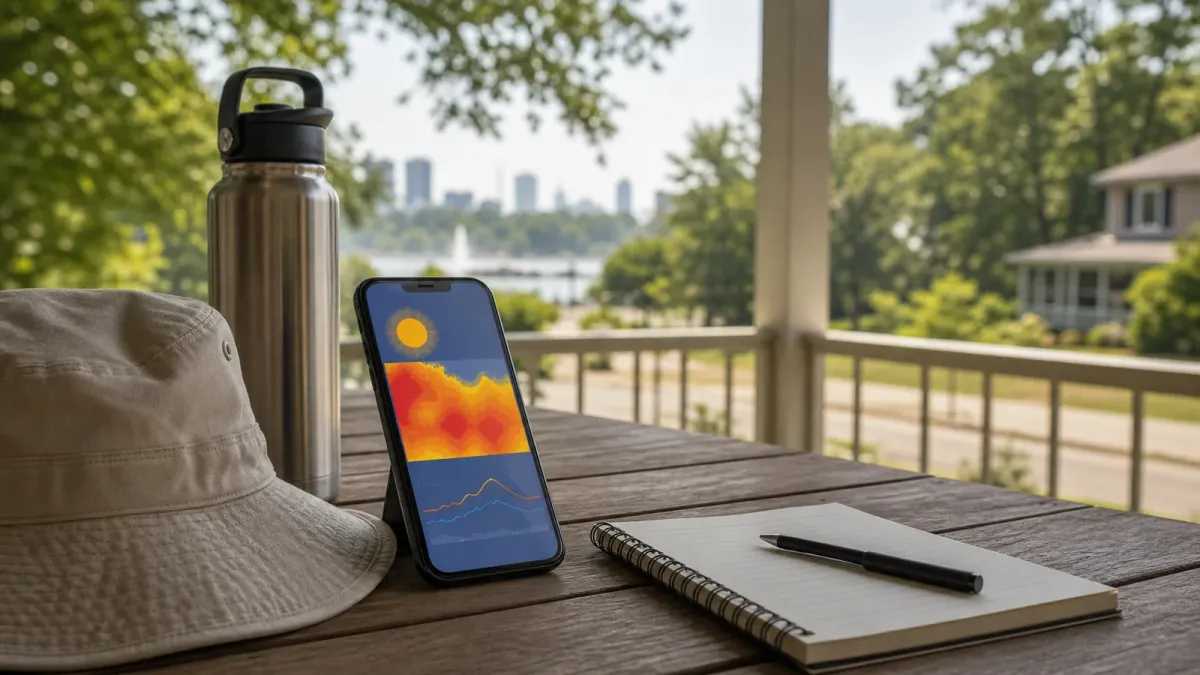
When a hot forecast gets serious, the actual air temperature is usually the least useful number on the screen. Heat index, wet-bulb globe temperature and HeatRisk all describe heat stress, but they are built for different decisions.
The short version: use heat index for a quick read on how hot it feels in shade, use wet-bulb globe temperature if you will be working or exercising in direct sun, and use HeatRisk when you are planning around several days of unusual heat.
That distinction matters during mid-July heat alerts, when humidity, sunshine, warm nights and physical effort can make the same 95-degree afternoon feel very different from one place or activity to another.
The short answer
The National Weather Service says heat index combines air temperature and relative humidity to estimate how hot it feels. It is a familiar, fast screening number, but it assumes shade and light wind. Full sunshine can make conditions feel up to 15 degrees hotter.
Wet-bulb globe temperature, or WBGT, goes further. It folds in temperature, humidity, wind, sun angle, cloud cover and solar radiation. That makes it more useful for people producing body heat outdoors: athletes, marching bands, construction crews, landscapers, farmworkers and anyone doing strenuous yard work.
HeatRisk is different again. It is a color and number forecast that looks at how unusual the heat is for a location, the time of year, how long the heat lasts, whether nights cool down, and health thresholds developed with CDC input.
If you only have time to check one forecast, match the number to the activity. A shaded walk to the store, a youth practice on turf and a multi-day stretch without cool nights are not the same kind of heat problem.
Use this rule of thumb
- Checking a casual errand: start with the heat index, then adjust for sun exposure, pavement and how long you will be outside.
- Planning practice, a run or outdoor work: check WBGT when available, especially in full sun or on fields, roofs, courts and parking lots.
- Planning the next few days: check HeatRisk to see whether repeated heat or warm nights raise concern for people who are older, very young, pregnant, medically vulnerable or without reliable cooling.
What to check before going outside
NIOSH says the OSHA-NIOSH Heat Safety Tool provides local heat index, hourly forecasts, risk levels, precautions and heat illness first-aid information. It also notes that WBGT is preferred when employers or organizers can use it, while heat index remains a practical alternative for many settings.
Do not let one low number override obvious conditions. Direct sun, heavy clothing, little breeze, dark pavement, dehydration, recent illness and hard exertion can all raise risk. The CDC lists heat exhaustion warning signs such as headache, nausea, dizziness, weakness, thirst, heavy sweating and reduced urination.
For ordinary planning, the safest habit is simple: check the forecast before the hottest part of the day, move strenuous activity earlier or later, build in shade and rest, drink water before you feel thirsty, and know where you can cool down. If someone becomes confused, passes out or has symptoms that worsen or do not improve, treat it as urgent and seek medical help.


