
The Atlantic was quiet early Tuesday, July 7, 2026, but hurricane season is still underway. The National Hurricane Center said in its 2 a.m. EDT outlook that tropical cyclone formation was not expected in the North Atlantic, Caribbean Sea or Gulf of America during the next seven days.
That quiet window is exactly when hurricane alerts are easiest to understand. Once a storm is moving toward land, the words watch, warning, storm surge and evacuation can arrive together and leave little time for sorting out what each one means.
NOAA's seasonal outlook calls for a below-normal 2026 Atlantic hurricane season, with 8 to 14 named storms, 3 to 6 hurricanes and 1 to 3 major hurricanes. A lower forecast does not mean no risk. One landfalling storm can still turn a normal week into an evacuation, power outage or flooding problem.
Watch means possible; warning means expected
The simplest distinction is this: a watch means conditions are possible, while a warning means they are expected somewhere in the alerted area. The timing matters because preparations often become unsafe once tropical-storm-force winds arrive.
The National Weather Service says a hurricane watch means hurricane conditions, with sustained winds of 74 mph or greater, are possible. The National Hurricane Center generally issues hurricane watches about 48 hours before it expects tropical-storm-force winds to begin, because boarding windows, moving boats, filling prescriptions and leaving an evacuation zone can take time.
A hurricane warning is more urgent. It means hurricane conditions are expected somewhere in the area, generally with about 36 hours before tropical-storm-force winds make final preparations difficult or dangerous. If a warning is issued, finish the plan rather than starting it: secure the home if you can do so safely, charge devices, move to the safer shelter location and leave immediately if local officials order an evacuation.
Tropical storm watches and warnings use the same possible-versus-expected structure, but for sustained winds of 39 to 73 mph. Those winds can still knock down trees, close bridges, cut power and make driving dangerous, especially before or after the hurricane core passes.

Storm surge is a separate danger
Wind category is not the whole storm. Storm surge is water pushed inland from the shoreline, and it can be life-threatening even when people focus only on wind speed. The National Weather Service says a storm surge watch means life-threatening inundation is possible, generally within 48 hours. A storm surge warning means that danger is expected, generally within 36 hours.
If a storm surge warning covers your area, check local evacuation orders first. Surge risk depends on coastline shape, storm size, tide timing, elevation and local roads, so a national map cannot replace county or city instructions. The safest move is to know your evacuation zone before a storm forms and to leave early if officials tell your zone to go.
What to do before alerts arrive
Use quiet days to make the decisions that are hardest under pressure. Ready.gov recommends knowing how you will receive alerts, where you will shelter, what evacuation route you will use and how your household will communicate if separated. Write those answers down, because cell service, power and memory can all fail during a stressful evacuation.
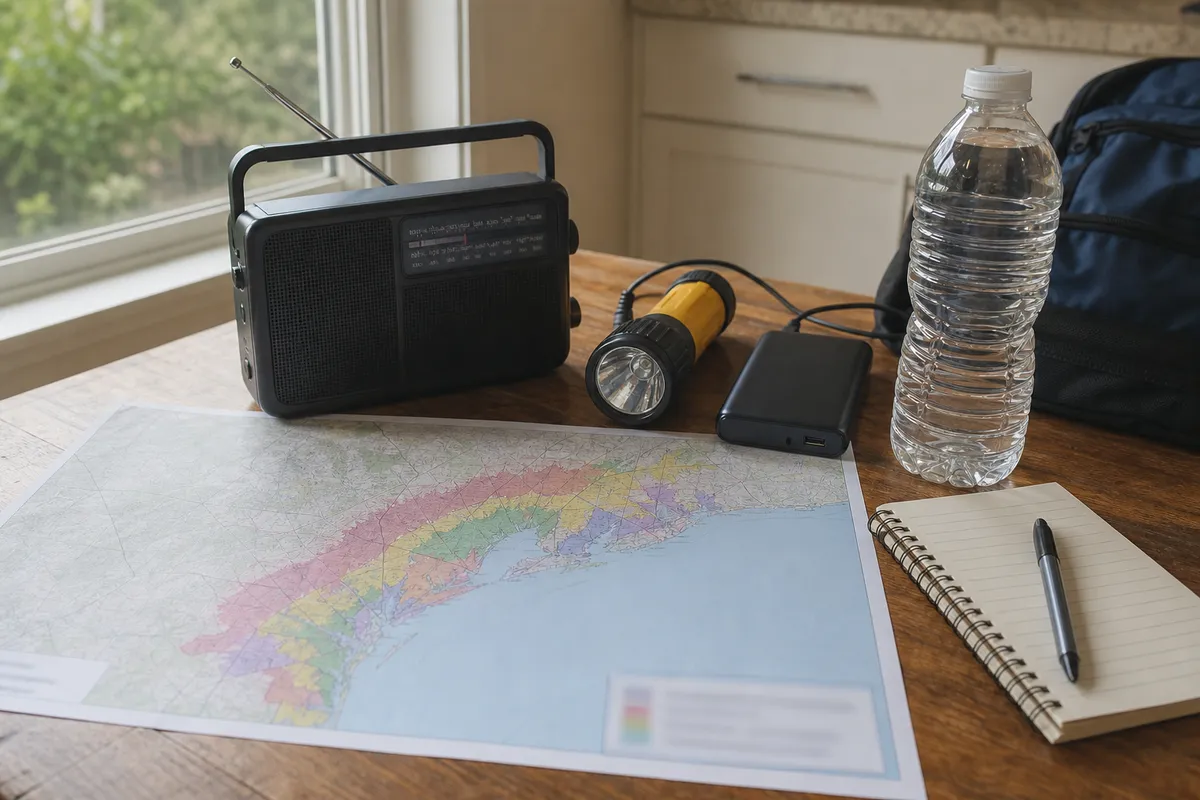
Build the first 24 hours around practical needs: medication, medical equipment, chargers, water, shelf-stable food, pet supplies, insurance documents, cash, keys and a way to receive alerts if the internet goes down. A battery or hand-crank radio can matter when phones are dead or networks are overloaded.
Also decide what would make you leave. Some households can safely shelter from wind but cannot manage stairs, heat, medical devices or flooding after the power fails. Others may need extra time for older relatives, children, pets or accessible transportation. Those details turn a watch from a vague alert into a clear deadline.
How to read the next update
When a storm does appear, check the official forecast track, watches and warnings from the National Hurricane Center, then check local emergency management for evacuation zones, shelters and road instructions. Do not treat the center line as the only risk area; hazards can extend far from the forecast track.
The useful rule is blunt. A watch means get ready while travel and outdoor work are still safer. A warning means conditions are expected and the time for optional preparation is ending. A storm surge alert means water, not wind, may decide whether staying is dangerous. If local officials order your zone to evacuate, the alert vocabulary no longer matters: go.