
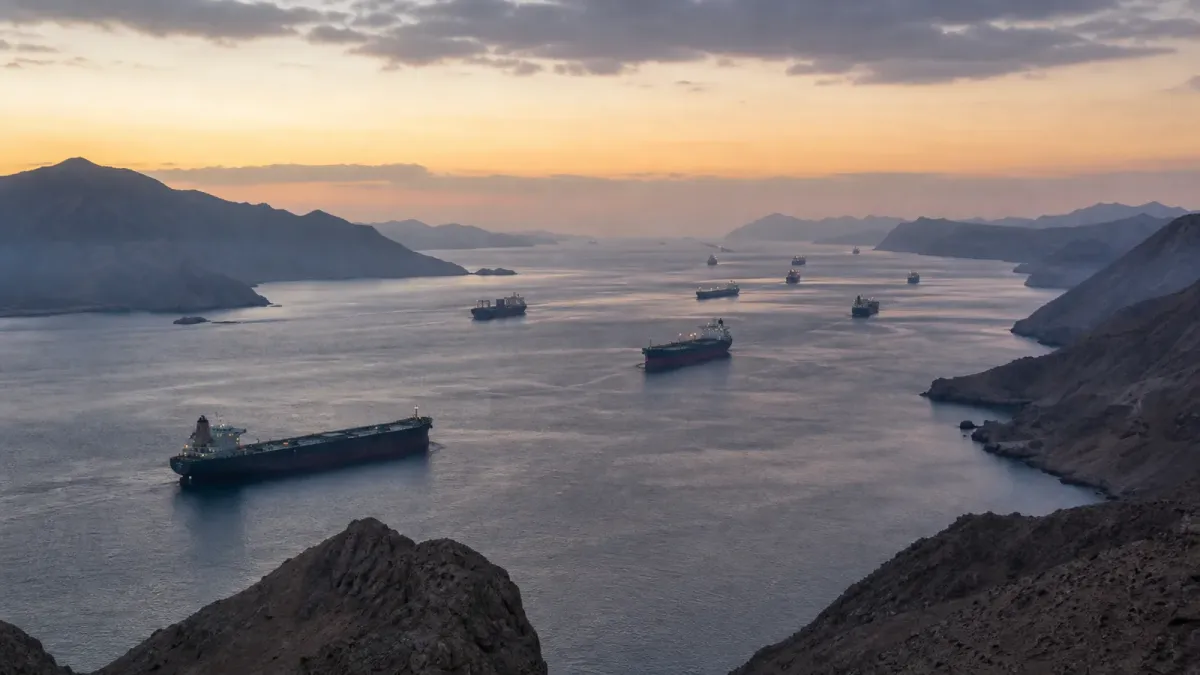
Iran's Islamic Revolutionary Guard Corps said early Sunday, July 12, that the Strait of Hormuz was closed to vessels until further notice, marking a renewed escalation around one of the world's most important energy shipping routes.
The IRGC Navy said it made the announcement after firing a warning shot at a vessel it accused of attempting to transit along an unauthorized route, according to Reuters and the Associated Press. The force tied the closure to what it called foreign interference in the region and warned of a severe response to retaliation.
The declaration came after the United States launched new strikes on Iranian targets near the strait. U.S. Central Command said those strikes responded to an Iranian attack that badly damaged a commercial cargo ship, while Iran reported further attacks of its own in the region.
What is confirmed
Iran has publicly declared the waterway closed again, and independent news organizations have confirmed the announcement through Iranian state media. The AP reported that the vessel at the center of the latest incident was struck after taking a route Iran did not authorize. Officials had not immediately released a complete public account of the ship's identity, crew condition or precise location when the declaration was made.
What is not yet independently clear is whether Iran has physically stopped every vessel from passing through every lane. Maritime conditions can change quickly, and an official closure declaration does not by itself establish the real-time position of all commercial traffic. Ship operators are likely to rely on navigational warnings, security advisers and direct communications before attempting a transit.
Why the strait matters
The Strait of Hormuz connects the Persian Gulf with the Gulf of Oman and the wider Arabian Sea. It is a critical passage for oil, liquefied natural gas and commercial cargo from Gulf producers. Disruption can raise tanker insurance costs, delay deliveries and add pressure to fuel prices even when some ships continue moving.
The latest declaration also puts additional strain on efforts to preserve a ceasefire between Iran and the United States. Washington had demanded that Tehran clearly state the strait was open and stop attacks on commercial shipping. Sunday's announcement moves in the opposite direction and increases the possibility of more military action near civilian shipping lanes.
What to watch next
The most important near-term evidence will come from official maritime alerts and verified vessel movement, not from political statements alone. Watch for notices from international shipping authorities, flag states, port operators and naval forces about whether transit is suspended, rerouted or proceeding under tighter controls.
Energy markets will also be closely watched when trading resumes. A prolonged or effectively enforced closure would carry much larger consequences than a short-lived declaration, particularly if it interrupts tanker traffic or prompts operators to keep vessels outside the waterway.
This is a developing story. Details about the affected vessel, the precise status of shipping lanes and the scope of the latest U.S. and Iranian strikes may change as authorities release new information.


