
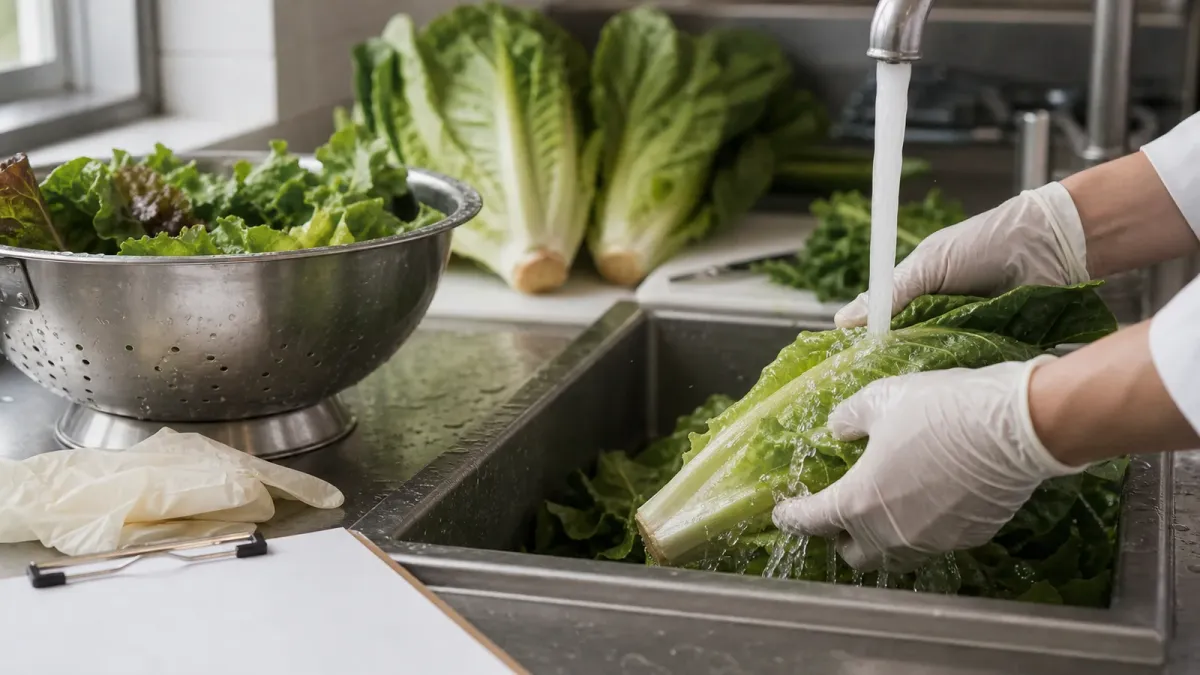
Michigan health officials said on Monday, July 13, 2026, that early investigation results in the state's cyclosporiasis outbreak point to lettuce or salad greens as a possible source, while stressing that no specific product, grower or supplier has been identified.
The Michigan Department of Health and Human Services reported 2,640 cases as of July 13. The agency said other food items have not been ruled out, and the investigation remains active.
What changed
The new guidance is more specific than earlier public alerts. MDHHS said lettuce has repeatedly appeared in interviews with people who tested positive, and it is now advising people in impacted counties, restaurants and commercial kitchens to take extra precautions with lettuce and salad greens.
That does not mean a recall has been announced. The agency said current results point to a possible source, not a confirmed one. It also said recreational water exposure, such as swimming in lakes, is not a recognized risk factor for cyclosporiasis and is not currently linked to this outbreak.
The federal picture is still catching up. The CDC reported 843 domestically acquired cases across 31 states as of July 9, with 86 hospitalizations and no deaths reported. CDC notes that state health departments may have more timely local information.
Do this first
- In affected Michigan counties, consider buying whole heads of lettuce instead of pre-washed bagged lettuce or salad kits.
- Discard the outer two to three layers of leaves before preparing lettuce.
- Wash remaining inner leaves under clean running water, even if you plan to peel or trim produce.
- Cook greens when practical. MDHHS says heating food to at least 158 F, or 70 C, kills Cyclospora.
- Do not assume a pre-washed label removes risk. MDHHS says rewashing bagged lettuce is unlikely to remove Cyclospora reliably.
Check symptoms
Cyclosporiasis is an intestinal illness caused by the Cyclospora parasite. Symptoms can include frequent watery diarrhea, nausea, stomach cramps, appetite loss, weight loss and fatigue. Symptoms may take up to two weeks to appear after exposure, which makes traceback investigations slower.
People with frequent watery diarrhea should contact a health care provider and ask specifically about Cyclospora testing, MDHHS said. Routine stool tests may miss the parasite. Treatment generally involves antibiotics, rest and fluids to prevent dehydration.
What is still unknown
Officials have not named a lettuce type, brand, supplier, farm or distributor. They also have not ruled out other foods. MDHHS said it has completed more than 1,000 interviews and is working with local health departments, CDC and FDA partners on traceback investigations.
The practical takeaway is narrow: follow local health department updates, take extra care with raw lettuce and salad greens in affected areas, and seek testing if symptoms persist. The investigation can still change as new interviews, lab results and supply-chain information come in.


