
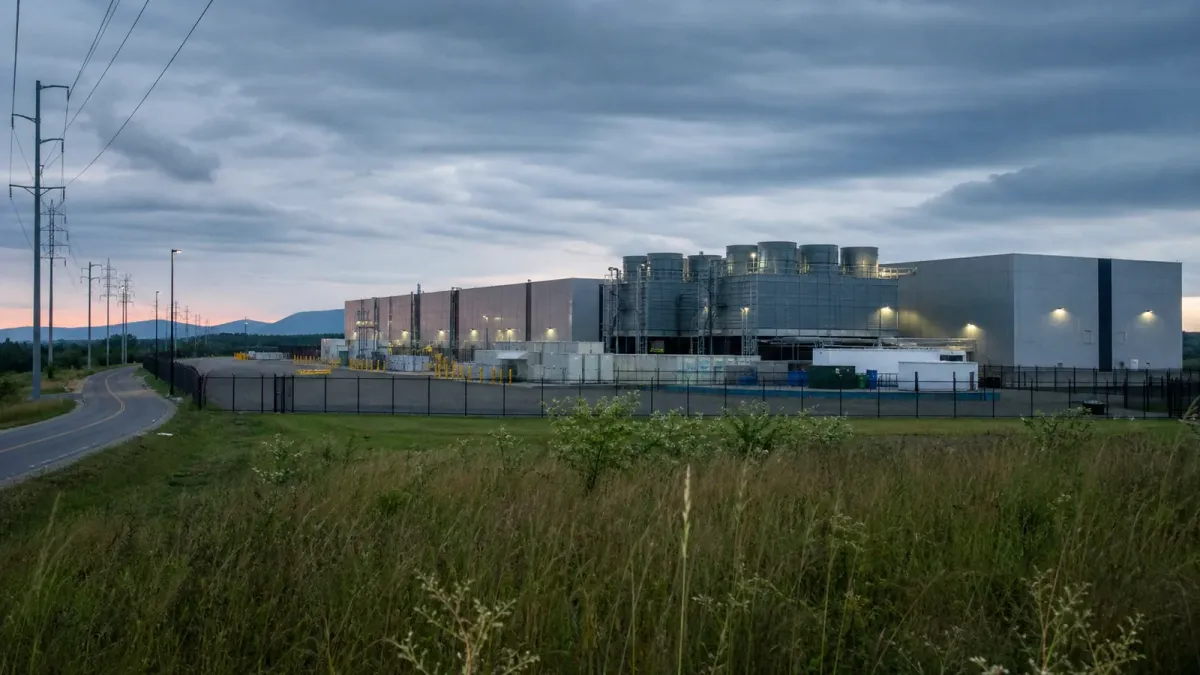
New York Governor Kathy Hochul signed an executive order on Tuesday, July 14, 2026, pausing new state environmental permits for large hyperscale data centers for up to one year while the state writes rules for their energy, water and community impacts.
The order is aimed at facilities that can consume 50 megawatts of electricity or more, a threshold meant to capture the largest AI and cloud-computing projects without sweeping in smaller institutional computing sites used for research, education or medical care.
The move makes New York the first state to impose a statewide pause on new large data centers, according to the governor's office and AP News. It also puts the state into a national fight over whether AI infrastructure should move as quickly as companies want, or slow down until utility costs, grid upgrades and local effects are clearer.
What changed
Executive Order No. 62 directs the Department of Public Service to examine data-center interconnection impacts and begin a formal public process for a generic environmental impact statement. That review is expected to cover energy demand, water use and quality, air quality, disproportionate impacts on disadvantaged communities, and noise.
The governor's office says the one-year pause is meant to protect ratepayers from paying for transmission and infrastructure buildouts driven by private large-load projects. The order cites nearly 12 gigawatts of data-center load requests in the New York Independent System Operator interconnection queue as of May 2026, with more than 8 gigawatts entering the queue in 2025 alone.
For consumers, the practical issue is not whether a data center gets built next door. It is whether the power lines, substations, cooling water and backup generation needed for very large projects end up affecting electric bills, local resources or neighborhood quality of life.
Who is affected
The order covers large data-center projects with server, cooling, cybersecurity and related infrastructure that provide storage, cloud computing or content delivery on a continuous basis and can consume at least 50 megawatts. It excludes facilities primarily used for manufacturing, academic research, quantum or biomedical research, Empire AI, or medical care.
That distinction matters because a hospital server room or university research cluster is not the same policy problem as a hyperscale site built to serve national cloud or AI workloads. The order is focused on the largest projects whose energy and water needs can reshape local infrastructure planning.
Why it matters
Data centers have become one of the most visible physical costs of the AI boom. Companies need more computing capacity for model training, cloud services, streaming and enterprise tools, but many communities are asking who pays when a project requires new power infrastructure or strains water supplies.
AP reported that the New York decision lands as other states and local governments weigh limits or pauses of their own. The Verge noted that the executive order is narrower than a bill passed by New York lawmakers that used a lower 20-megawatt threshold and is still awaiting Hochul's decision.
The tradeoff is direct. A strict pause may slow investment and jobs tied to AI infrastructure. A looser approach may leave utilities and communities reacting project by project without consistent standards for grid costs, water reuse, noise, air quality and local benefits.
What happens next
State agencies now have to turn the pause into rules. The Department of Public Service, the Department of Environmental Conservation and Empire State Development are directed to coordinate with other agencies and authorities, including the Department of Health, NYSERDA, the Long Island Power Authority and NYISO.
Developers, utilities, local governments and residents should watch the public-review process, the state's eventual permitting standards, and Hochul's decision on the broader legislature-approved data-center bill. The outcome could become a template for other states trying to balance AI infrastructure growth against power costs and environmental risk.


