
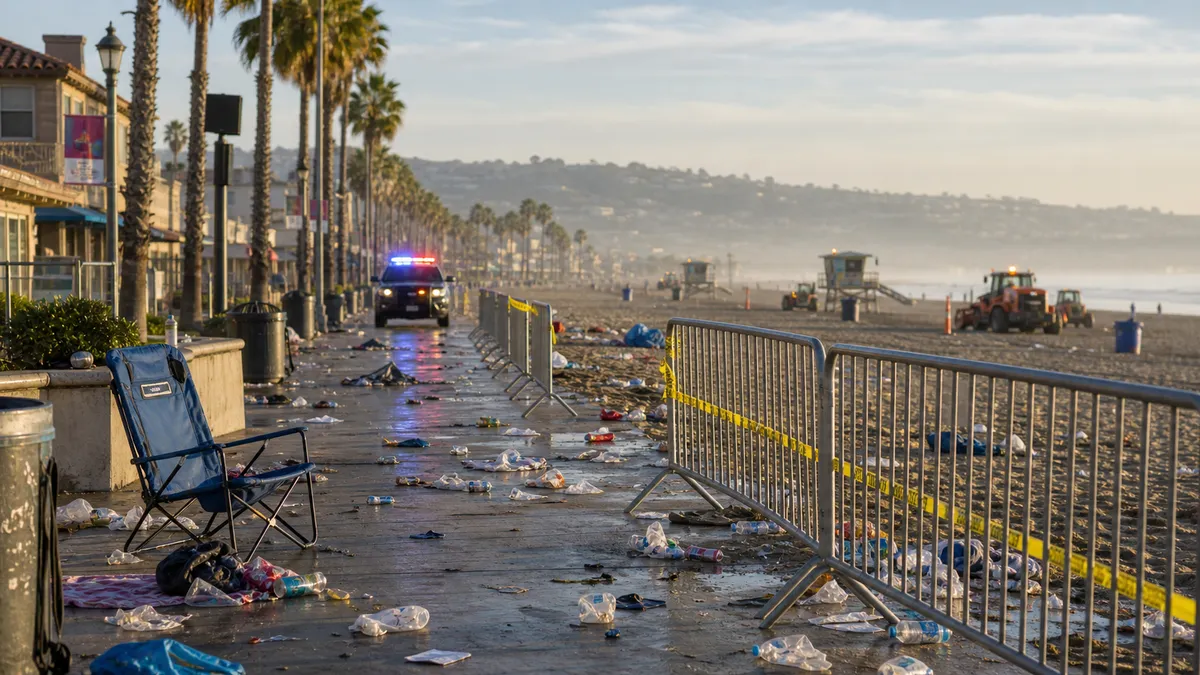
Newport Beach entered the Fourth of July weekend with warning signs already posted: fireworks were banned, fines were tripled in designated safety zones, and the city was telling visitors that rowdy behavior would not be tolerated. By the end of the holiday rush, the city had become a case study in how quickly a beach celebration can turn into a public-safety problem when crowds, fireworks and social media momentum collide.
Local reporting on July 5 said more than 400 people were arrested across a 36-hour period, citing Newport Beach Mayor Lauren Kleiman. Earlier reports from ABC7 said at least 100 people had been taken into custody after fights broke out, illegal fireworks were thrown and officers were injured. The Daily Pilot reported that police described a crowd of close to 3,000 people causing disruption from 29th Street to 35th Street.
The details are still being sorted, but the pattern is already clear enough to matter beyond Newport Beach. A holiday crowd did not simply gather, celebrate and disperse. Officials and local reports described fights, fireworks being launched in dangerous ways, looting or vandalism at a nearby Pavilions market, street closures, mounted police, cleanup crews and a city preparing for a post-weekend review.
Why this became bigger than one beach party
Newport Beach is used to heavy summer traffic. The difference this year, according to city leaders quoted by the Los Angeles Times, was the scale and speed of youth turnout linked to social media. The city had already launched a "Not in Newport" campaign before the holiday, warning that illegal fireworks, public intoxication and other violations would bring consequences.
Those preparations show the tension now facing popular destinations. A city can plan for a holiday weekend, but an online meetup can change the size, timing and behavior of a crowd faster than traditional enforcement plans can adapt. By the time a gathering becomes visible on short-form video apps or social feeds, it may already be too large for routine beach patrols and traffic control.
Newport Beach also tried to use penalties as deterrence. The city's Fourth of July information page said fireworks are prohibited, including so-called safe and sane fireworks purchased elsewhere, and that safety enhancement zones allow steeper penalties during the holiday period. Local reporting also noted a one-strike rule for short-term lodging permits tied to violations during enhanced safety periods.

The lesson for other cities
The practical question for Newport Beach is not only how many people were arrested. It is whether the city's early warnings, rental rules, beach restrictions and enforcement zones matched the way the crowd actually formed. If the gathering was amplified online, city planning may need to track public signals earlier, coordinate with rental hosts more directly and prepare flexible street closures before a crowd becomes unmanageable.
That does not mean every viral gathering should be treated as a riot in waiting. Overreaction can burden residents, visitors and lawful celebrations. But underreaction can leave officers, workers, businesses and young visitors in chaotic conditions where a small number of people can set the tone for everyone else.
There is also a communications lesson. Newport Beach's official page told visitors not to call 911 just because they heard or saw fireworks, and instead gave a non-emergency police number for exact locations. That kind of instruction matters during a holiday surge, when dispatchers can be overwhelmed by duplicate calls while officers are dealing with active fights or injuries.
What happens next
Officials are expected to review what happened over the weekend, and the answers should be specific. How many arrests were tied to violence, fireworks, curfew, public intoxication or failure to disperse? How many people were minors or visitors from outside the city? Did short-term rentals play a meaningful role? Did warnings reach the people most likely to show up?
For readers outside Orange County, the takeaway is simple: holiday destinations are now managing both physical crowds and online crowd formation. Newport Beach had rules in place before July Fourth. The challenge was that a trend can move faster than a municipal playbook, especially when visitors decide where to go in group chats and social feeds hours before sunset.