
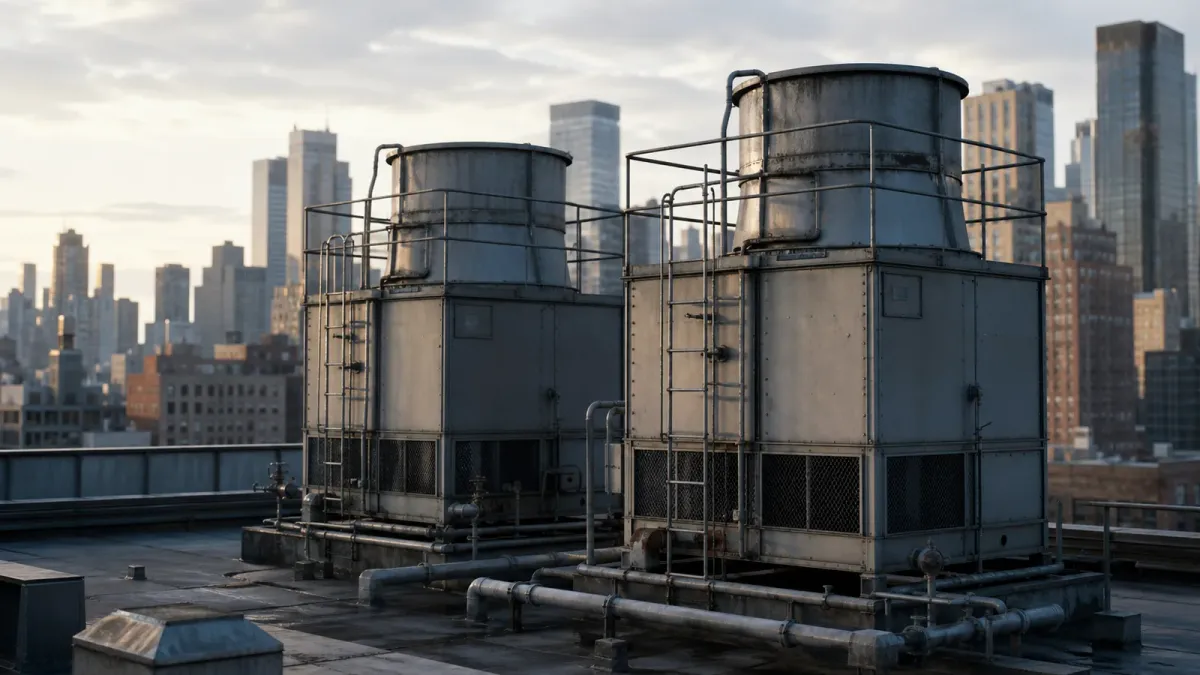
New York City’s Upper East Side Legionnaires’ disease outbreak has reached at least 54 confirmed cases, including 18 people currently hospitalized, city health officials said Friday night, July 10. No deaths have been reported.
Initial screening found Legionella bacteria in cooling towers at 31 buildings. Nineteen had completed full cleaning and disinfection by Friday night, while the remaining 12 were ordered to finish remediation by the end of Saturday, July 11. Officials cautioned that a positive screening result does not prove a particular tower caused the illnesses; confirmatory testing and the search for the source are continuing.
What changed
The new case count is more than double the 23 cases reported on July 6. The city says it sampled and tested roughly 183 cooling-tower systems between East 76th and East 97th streets after identifying the cluster on July 2.
The affected area includes ZIP codes 10028, 10128 and 10075, covering parts of Carnegie Hill and Yorkville. The city released the addresses of buildings with positive initial tests and ordered their towers drained, cleaned and disinfected without waiting for slower culture-test results.
Cooling towers release fine water mist outdoors. Legionnaires’ disease can develop when people breathe mist containing Legionella bacteria, but it generally does not spread from one person to another.
What residents and visitors should know
City officials say the outbreak is not an issue with building plumbing. Tap water remains safe for drinking, cooking, bathing and showering, and people can continue using window units, indoor air conditioning and city cooling centers.
Anyone who lives, works or has visited the affected Upper East Side area since late June should watch for fever, cough, muscle aches, headache or shortness of breath. Symptoms usually develop two to 14 days after exposure, according to the Centers for Disease Control and Prevention.
Adults age 50 and older, current or former smokers, and people with chronic lung disease, weakened immune systems or other underlying conditions face higher risk. People in the affected area who develop symptoms should contact a health care provider promptly and mention the possible exposure. Legionnaires’ disease is a serious form of pneumonia, but it can be treated with antibiotics, and early treatment improves the chances of recovery.
What remains unknown
Investigators have not confirmed which cooling tower or towers released the bacteria that caused the illnesses. A positive PCR screen can detect genetic material from Legionella without establishing that live bacteria from that location infected patients.
The city says additional laboratory work is underway and the list of buildings may change as results are reviewed. Required remediation reduces the possibility of continued exposure while investigators compare environmental samples with patient information.
People should not assume that entering a listed building creates an indoor exposure. The city says the concern is outdoor mist from cooling towers, and a building’s positive screen alone does not establish it as the outbreak source.
What happens next
The 12 buildings that had not finished remediation Friday night face a Saturday deadline. Health officials will continue monitoring new cases, reviewing confirmatory cultures and updating the public as the source investigation develops.


