
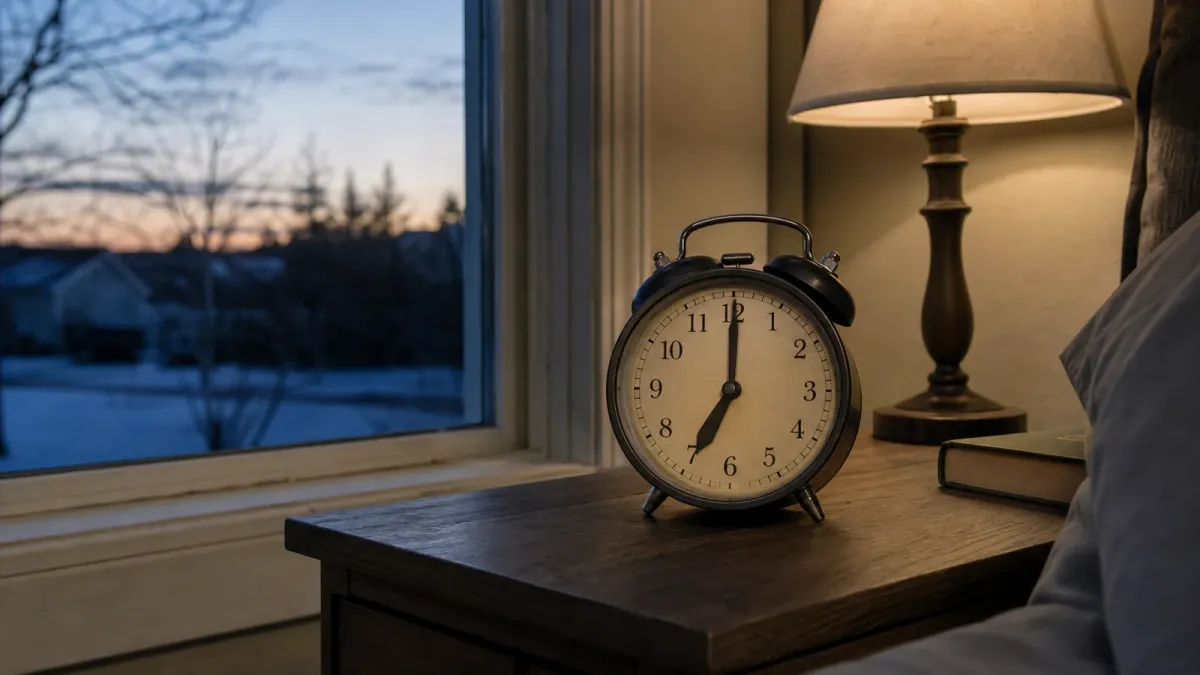
The House voted 308–117 on Tuesday, July 14, to make daylight saving time permanent across most of the United States. The bipartisan vote gets the public’s frustration exactly right: changing the clocks twice a year is a needless disruption. But it turns the correct complaint into the wrong solution.
Congress should stop the clock changes. It should keep permanent standard time instead.
The distinction matters. Permanent daylight saving time does not create an extra hour of sunlight; it moves the clock label attached to the light we already have. The reward is a later sunset by the clock. The price is a later sunrise, most noticeably during winter, when many children, commuters and early-shift workers would begin their day in deeper darkness.
Ending the switch is still the right goal
The strongest case for reform is not really about evenings. It is about eliminating the abrupt spring transition. CDC’s National Institute for Occupational Safety and Health says the shift can shorten and disrupt sleep and is associated with adverse health and safety effects. The agency notes evidence of increased heart-attack risk and a rise in fatal traffic crashes after the spring change.
That is reason to choose one clock and stick with it. It is not evidence that daylight time is the better clock to keep all year.
The popular option is not the biological one
The American Academy of Sleep Medicine supports ending seasonal changes but recommends permanent standard time because morning light better aligns the clock with human circadian biology. Light in the morning helps set the body’s sleep-wake rhythm; pushing sunrise later while extending evening light pulls in the opposite direction.
Supporters of the House bill have a fair argument. Longer clock-time evenings can feel more useful for recreation, shopping and family life. A 2025 AP-NORC poll found that 56% of adults preferred permanent daylight saving time when forced to choose, while roughly four in 10 preferred standard time. Political appeal is obvious, especially when the vote can be sold as “more daylight.”
But public policy should describe the tradeoff honestly. Congress is not adding daylight. It is deciding whether winter sunlight is more valuable before work and school or afterward. My view is that darker winter mornings impose the less visible but more consequential cost, particularly for people who cannot simply move their schedules later.
What happens next
The measure still needs Senate approval before it can reach the president. The House Energy and Commerce Committee says H.R. 139 would establish permanent daylight saving time, while states with qualifying exemptions could remain on standard time. The Senate has backed similar legislation before, in 2022, only to see it stall in the House; this time, the uncertainty has switched chambers.
Lawmakers should use that pause to separate two questions that keep getting bundled together. Should Americans stop changing the clocks? Yes. Which clock should remain? Standard time. A durable reform should be built around sleep, safety and the winter morning—not simply the evening most voters imagine in July.


