
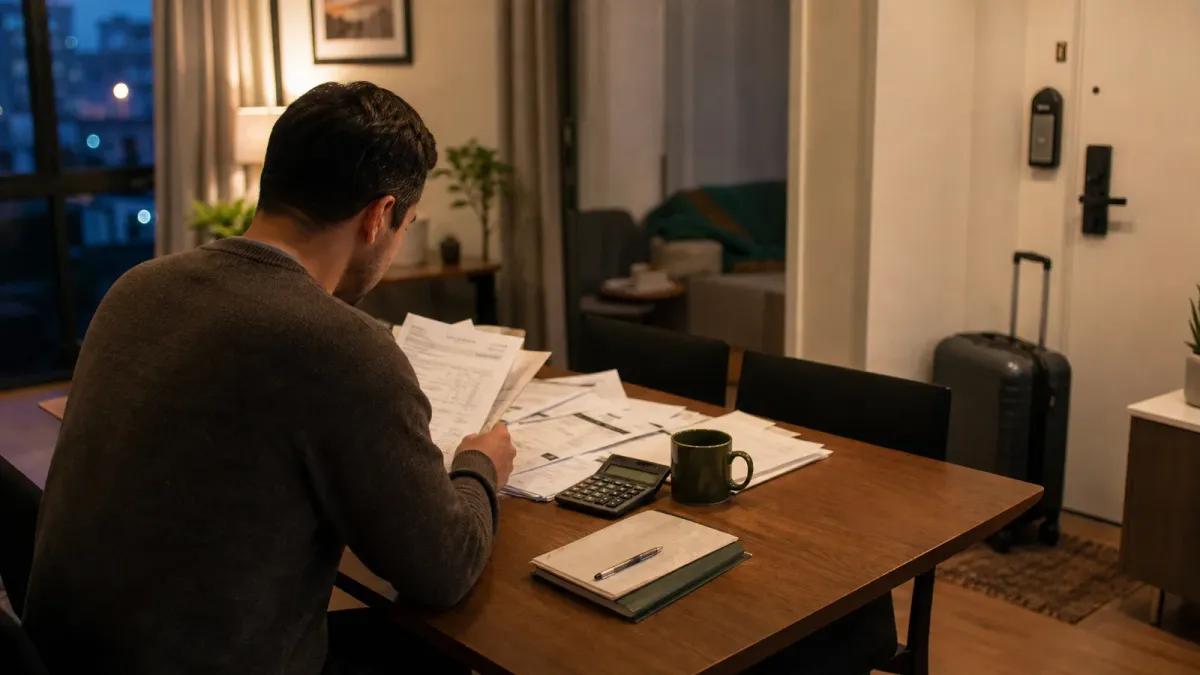
The nightmare version of owning an Airbnb rarely begins with one spectacular disaster. It starts quietly: a permit you did not know you needed, an insurer that will not cover a guest-related claim, a slow month that still comes with a full mortgage payment, or damage that falls outside a platform guarantee.
That is what makes short-term rentals dangerous for unprepared owners. The listing can look like passive income on a spreadsheet while behaving like a small lodging business in real life. You carry fixed housing costs, variable demand and rules that can change by city, building or platform.
The short answer: Do not buy or list a property because the best month looks profitable. Assume revenue will fall, expenses will rise and at least one protection you expected to rely on will have limits. Then decide whether the property still works.
AirCover is not a substitute for your own insurance
Airbnb advertises protection for hosts, but its 2026 Host Damage Protection terms explicitly say the damage guarantee is not an insurance contract and does not replace insurance obtained by the host. The terms contain eligibility rules and exclusions, including wear and tear, deterioration, mold and other categories of loss.
The claims clock can also move quickly. Under those terms, a host generally must notify Airbnb and the responsible guest, try to resolve the loss with the guest and submit the reimbursement request within 14 days of checkout. Miss documentation or a deadline and the protection you counted on may not respond as expected.
- Tell your insurance agent in writing that you plan to accept paying short-term guests.
- Ask whether the policy covers property damage, theft, guest injury, loss of rental income and business activity.
- Save the answer, endorsements, photographs, receipts and an inventory outside the rental property.

The National Association of Insurance Commissioners warns that most homeowners or dwelling policies are not designed to cover accidents arising from short-term rentals. If an insurer treats hosting as undisclosed business activity, the cheapest policy can become painfully expensive when a claim arrives.
Your city can erase the business model
A legal listing today is not proof that every planned stay is permitted. Rules may come from a city, county, state, condo board, homeowners association, lease or lender. Registration, primary-residence requirements, occupancy limits, night caps, safety inspections and lodging taxes can all change the numbers.
New York City shows how dramatically location matters. The city says most rentals shorter than 30 days are allowed only when the host stays in the unit, with no more than two paying guests, and hosts must register. It also warns of penalties for illegal advertising. A buyer whose plan depends on renting an entire apartment nightly could discover that the plan—not the apartment—is the worthless asset.
Before spending money, search the exact property address in local zoning and short-term-rental records. Read the deed restrictions, HOA documents, lease and loan terms. Do not rely on an agent, seller, online course or neighboring listing as proof of legality. Get uncertain answers in writing from the authority or a qualified local professional.
The tax rules are easy to underestimate
Rental income is generally taxable, and personal use can change what expenses are deductible. The IRS says a dwelling is treated as a residence when personal use exceeds the greater of 14 days or 10% of the days it is rented at a fair price. Providing substantial guest services can also affect whether activity belongs on Schedule E or Schedule C.
Federal tax is only one layer. State income tax, local lodging tax, sales tax, business registration and platform collection rules may apply differently. Platform withholding does not automatically mean every filing obligation has been satisfied. A tax professional who understands short-term rentals in the property's jurisdiction can help identify the real after-tax return.
Revenue can vanish while the bills stay
Nightly rate multiplied by 365 is not a forecast. Real occupancy includes empty weekdays, seasonality, cancellations, maintenance blocks and competition. Gross booking revenue must pay for platform fees, cleaning gaps, utilities, supplies, repairs, insurance, permits, taxes, management, furniture replacement and the owner's time before it becomes profit.
Run a stress test before listing or buying. Cut the expected occupied nights by 30%, reduce the nightly rate by 15% and add a major repair plus a month without bookings. If the mortgage, taxes, insurance and essential utilities cannot be paid without new credit, the property is not producing resilience; it is consuming it.
Do this before the next guest
- Verify legality: confirm registration, zoning, HOA, lease and lender restrictions for the exact address.
- Confirm insurance: obtain written coverage for short-term rental activity and understand deductibles and exclusions.
- Build a reserve: keep several months of fixed property costs plus a realistic repair allowance in cash.
- Model the bad year: use conservative occupancy and rate assumptions, not the best comparable listing.
- Create a claim file: store dated photos, inventories, receipts and guest communications where you can retrieve them quickly.
- Get tax advice: confirm federal, state and local reporting before assuming a payout equals profit.
Owning an Airbnb is not automatically a mistake. Treating it like effortless income can be. The safest time to find the fatal weakness in the plan is before a guest, regulator, insurer or weak season finds it for you.


