
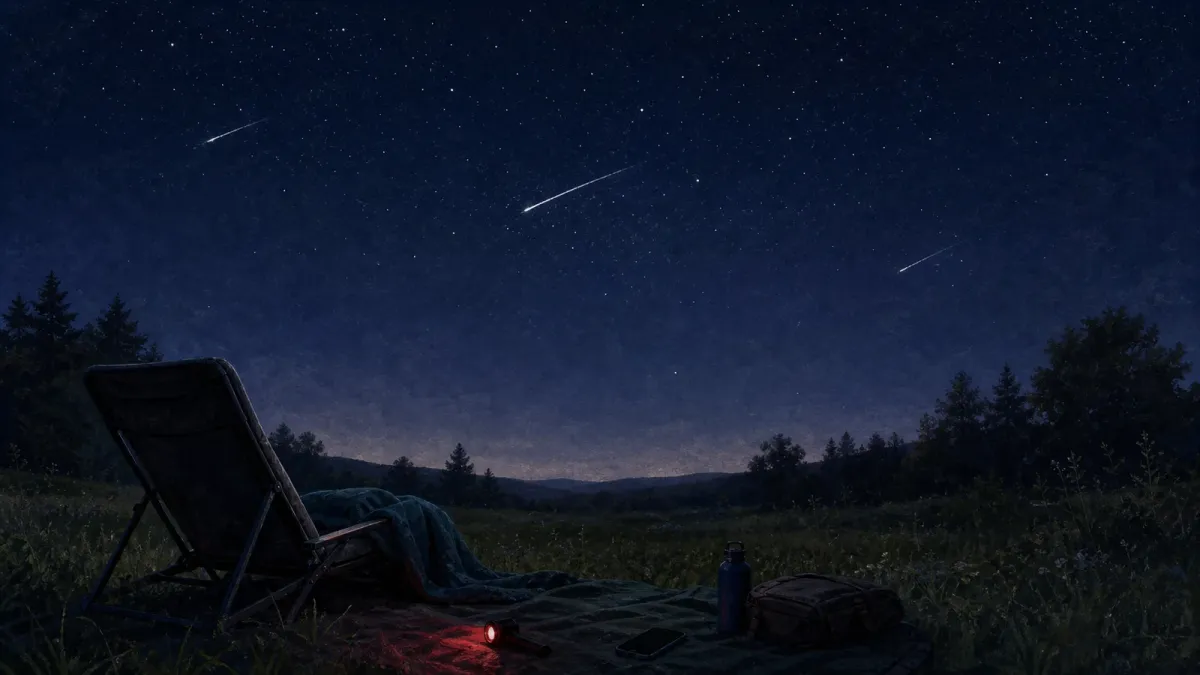
The 2026 Perseid meteor shower is about to enter its active window, and this year’s timing is better than usual for anyone who can get to a dark sky. The American Meteor Society lists the Perseids as active from July 17 through August 24, with the next peak on the night of August 12-13 and the moon at 0% full.
That does not mean you need to wait until the exact peak to look up. It does mean the best plan is to treat mid-August as the main target, then use the nights around it as backups if clouds, smoke, work schedules, or travel get in the way.
The short answer
For most Northern Hemisphere viewers, the best window is after midnight and before dawn on the mornings of August 12 and August 13. NASA says the Perseids are best viewed in the Northern Hemisphere during the pre-dawn hours, though some meteors can appear as early as about 10 p.m.
The shower appears to radiate from the direction of Perseus, but you do not need to stare at that constellation. Meteors can cross a wide part of the sky, so the practical move is to lie back, keep as much sky in view as possible, and give your eyes time to adjust.
What to check before you go
- Moonlight: 2026 is favorable because the peak arrives around a new moon. That removes one of the biggest sources of natural sky glare.
- Clouds and smoke: Check the local forecast, satellite clouds, and air-quality conditions before committing to a long drive.
- Light pollution: The difference between a city sky and a rural sky can decide whether you see a few meteors or a steady show.
- Local timing: Timeanddate lists the August 12-13 peak for New York and lets readers change location for a local sky map.
- Comfort: Bring a reclining chair or blanket, layers, water, and bug protection. A telescope is not useful for meteor watching.
Why 2026 stands out
The Perseids are popular because they arrive during warm summer nights and often produce bright, fast meteors. NASA describes the shower as one of the year’s most plentiful, while the American Meteor Society lists a zenithal hourly rate of 100 under ideal conditions. Real-world counts are usually lower, especially near lights or haze.
The peak also lands on August 12, the date of a separate solar eclipse. NASA says parts of Greenland, Iceland, Spain, Russia, and a small area of Portugal will see totality, while parts of North America will see a partial eclipse. For U.S. readers, the eclipse is a daytime event and the Perseids are a night-sky event, so they require different safety rules and different viewing plans.
What not to do
Do not look at the Sun without proper eclipse viewing protection during the daytime eclipse. For the meteor shower at night, do not use binoculars or a telescope, do not keep checking a bright phone, and do not give up after five minutes. Meteor watching rewards patience more than equipment.
If the peak night is cloudy, try again within a night or two. The Perseids fall off after maximum, but the shower remains active well beyond August 13. The simplest winning plan is a dark location, an open view of the sky, and enough time outside for your eyes to settle in.


