
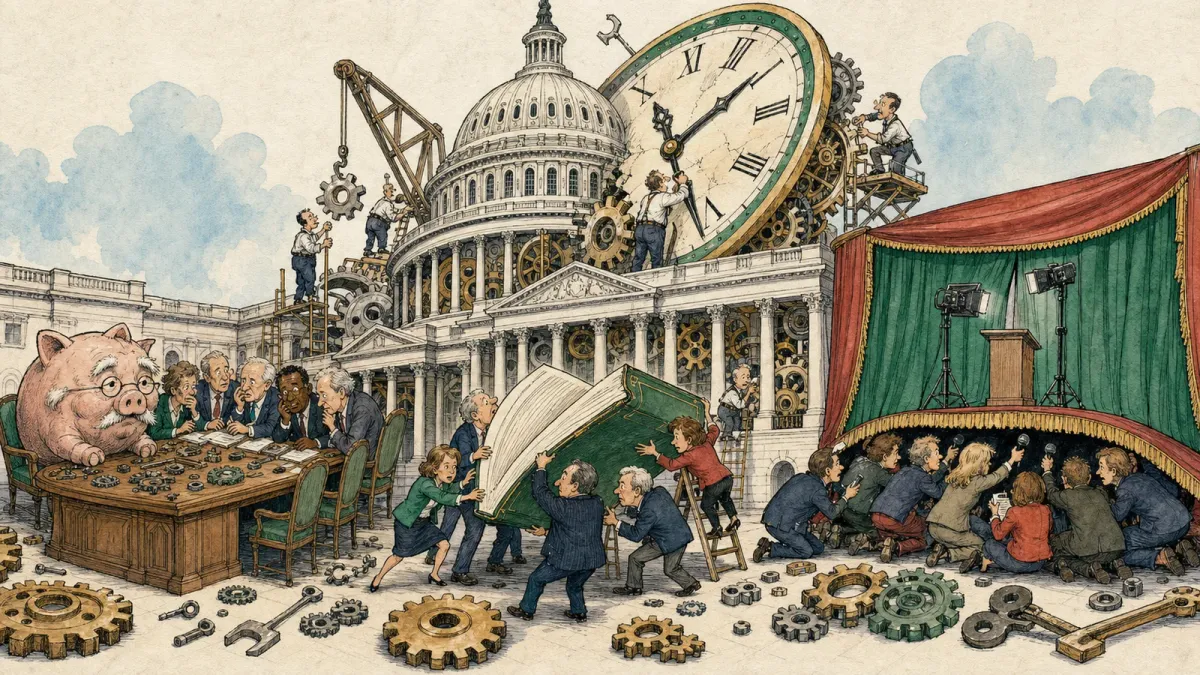
Washington is moving at three speeds this week: one hour forward, several decades late and exactly 9 p.m. Eastern. The House wants to stop the twice-a-year clock change, senators have proposed a new process for confronting Social Security’s financing gap, and President Donald Trump is promising a major television address while keeping most of the contents under wraps.
That combination practically draws itself. This edition of the PS News cartoon column pairs three original editorial illustrations with the verified facts behind each joke. The images are AI-generated artwork commissioned for this article; the concepts, captions and reporting were developed for PS News, and the cartoons do not imitate any named artist’s signature style.
Satire works best when readers can tell where the joke ends and the record begins. So each cartoon below starts with what has actually happened as of Wednesday, July 15, 2026, then lets the visual metaphor do the editorial work.
1. Congress finally finds the hands of time
The setup: The House voted 308-117 on Tuesday to make daylight saving time permanent. The measure would stop most of the country from changing clocks in March and November, but it still needs Senate approval before it can reach the president. States would retain a path to opt out under the House bill. The House Clerk’s floor record lists the measure as H.R. 139, while Associated Press reporting details the vote and the unresolved Senate step.
The joke: Congress has spent years arguing about which direction the clock should move, so the cartoon gives lawmakers the most literal possible assignment: grab a hand and pull. The voter in pajamas has the only realistic platform — coffee first, chronology later.
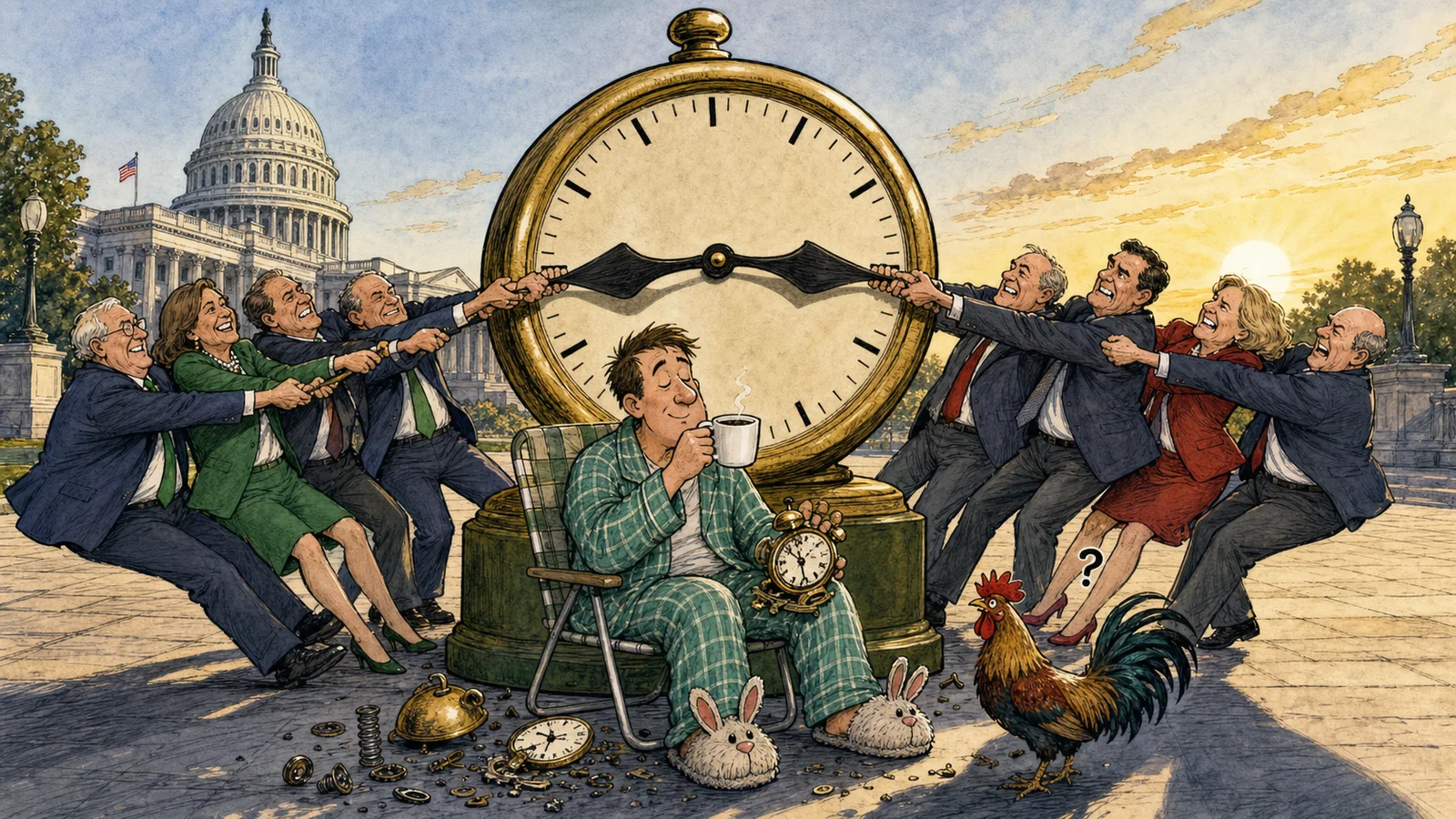
The policy argument is real. Permanent daylight saving time means more evening light but darker winter mornings, while permanent standard time reverses that tradeoff. The House may have stopped one clock; the Senate now controls the stopwatch.
2. Social Security gets a ribbon-cutting ceremony
The setup: A bipartisan group of senators introduced the PROMISE Act this week. The bill would establish a process for Congress to develop a Social Security solvency plan rather than immediately choosing tax increases, benefit changes or some combination of the two. That is an opening move, not a completed rescue package.
The latest Social Security trustees’ projection says the retirement and survivors trust fund can pay full scheduled benefits until the fourth quarter of 2032. If Congress does not act, continuing revenue would cover about 78% of scheduled benefits at that point. The AP’s account of the proposal emphasizes the familiar divide: Republicans have resisted broad tax increases, while Democrats have resisted raising the retirement age.
The joke: Washington loves a bipartisan process because everyone can attend the ribbon-cutting before anyone has to decide what is inside. In the cartoon, the piggy bank has brought a cane, reading glasses and more patience than the committee.
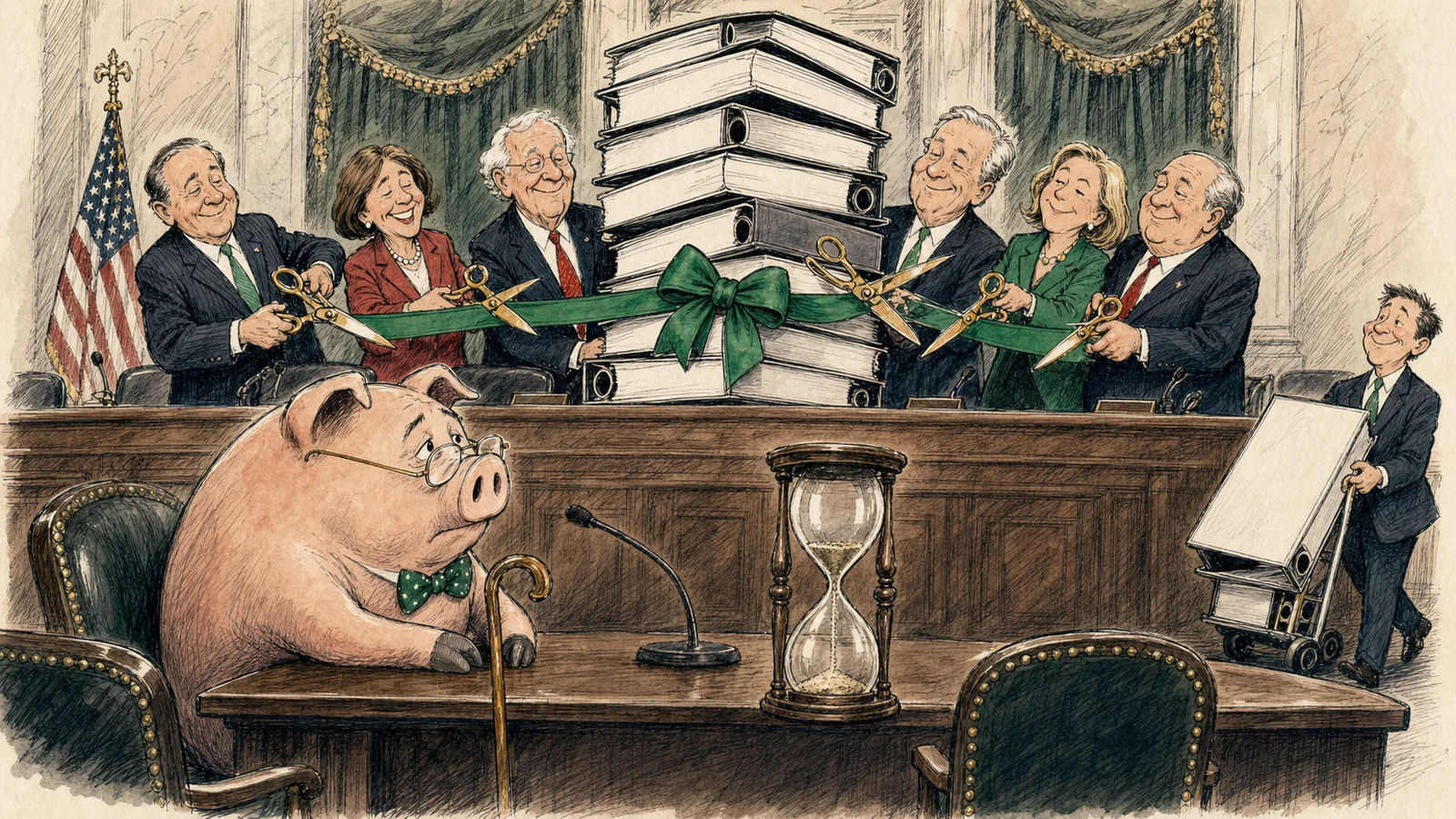
The satire is aimed at delay, not at the program or its beneficiaries. The solvency problem is neither an overnight collapse nor an abstract century-away forecast. The deadline is close enough to shape today’s retirement planning, and the eventual compromise will be harder the longer Congress waits.
3. The primetime mystery box
The setup: Trump says he will address the nation at 9 p.m. Eastern on Thursday, July 16. He has said the speech will include “really big news” about elections and other subjects but has offered few specifics. AP reporting says the president described the address as a mix of election issues and a broader assortment of topics.
That information gap has produced a flood of speculation online. A Threads search on Wednesday showed repeated discussion of the speech, election investigations and possible announcements. None of those posts was used as factual support here; unsupported rumors remain rumors until an official action, filing or independently verified report exists.
The joke: A giant covered box is the natural prop for a political tease. The president gets the spotlight, the press gets magnifying glasses, and everyone else gets a reminder that anticipation is not evidence.
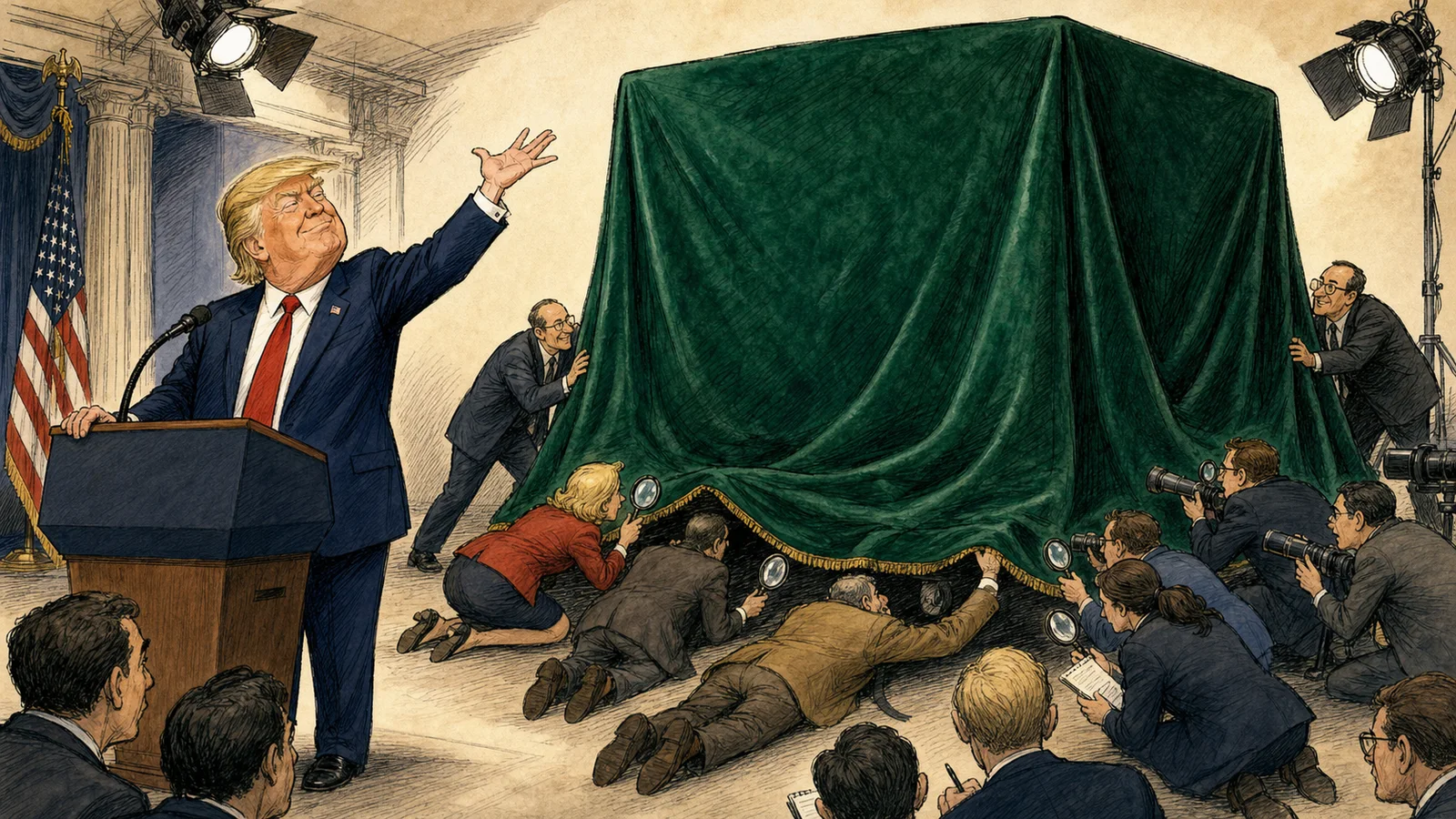
The safest forecast is also the least dramatic: wait for the speech, separate concrete actions from rhetoric, and check any legal or election claim against official records. The box may contain a policy announcement, a campaign message or a mixture of both. Until the cloth comes off, certainty is just another stage prop.
Why the cartoons belong together
Each story turns on a different version of political time. The daylight saving bill tries to freeze the clock. The Social Security proposal tries to create time for a difficult compromise before the trust fund deadline. The primetime address uses suspense to make the hours before broadcast part of the message.
That is what editorial cartoons can do well: compress a complicated procedural argument into one image without pretending the image is the whole argument. Laugh at the clock, the binders and the mystery box — then follow the links, because public policy keeps moving after the punchline.


