
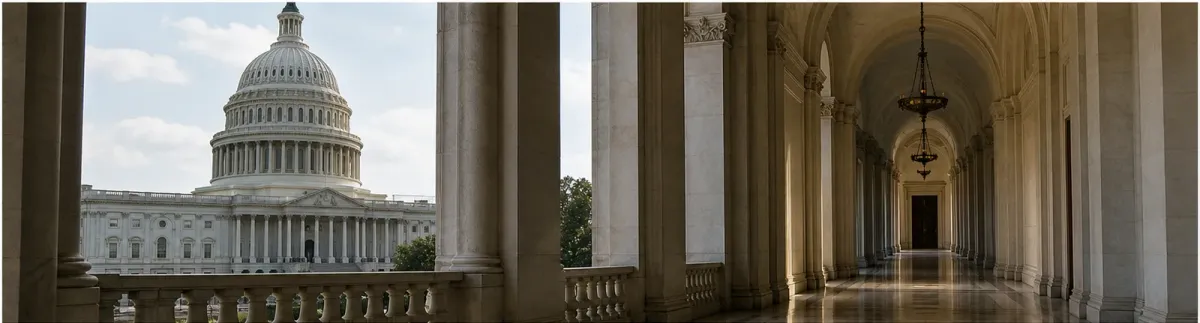
Questions about Senate attendance are back in public view after Sen. Mitch McConnell said on July 12, 2026, that a fall had led to his June hospitalization and that he was recovering in rehabilitation, while the death of Sen. Lindsey Graham added a separate vacancy question for South Carolina.
The short version: an absent senator does not get a proxy vote on the Senate floor. A vacant seat lowers the number of senators currently serving, but the details of replacing that senator are mostly set by state law. Those two facts can matter a lot when the chamber is closely divided.
Here is the practical guide to what changes, what does not, and why the answer is not the same in every state.
The short answer
If a senator is alive but away from Washington, the seat is still occupied. That senator can work with staff, issue statements and participate in many political decisions, but a floor vote requires the senator to actually cast a vote during the voting window.
If a senator dies or resigns, the seat becomes vacant. The U.S. Constitution requires a special election process, and it allows state legislatures to decide whether a governor may make a temporary appointment until voters fill the seat. That is why one vacancy can be filled quickly by appointment while another can remain empty until an election.
How floor votes work
The Senate says roll-call votes are recorded when senators vote "yea" or "nay" as their names are called. In most cases, a simple majority is enough for a measure to pass, and the vice president can break a tie if present.
That means absences change the practical math. A bill that might have needed 51 votes in a full 100-member chamber could pass with fewer affirmative votes if fewer senators are present and voting, depending on the motion and rule involved. The reverse is also true: if one party is missing members, leaders may delay votes they cannot afford to lose.
Quorum is a separate question
The Senate's rules say a quorum is a majority of senators duly chosen and sworn. In ordinary practice, the Senate often proceeds unless a senator raises the absence of a quorum. If a quorum call shows too few senators are present, the chamber has tools to compel attendance or pause business.
For readers, the key point is that a quorum is about whether the Senate can do business at all. A close vote is about whether enough senators who are present choose yes or no. Those questions overlap, but they are not identical.
What happens when a seat is vacant
Vacancy rules are not uniform. The National Conference of State Legislatures says state approaches vary by whether the vacancy is filled at a regular election or an expedited special election, and by whether the governor can make an interim appointment.
As of NCSL's March 2, 2026 update, four states - Kentucky, North Dakota, Rhode Island and Wisconsin - prohibit their governors from making an interim U.S. Senate appointment, meaning the seat remains empty until voters fill it. Many other states allow a governor to appoint a temporary senator, sometimes with party-matching rules or deadlines for a later election.
That distinction matters in the current news environment. McConnell represents Kentucky, one of the states where a vacancy would not be filled by a governor's temporary appointment. Graham represented South Carolina, where vacancy timing and appointment rules are different. The process is state-specific, not one national template.
Why leaders care about absences
Attendance can affect nominations, amendments, budget votes and procedural motions. It can also change leverage inside each party. A senator recovering away from the chamber may still influence negotiations, but leadership has to count votes based on who can actually make it to the floor.
Vacancies can have a longer effect because committees, party ratios and statewide representation may all be in flux until a replacement is seated. In a narrowly divided Senate, even a short vacancy can change which votes leaders schedule and which fights they postpone.
What to watch next
Watch three things before assuming a headline changes Senate control. First, is the senator absent or is the seat legally vacant? Second, does the state allow a temporary appointment? Third, is the upcoming vote a simple majority question, a tie-prone party-line vote, or a higher-threshold procedure such as cloture?
The answer often comes down to boring mechanics: attendance, roll-call timing, quorum rules and state election law. Those mechanics are exactly what determine whether a political shock changes Senate math for a day, for a few weeks or until voters choose a successor.


