
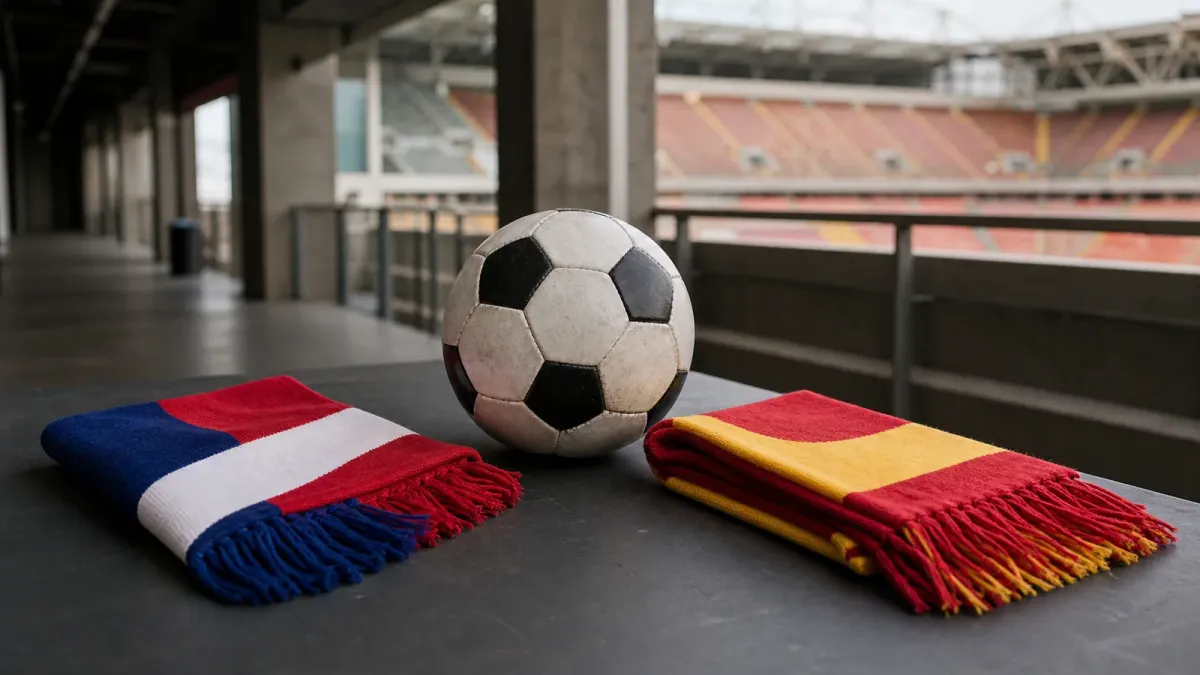
France and Spain were already carrying one of the biggest soccer stakes of the week into their Tuesday, July 14, 2026, World Cup semifinal. Then a column by former Spanish Prime Minister Mariano Rajoy turned the matchup into a wider argument about nationality, race and who gets to represent a country.
Rajoy, writing before the semifinal, praised France's strength but said the team did not have French players, a claim French and Spanish officials denounced as racist. The Associated Press reported that Rajoy made the comment in a July 10 column for El Debate before France and Spain met in Dallas. The dispute was still circulating as the match window opened.
What changed
The backlash moved quickly because the comment landed before a politically loaded match. FIFA lists France-Spain as a World Cup semifinal at Dallas Stadium on July 14, and the game also fell on France's National Day, giving the dispute a larger public stage than a normal pregame exchange.
French Foreign Minister Jean-Noel Barrot rejected the idea that French identity can be judged by skin color, while French football officials said France's players did not need a nationality certificate from a former Spanish leader. Spanish Prime Minister Pedro Sanchez also criticized the claim, saying belonging should not be measured by surname, birthplace or skin color, according to AP reporting.
EL PAIS reported that French officials viewed the column as racist and ignorant, and framed the row as another layer of tension around a semifinal already heavy with history. France and Spain are neighbors, rivals and two of the tournament's most watched teams, so the comment became a debate about both the match and the politics surrounding national teams.
Why it matters
National teams often become shorthand for national identity, especially during World Cups. France's squad has long been discussed as a symbol of a diverse republic, while critics of multiculturalism have repeatedly tried to separate players' citizenship from their family backgrounds. That is why a sentence in a pregame column became bigger than soccer.
The factual issue is straightforward: players selected for France are French internationals. The political issue is harder, because the same teams that can unite fans during a tournament can also expose old arguments about migration, race and belonging.
For viewers, the practical takeaway is to separate the sports question from the identity claim. France-Spain is a semifinal between two elite teams. Rajoy's comment is now part of the atmosphere around it, but it does not change who the players are or what is at stake on the field.
What to watch next
The immediate question is whether the argument fades after the final whistle or follows whichever team advances. If France wins, the comments may be remembered as part of the emotional backdrop to a Bastille Day semifinal. If Spain wins, Spanish officials may still face pressure over how directly their political parties respond to Rajoy.
Either way, the episode shows how quickly a World Cup match can become a proxy for debates that extend well beyond the scoreboard.


