
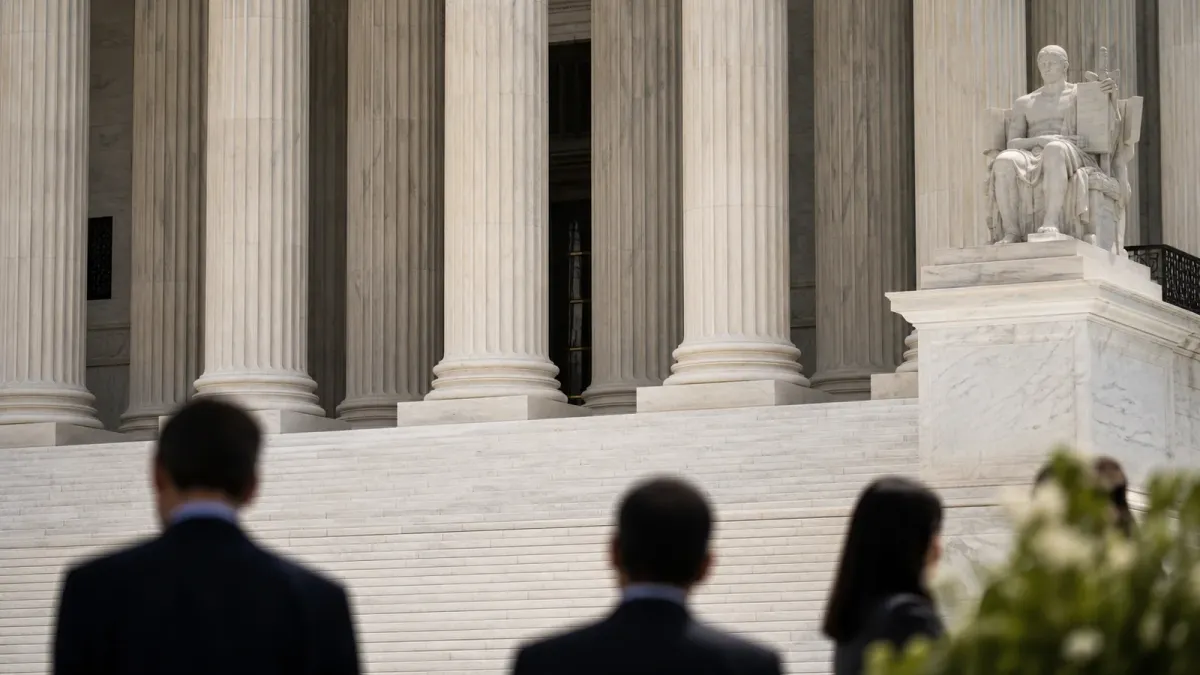
Supreme Court Justices Elena Kagan and Amy Coney Barrett made a rare appearance before Congress on July 14, 2026, to argue that security needs should be treated as a central part of the court's next budget, not a side issue.
The House Appropriations Committee scheduled the hearing on the Supreme Court's fiscal year 2027 request, with both justices listed as witnesses. Committee remarks from Rep. Dave Joyce said the court is seeking $225 million for fiscal 2027, while CBS News reported the request as more than $228 million, including $14.6 million to expand protection for the justices.
The case the justices made was simple: threats against judges and justices have become more frequent, more personal and more expensive to manage. For readers, the question is not only how much the court receives, but what kind of security Congress believes an independent judiciary now requires.
What changed
Kagan told lawmakers that Supreme Court Police expect threats against justices to rise 38 percent in 2026, according to CBS News and Axios. Axios reported that the increase would follow a 25 percent rise last year, and that the court's request includes money for more personal protection agents, added court security officers and cybersecurity support.
Threat data from the U.S. Marshals Service gives the broader federal-court backdrop. Through July 1, 2026, the agency reported 512 protective investigations, 370 total threats to federal judges and 276 unique judges named as threatened in fiscal 2026. In fiscal 2025, it recorded 807 investigations and 564 total threats to judges.
Joyce's prepared remarks pointed to Chief Justice John Roberts' earlier warning that hostile threats and communications toward judges had more than tripled over the preceding decade. The chairman also cited the 2020 killing of Daniel Anderl, the son of federal Judge Esther Salas, and the 2022 threat against Justice Brett Kavanaugh as examples of why lawmakers were weighing the request against a changed threat environment.

The numbers
The most specific line item reported by CBS News is $14.6 million for expanded security provided by Supreme Court Police. That funding would add six agents per justice and cover travel protection when justices are outside the Washington, D.C., region. Axios described a larger $18.9 million security package that also includes an off-site security command post and cybersecurity experts.
The difference between the $225 million figure in House remarks and the more-than-$228 million figure in news coverage appears to reflect different descriptions of the broader fiscal 2027 request. The key point is consistent across sources: the court is asking for a budget increase, and security is a major driver of it.
Why it matters
Security funding for the Supreme Court is no longer just a facilities question. The justices are arguing that physical protection, residential security, travel coverage and cyber defenses are now part of keeping the court able to work without intimidation.
That argument reaches beyond the nine justices. The Marshals Service data tracks threats to federal judges across the country, not only the Supreme Court. When threats rise, courts can face higher protection costs, more law-enforcement coordination and more pressure on judges' families and staff.
The issue is also politically sensitive because it arrives while the court is under intense scrutiny for major rulings, emergency orders and ethics questions. Lawmakers can support money for safety while still pressing the court on transparency, but the hearing showed that those debates are now happening in the same room.
What happens next
Congress will decide how much of the fiscal 2027 request to include in appropriations legislation. The House hearing on July 14 was one step in that process, and the justices were also expected to appear before a Senate Appropriations subcommittee the same day.
The practical signals to watch are whether appropriators fund the $14.6 million protection line, whether they add or trim cybersecurity and residential-security money, and whether any ethics or transparency conditions become part of the budget debate.
For now, the testimony puts a clear marker down: the Supreme Court is telling Congress that the threat environment has changed faster than its security staffing and systems, and that the next budget should catch up.


