
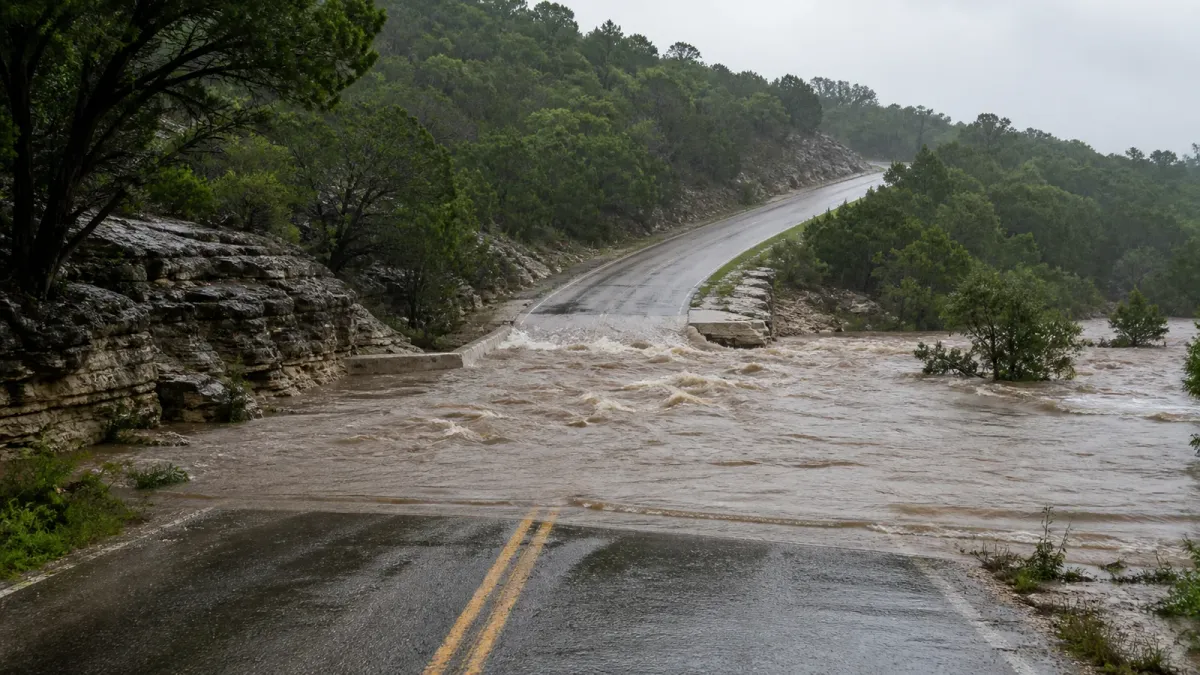
Flash flooding in the Texas Hill Country became a life-safety emergency Thursday, July 16, as the National Weather Service warned that dangerous water was moving down the Guadalupe River and urged people in affected areas to seek higher ground.
Gov. Greg Abbott said at least one person had died, according to the Associated Press, while rescuers used boats, drones and helicopters after floodwaters cut off roads, entered structures and stranded people in vehicles and homes.
What changed
The National Weather Service in Austin/San Antonio issued and extended flash-flood warnings through Thursday afternoon and evening for parts of Kerr, Kendall, Comal, Gillespie, Medina and nearby counties. One warning described the Guadalupe River from Center Point to Bergheim as a flash-flood emergency and a particularly dangerous situation.
The agency said emergency management reported observed flooding, with life-threatening water affecting low-water crossings, creeks, streams, streets, highways and underpasses. In some warned areas, 3 to 15 inches of rain had already fallen, with additional rain still possible.
AP reported that Uvalde was overrun by water overnight and that Texas Game Wardens rescued more than 40 people, mostly in Uvalde County. The wire service also reported that gauges along the Guadalupe showed rises of more than 30 feet in hours in some locations.
What to do now
If you are in a warned area, follow local evacuation orders first. Do not drive through flooded roads, underpasses or low-water crossings, even if the water looks shallow. The Weather Service repeats that most flood deaths happen in vehicles.
People near the Guadalupe River, Pedernales River, creeks, campgrounds or low-lying roads should move away from water and keep checking official warnings, local emergency management, road closures and river gauges. Travelers should delay nonessential trips into the affected counties until warnings expire and roads are confirmed open.
What happens next
The immediate risk is not over when rain briefly eases. Flood waves can move downstream after the heaviest rain, and saturated ground can turn another storm into a fast rise. The safest plan is to stay on higher ground, avoid night travel around water, and wait for local officials to clear routes before returning.


