
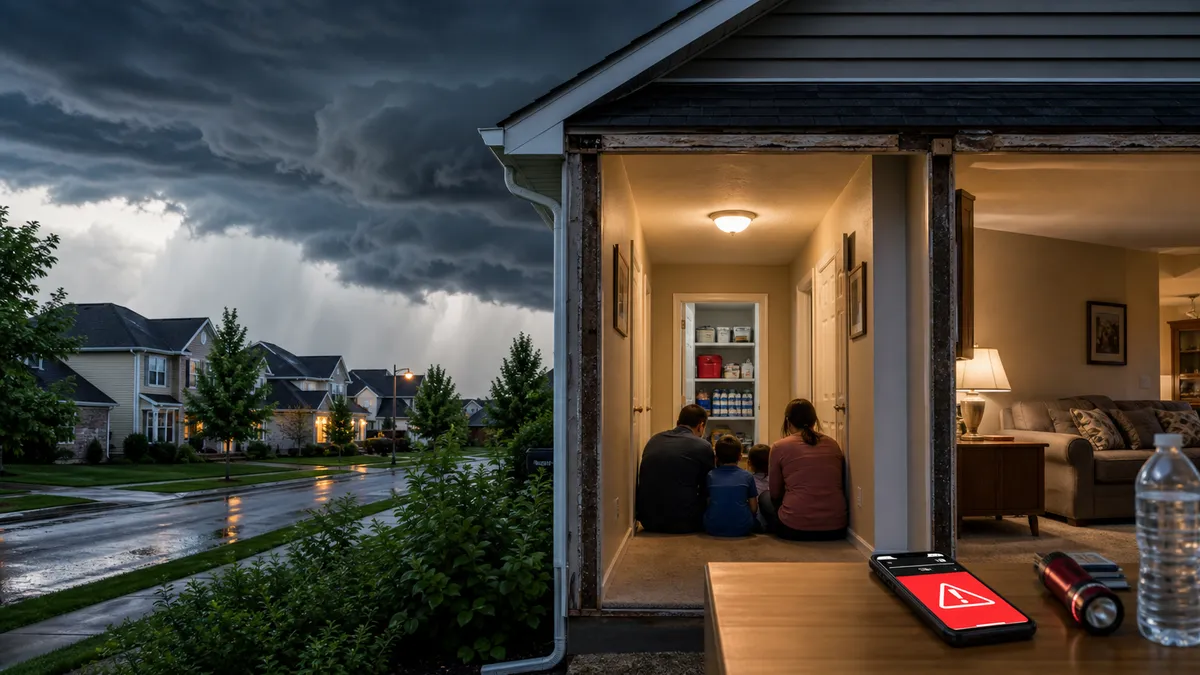
When a tornado warning hits your phone, the first task is not to refresh radar, compare apps, or check social media. It is to move. A warning means the National Weather Service believes a tornado has been sighted or indicated by radar, and that people in the warned area should take protective action immediately.
That distinction matters because many people use watch and warning interchangeably. A tornado watch means conditions are favorable and people should be prepared. A tornado warning is smaller, more urgent, and tied to a specific storm threat. A tornado emergency is the highest level of alert, used when a violent tornado has touched down and catastrophic damage is expected or already being confirmed.
Google Trends showed "tornado warning" rising in U.S. searches on July 5, 2026, a sign that many readers are trying to understand alerts in real time. The safest answer is intentionally plain: go to the lowest floor of a sturdy building, choose a small interior room or hallway, avoid windows, and protect your head and body from flying debris.
The first five minutes
If you are at home, move to a basement if you have one. If there is no basement, choose a bathroom, closet, under-stair space, or interior hallway on the lowest floor. Put as many walls as possible between you and the outside. Crouch low, face down if needed, and cover your head with your arms, a helmet, a thick blanket, or a mattress.
Do not spend those first minutes opening windows. The Storm Prediction Center explicitly warns against the old pressure-equalizing myth; tornado winds and debris are the real threat. Do not stand near windows to look for the storm. Tornadoes can be rain-wrapped, hidden at night, or moving faster than they appear.
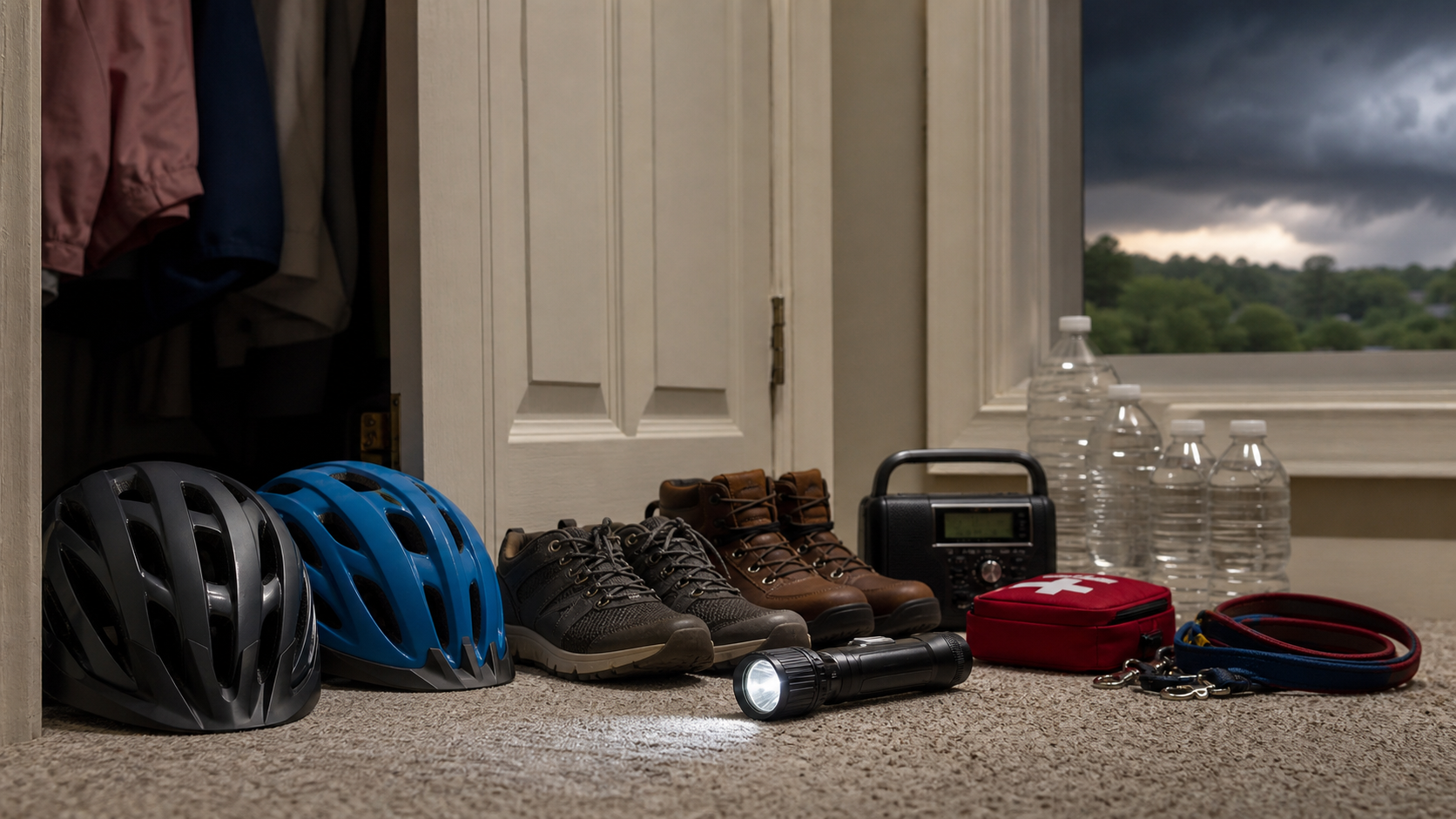
Bring pets if they are close, but do not let a search for supplies delay sheltering. The most useful items are the ones already staged where you shelter: shoes, bike or sports helmets, a flashlight, a phone charger or battery pack, a weather radio, water, leashes, basic medicines, and a small first aid kit. Sturdy shoes matter because broken glass and nails are common hazards after severe wind damage.
If you are not in a house
Mobile and manufactured homes are not safe places to ride out a tornado. If a warning is possible later in the day, identify a nearby sturdy building before storms arrive. Once a warning is issued, waiting until the last minute to leave can become dangerous, especially if heavy rain, hail, or traffic blocks the route.
In an apartment, dorm, office, school, store, or theater, move to an enclosed interior space on the lowest floor available. Avoid large open rooms such as gyms, auditoriums, atriums, and spaces with wide roofs. Elevators are a bad bet during severe weather because power can fail; interior stairwells can be safer when they are not crowded.
Cars are especially risky. If a tornado is visible far away and traffic is light, the Storm Prediction Center says drivers may be able to move at right angles to its path, but the better option is a sturdy building or underground shelter when one is available. Do not shelter under a highway overpass. Overpasses can create traffic hazards and do not reliably protect people from wind and debris.
Why phone alerts are short
Wireless Emergency Alerts are designed to get attention quickly. The National Weather Service says they are sent automatically to capable phones in an emergency area through participating carriers; people do not need to sign up. The alert may not include every detail, and it may arrive while someone is traveling through a threat area rather than sitting at home.
That is why the alert should start the shelter routine first. Once you are in the safest nearby place, use a trusted local source, NOAA Weather Radio, a local station, or the National Weather Service to check the warning polygon, expiration time, and follow-up statements. If the alert was for a nearby county or storm track, you have lost little by moving. If it was for your immediate area, those minutes matter.
After the storm passes, keep listening for official updates. Avoid damaged buildings, downed lines, leaking gas, floodwater, and sharp debris. Help injured people if you can do so safely, but wait for emergency crews before entering heavily damaged structures. The goal is not to become a weather expert during a warning. It is to make one practiced decision quickly enough that the details can wait.