
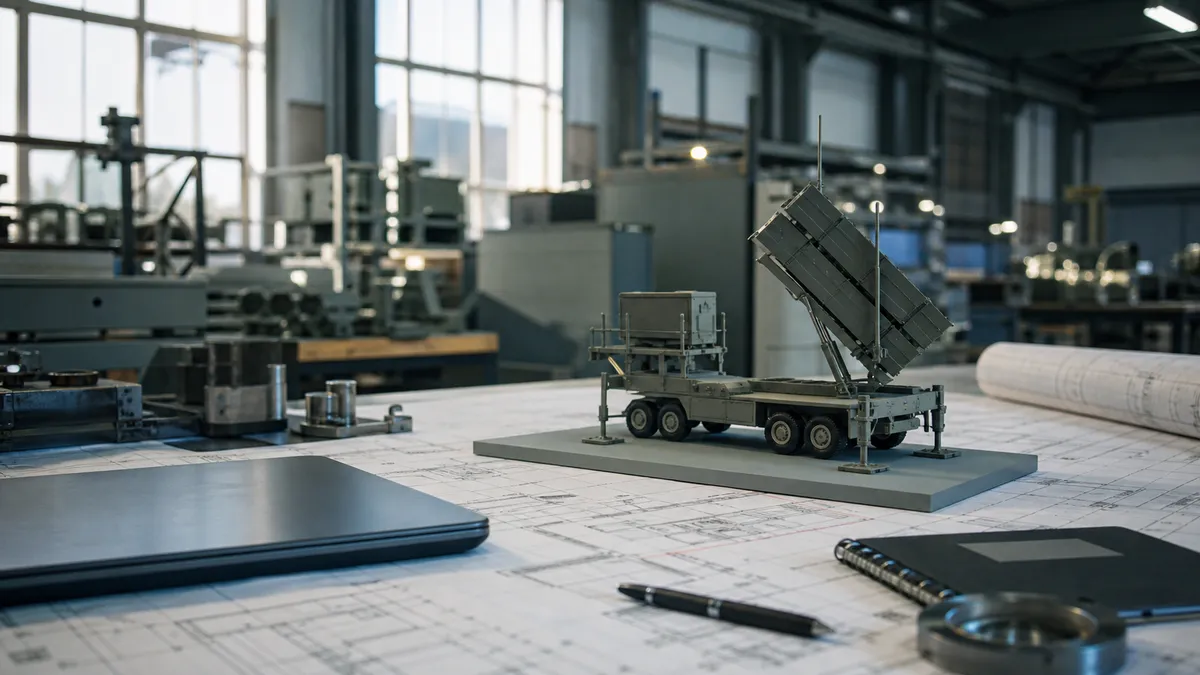
President Donald Trump said Wednesday, July 8, 2026, that the United States will give Ukraine a license to make Patriot air-defense systems, a potentially important shift for Kyiv as Russia keeps using ballistic missiles against Ukrainian cities.
The announcement came during Trump’s meeting with President Volodymyr Zelenskyy at the NATO summit in Ankara. It does not solve Ukraine’s immediate air-defense shortage: Patriot missiles and launchers are expensive, demand is global, and production timelines are measured in months or years, not days.
What changed
Trump said the United States would give Ukraine the right to make Patriots and show Ukrainian partners how to do it, according to Associated Press reporting from the summit. Zelenskyy has pushed for that kind of permission because donated systems and interceptors have not kept pace with Russia’s missile campaign.
Ukraine’s presidential office said after the Ankara meeting that Zelenskyy thanked Trump for emphasizing stronger air defense and that both sides discussed ideas to strengthen Ukraine’s position and bring peace closer. Two days earlier, Zelenskyy argued in an official address that U.S. licenses for Patriot production could let Ukraine protect itself and eventually help partners.
The clearest near-term effect is diplomatic and industrial. A license would point Ukraine away from relying only on transfers from U.S. or allied stockpiles and toward production arrangements that could expand capacity over time. It also signals that Washington may be more open to sharing sensitive air-defense manufacturing know-how than it had been earlier in the war.
What we do not know yet
The public announcement left several critical details unresolved. It was not immediately clear whether the license would cover complete Patriot systems, interceptor missiles, components, or production in Ukraine, Europe, or both. The Guardian reported that Trump acknowledged he had not yet spoken with the companies that produce the Patriot system, and that the process would be complex.
That caveat matters because Ukraine needs interceptors now. Zelenskyy said on July 6 that a Russian attack involving 68 missiles and more than 350 drones killed 22 people and injured nearly 90, and he singled out ballistic-missile defense as the main gap when Patriot interceptors are insufficient.
What happens next
The practical test is whether U.S. officials, defense contractors, and allies turn the political statement into contracts, export approvals, security safeguards, and a production schedule. Those steps would determine whether the idea becomes a symbolic promise or an actual supply line.
For Ukraine, the announcement is still notable because it addresses the specific bottleneck Kyiv has been naming for months: not only getting more systems, but being allowed to make more of the defensive weapons it depends on. For readers watching the war’s next phase, the key question is whether licensed production can arrive fast enough to change Ukraine’s air-defense math before Russia’s missile pressure increases again.


