
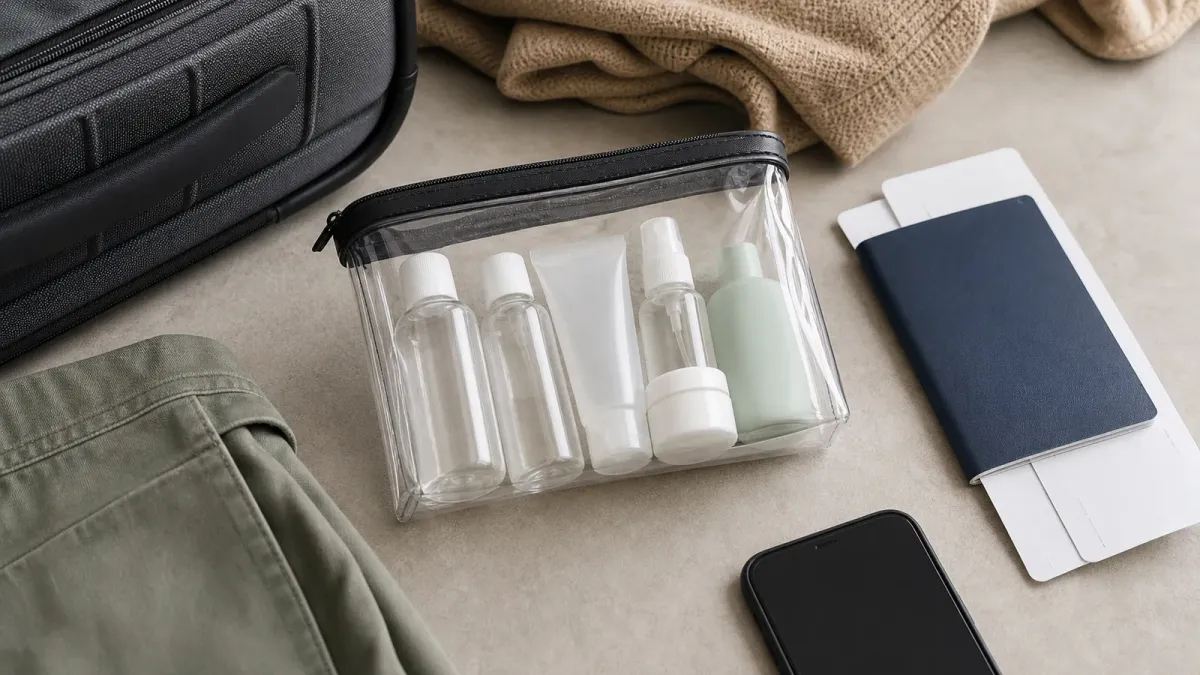
Summer air travel is still moving through a high-volume stretch, and the easiest airport delay to prevent is the one inside your own bag. The Transportation Security Administration said on June 25, 2026, that it expected to screen nearly 18.7 million travelers from June 30 through July 6, with more than 3 million people expected on the peak day, July 2. Even after that holiday window, TSA's passenger-volume page continues to track weekday checkpoint counts as the summer travel season rolls on.
The liquid rule itself has not become complicated, but the edge cases still trip people up: half-empty full-size bottles, gels that feel like food, duty-free purchases on connecting flights and medically necessary items that need separate screening. Here is the short version to check before you zip the carry-on.
Do this first
- Use one quart-size clear bag. TSA allows liquids, aerosols, gels, creams and pastes in travel-size containers inside one small bag.
- Keep each container at 3.4 ounces or 100 milliliters or less. The limit is about container size, not how much product is left inside.
- Move larger toiletries to checked baggage. Shampoo, sunscreen, lotion or hair products in bigger bottles should go in checked luggage unless they qualify for a separate exception.
- Keep the bag easy to reach. TSA says separating the small liquids bag from your carry-on helps the screening process.
What counts as a liquid
TSA's rule covers more than pourable liquids. Aerosols, gels, creams and pastes are part of the same carry-on limit, which is why items such as sunscreen, toothpaste, moisturizer, hair gel and some spreadable foods can become checkpoint problems. If it can be squeezed, sprayed, smeared or poured, treat it as a liquid unless TSA's What Can I Bring? tool says otherwise.
Check these details
Do not rely on a nearly empty full-size bottle. A 6-ounce container with only a small amount left can still be rejected because the container is larger than 3.4 ounces. If you want the item in your carry-on, transfer it into a compliant travel-size bottle before leaving home.
Duty-free liquids get a narrower exception. TSA says liquids over 3.4 ounces may travel in a secure, tamper-evident bag if they were bought internationally, you are connecting to a U.S. flight, the original receipt is present and the purchase was made within 48 hours. The items still must be screened and cleared.
Medical and family-travel needs deserve their own check. TSA links travelers with disabilities, medical conditions and children to separate guidance because some necessary liquids may be screened outside the standard quart-size bag. Keep those items accessible and be ready for extra screening rather than burying them deep in a suitcase.
A simple packing order
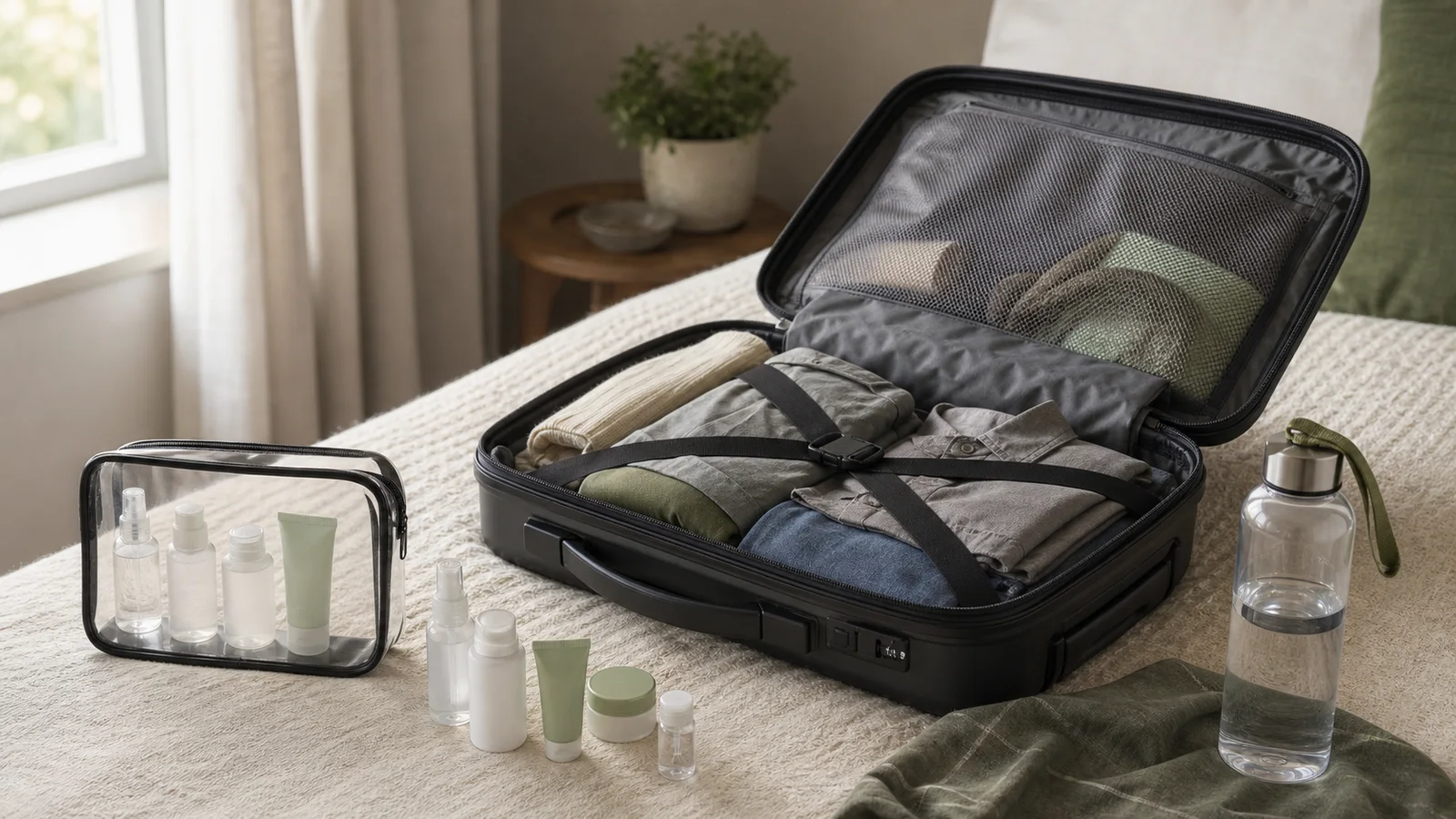
Start with the items you know you will need before bedtime or after landing, then decide whether each one belongs in the quart-size bag, checked luggage or a separate medical/family-travel pouch. Put anything optional and oversized in checked baggage first. That keeps the carry-on rule for the items that actually matter in the airport: medicine, child-care needs, a small sunscreen, a small toothpaste and basic toiletries for a delay.
Common mistakes
- Packing the liquids bag at the bottom. If an officer needs to inspect it, every layer above it slows you down.
- Forgetting creams and pastes. Sunscreen, toothpaste, makeup, peanut butter-style spreads and similar items can count.
- Assuming every airport lane works the same way. Some checkpoints use newer equipment, but the packing rule is still the safest baseline.
- Buying a large bottle before a connection. Airport purchases made before security or outside the duty-free exception may not make it through the next checkpoint.
When to check again
Use TSA's official liquids page and What Can I Bring? search before you pack anything expensive, unusual or hard to replace. If the item is optional and over the limit, checked baggage is usually the simpler choice. If it is medically necessary, part of traveling with a child or tied to a disability accommodation, review TSA's specific guidance and give yourself more time at the airport.
The bottom line: the 3-1-1 rule is simple when you pack around the container, not the product. One quart-size bag, containers of 3.4 ounces or less and easy access at screening will solve most carry-on liquid problems before they reach the X-ray belt.


