
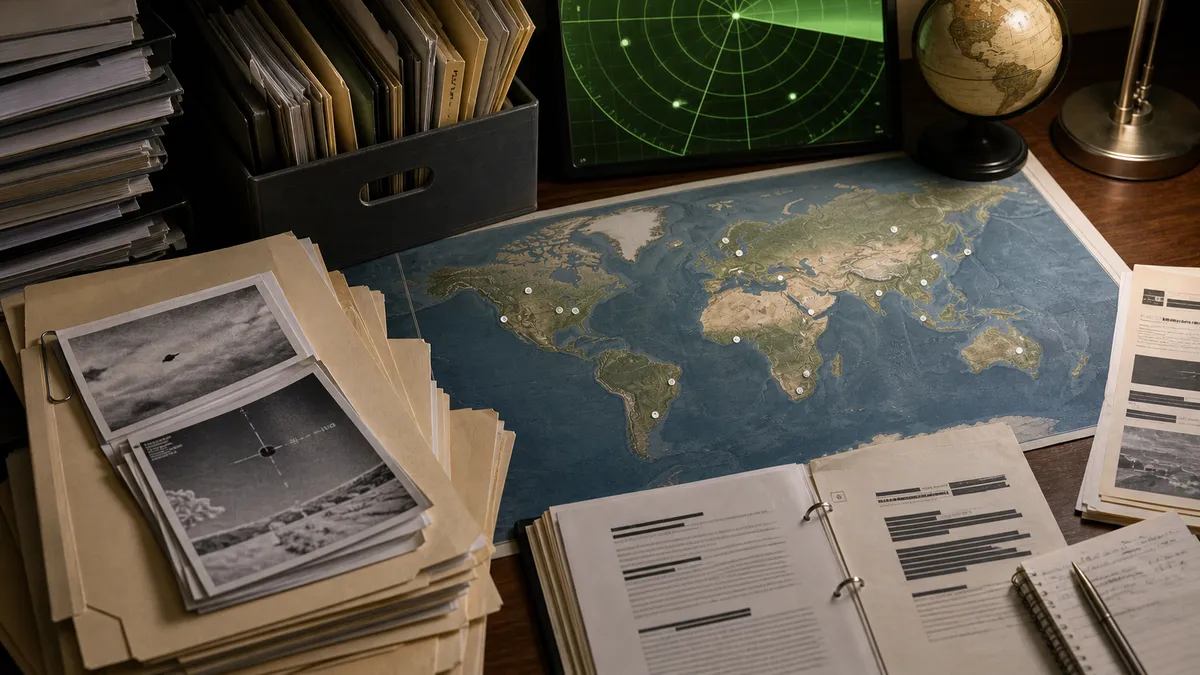
Government disclosure on UFOs has moved a long way from dismissive press lines and locked filing cabinets. The United States now has a formal UAP office, NASA has published a public study, Canada has reviewed how sightings should be reported, France has a long-running public case database, and the United Kingdom has transferred many historic Ministry of Defence files to The National Archives.
But the biggest point is also the easiest to lose: disclosure does not mean confirmation of extraterrestrial craft. In official usage, UFO or UAP means something observed in the air, sea, space, or across domains that has not yet been identified. Some cases remain unresolved because the data are poor, sensors disagree, witnesses saw something briefly, or records are incomplete. That is different from saying a government has proved a non-human origin.
The United States is the center of the current disclosure push. Congress required more public reporting after Navy videos and pilot accounts brought the issue back into mainstream debate. The Pentagon created the All-domain Anomaly Resolution Office, known as AARO, to collect and assess reports across military and intelligence channels. Separately, the National Archives now hosts a topic page for records related to UFOs and UAPs, including a federal UAP records collection created under recent law.
The U.S. model: reports, reviews, and limits
AARO's public posture is procedural: gather reports, standardize review, work with sensors and intelligence agencies, and reduce the number of cases that remain unexplained. That is a different kind of disclosure than releasing one dramatic answer. It is a system for sorting objects that might be drones, balloons, aircraft, satellites, weather effects, sensor artifacts, adversary technology, or still-unresolved events.
NASA took a separate lane. Its independent study team, released in 2023, argued that better data, less stigma, and clearer scientific methods are needed if UAP reports are going to be studied seriously. NASA did not present evidence of extraterrestrial origin. Its contribution was to say that credible scientific work starts with higher-quality observations and transparent methods.
France and Canada are more open about process
France is one of the clearest examples of a civilian-facing disclosure model. GEIPAN, housed within the French space agency CNES, receives witness reports, publishes cases, explains classifications, and makes its methodology visible. That makes France unusual: instead of only declassifying old files, it maintains a public-facing process for current reports.
Canada's Sky Canada project took a policy-review approach. The Office of the Chief Science Advisor examined how unidentified aerial phenomena are reported, how public information is handled, and what other countries do. Its report points to the United States, France, and Chile as examples of more coordinated or transparent approaches. Canada has not announced an alien finding; it has focused on whether its reporting and public communication system is clear enough.
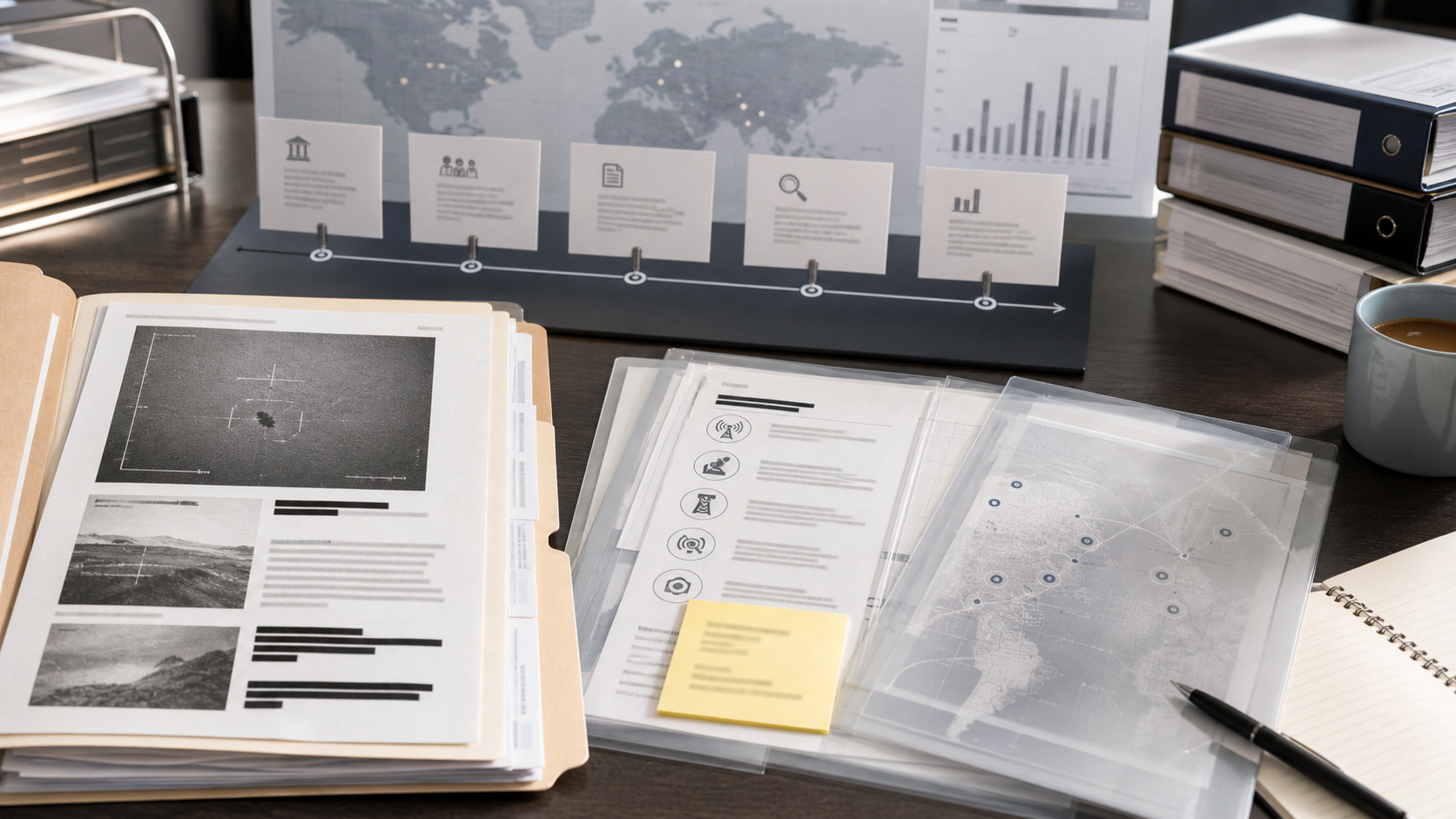
Britain, Brazil, Mexico, and Japan show different paths
The United Kingdom's disclosure story is largely archival. The National Archives says official reporting, analysis, and recording of UFO sightings began in the early 1950s, while many older files were destroyed under earlier Ministry of Defence policy. Surviving files have been reviewed for release because of public interest, but Britain closed its dedicated UFO desk in 2009 after concluding that the work did not justify continued defense resources.
Brazil has made records searchable through government archival systems, part of a wider pattern in Latin America where air force and civil aviation files have sometimes entered public collections. Chile has also been cited internationally because it developed an official committee structure for studying anomalous aerial reports. These examples matter because they move the topic from rumor into record management, even when they do not settle the underlying cases.
Mexico's recent visibility came through congressional-style hearings, not through a definitive government scientific finding. That distinction matters. Lawmakers can invite witnesses, display materials, and create public attention without the state itself validating every claim presented in the room. For readers, hearings are a disclosure venue, but not automatically a verdict.
Japan has taken a narrower defense-readiness approach. After U.S. attention increased, Japanese defense officials instructed Self-Defense Force personnel to document and analyze unusual aerial encounters that could affect security. That is not a public case database like France's, but it shows how governments increasingly treat UAP as an aviation and defense reporting problem even when they avoid dramatic language.
Other countries sit somewhere between those models. Italy has military channels for unusual air reports, New Zealand and Australia have released historical records, and several governments handle incidents through aviation safety or defense procedures instead of public science offices. The result is not one global disclosure program, but a patchwork of archives, safety systems, intelligence reviews, and political hearings.
What disclosure still leaves unknown
The global pattern is clear. Governments are becoming more willing to admit that unusual reports exist, to preserve records, to create reporting pathways, and to reduce stigma for pilots or service members. They are also careful about conclusions. The most responsible official language usually separates three questions: Was something observed? Can it be identified with available evidence? Does the case imply a foreign system, a safety hazard, a natural effect, or something still unexplained?
That means the next phase of disclosure is likely to be less cinematic than many expect. More archives may open. More annual reports may be published. More sensor standards may be created. A few cases may remain genuinely unresolved. But unless governments release verifiable evidence that can be independently tested, the honest headline remains narrower: the UFO file is more public than it used to be, and still far from closed.