
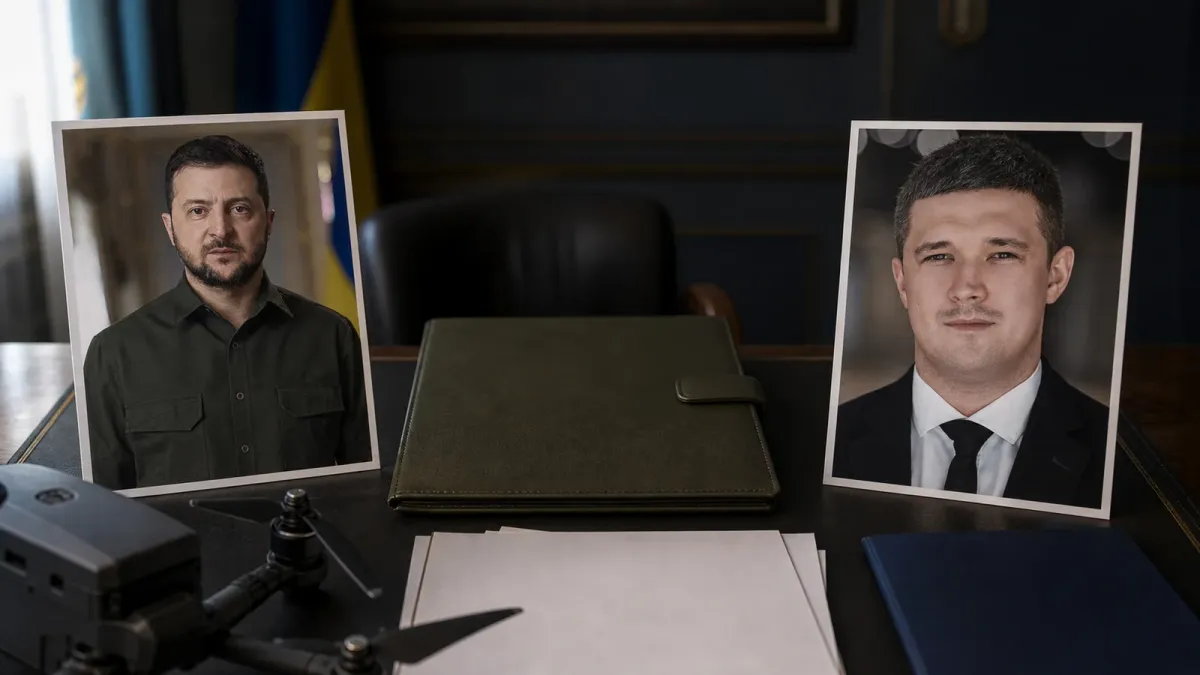
Ukraine's wartime government shake-up turned into a public political test on Thursday, July 16, after President Volodymyr Zelenskyy defended his decision to remove Defense Minister Mykhailo Fedorov and protesters gathered in Kyiv and other cities.
The dispute matters because Fedorov was widely associated with Ukraine's push to modernize battlefield technology, drones and procurement. His removal now raises a near-term question for allies and Ukrainians: whether the government can keep reforms moving while replacing senior officials during an active war.
The Guardian reported that Zelenskyy said relations had broken down between Fedorov and Ukraine's military leadership, including commander in chief Oleksandr Syrskyi. Zelenskyy said he wanted unity but had to choose when the sides could not resolve the dispute.
What changed
More than 1,000 people gathered outside the presidential office in Kyiv on Thursday, according to The Guardian, with signs and chants supporting Fedorov and criticizing Syrskyi. Other reports described protests in additional Ukrainian cities, making the dismissal one of the rare visible anti-government demonstrations since Russia's full-scale invasion in 2022.
Zelenskyy has named Yevhenii Khmara, acting head of Ukraine's security service, as acting defense minister and asked parliament to approve him for the post. The move came as part of a broader cabinet reset. Ukrainska Pravda reported that parliament approved Serhii Koretskyi, formerly tied to Ukraine's state energy sector, as prime minister with 289 votes.
Why it matters
Fedorov's supporters see him as a reformer whose work helped Ukraine shift toward faster procurement and technology-led operations. The political risk for Zelenskyy is that a personnel decision meant to resolve internal friction may instead create doubts about how Kyiv balances military command discipline with newer reform efforts.
The backlash is also landing in front of foreign partners. Ukraine depends on continued weapons, financing and political support, and leadership instability can complicate the message that wartime institutions remain focused and coordinated.
What happens next
The next test is whether parliament confirms a permanent defense minister and whether Fedorov's reforms continue under new leadership. Watch for statements from Ukrainian lawmakers, Western allies and defense officials, as well as any further protests after Thursday's demonstrations.


