
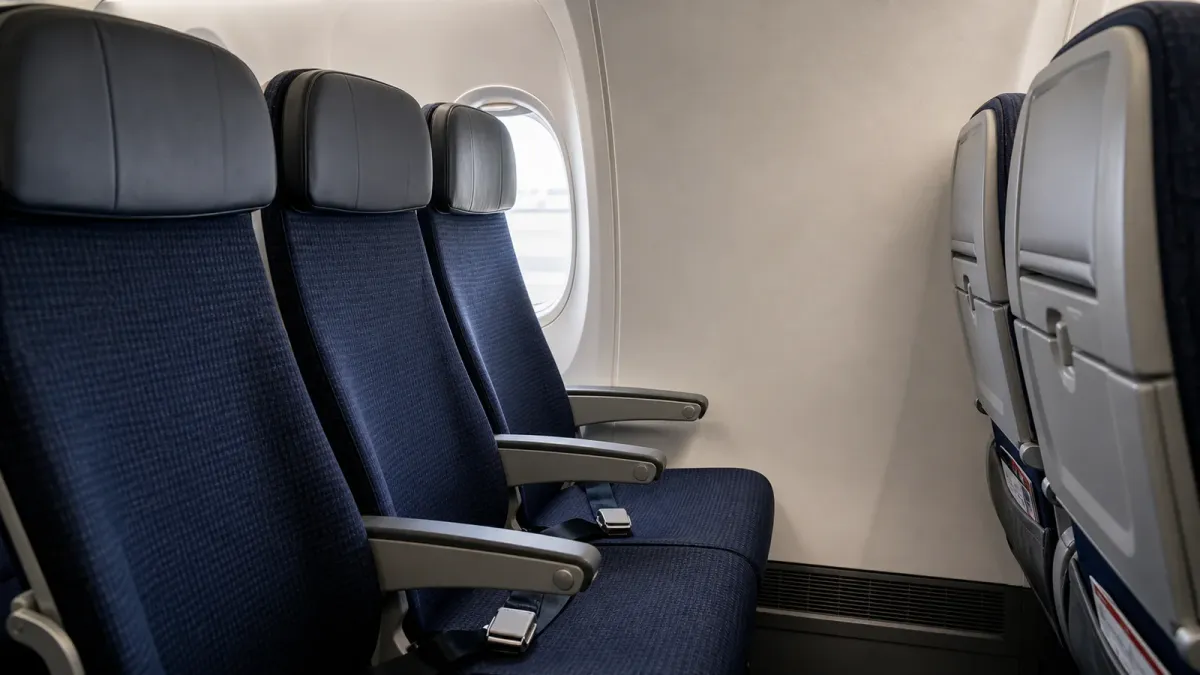
United Airlines must continue defending a proposed class-action lawsuit from passengers who say they paid for window seats but were assigned places beside blank cabin walls, a federal judge in San Francisco ruled July 6.
U.S. District Judge James Donato denied United’s motion to dismiss the breach-of-contract case. The decision allows the passengers’ claims to move forward, but it does not decide that United violated a contract, certify a passenger class or award anyone money.
What the judge decided
The lawsuit says United’s reservation screens and tickets described the purchased seats as window seats even though some rows on certain aircraft do not have a window aligned with the outer seat. The passengers argue that the description mattered because they selected or paid more for those positions.
United argued that “window” identified the seat’s location beside the cabin wall rather than promising an exterior view. It also argued that the federal Airline Deregulation Act blocked the state-law contract claims.
Donato concluded that the passengers had plausibly alleged a promise based on the booking presentation and ticket language. At the dismissal stage, the court must generally treat well-pleaded factual allegations as true. United can still dispute those allegations and raise defenses as the case proceeds.
The judge also rejected preemption at this stage, reasoning that the plaintiffs were seeking to enforce an alleged promise made by the airline rather than impose an outside state policy on airline services.
Why some window seats lack windows
Aircraft windows and passenger rows are not always spaced together. Cabin layouts can change when airlines add or reposition seats, while structural sections, ventilation ducts and other equipment can leave a row beside solid wall paneling.
That means a seat at the outer edge of a row can be called a window-position seat even when the nearest window is well forward or behind the passenger. The disputed issue is not whether those layouts exist; it is what the airline represented when selling a specific seat.
What travelers can check
Before paying for a particular view, inspect the airline’s seat map for warnings such as “no window,” “misaligned window” or an information icon. Because the aircraft assigned to a flight can change, confirm the aircraft type again when checking in.
Independent seat-layout references and recent cabin photographs can provide another clue, but they may be outdated or show a different configuration. The airline’s current booking disclosure remains the most relevant record of what was offered for that trip.
If a window matters for motion sickness, anxiety, photography or traveling with a child, consider saving the seat-selection confirmation and asking the airline about unclear map details before departure. Those steps do not guarantee an aircraft swap will not change the layout.
What happens next
The case, Brenman v. United Airlines, can now proceed into later litigation stages, including factual development. The plaintiffs would still need to seek class certification before representing a broader group of passengers.
A separate proposed class action raises similar allegations against Delta Air Lines in federal court in New York. The rulings in either case may influence how clearly airlines identify windowless outer seats, but neither dispute has reached a final judgment.


