
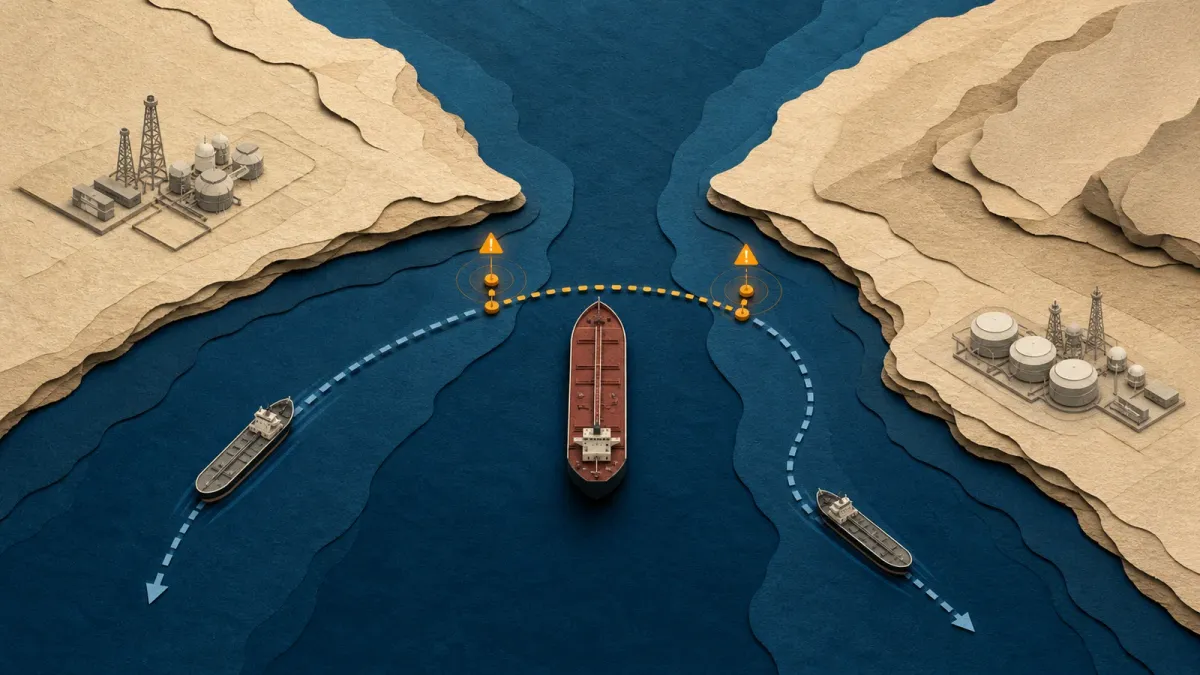
U.S. forces disabled a merchant tanker near Iran on Wednesday, July 15, in the first reported direct enforcement action against a commercial vessel since Washington reimposed a naval blockade on Iranian ports.
The move turned the renewed blockade from a threat into an active shipping risk. It also widened the stakes around the Strait of Hormuz, where back-and-forth attacks have already disrupted a route that normally carries a large share of the world's oil and liquefied natural gas trade.
What changed
The Associated Press reported that U.S. Central Command said a U.S. aircraft disabled the Curacao-flagged M/T Belma after the ship ignored multiple warnings while sailing toward Kharg Island, Iran's main oil export hub. AP said two other commercial vessels were contacted and turned away without force.
The action came after the United States reimposed the blockade over Iranian attacks on ships trying to pass through the Strait of Hormuz. CENTCOM said earlier this week that U.S. forces had struck Iranian military targets after aircraft and cruise missiles were launched in response to attacks on commercial vessels during the week of July 6-11.
Iranian officials have rejected the U.S. action and signaled retaliation. AP reported missile-alert warnings in Bahrain and Kuwait on Wednesday and cited Iran's Revolutionary Guard as threatening that regional oil and gas exports would be either available to everyone or to no one.
Why Hormuz matters
The Strait of Hormuz is not just a military flashpoint. It is a narrow energy chokepoint between Iran and Oman that links the Persian Gulf with the Gulf of Oman and the Arabian Sea. The U.S. Energy Information Administration has described recent Hormuz flows as more than one-quarter of global seaborne oil trade and about one-fifth of global oil and petroleum product consumption.
The International Energy Agency says the route is also central to liquefied natural gas shipments, especially from Qatar and the United Arab Emirates. That is why even limited enforcement actions, tanker attacks or routing changes can move quickly from military news into oil, fuel, fertilizer and shipping costs.
What we do not know yet
The full damage to the Belma, whether anyone aboard was injured, and how Iran will respond to the tanker strike were not immediately clear. Iranian officials also reported casualties from U.S. strikes inside Iran, but the claims could not be independently verified in real time.
The legal position of the blockade is also contested. The United States says it is responding to attacks on commercial shipping. Iran says it has authority over arrangements in and around the strait under the interim deal that briefly paused the war last month.
What happens next
The next signals to watch are whether more ships try to approach Iranian ports, whether Iran follows through on threats against other regional energy exports, and whether diplomatic contacts produce a way to restore predictable passage through Hormuz.
For readers far from the Gulf, the practical question is whether the conflict stays limited to enforcement and counterstrikes or begins to interrupt energy flows for longer. A prolonged disruption would raise the risk of higher crude prices, more volatile gasoline costs and pressure on countries that depend heavily on Gulf energy shipments.


