
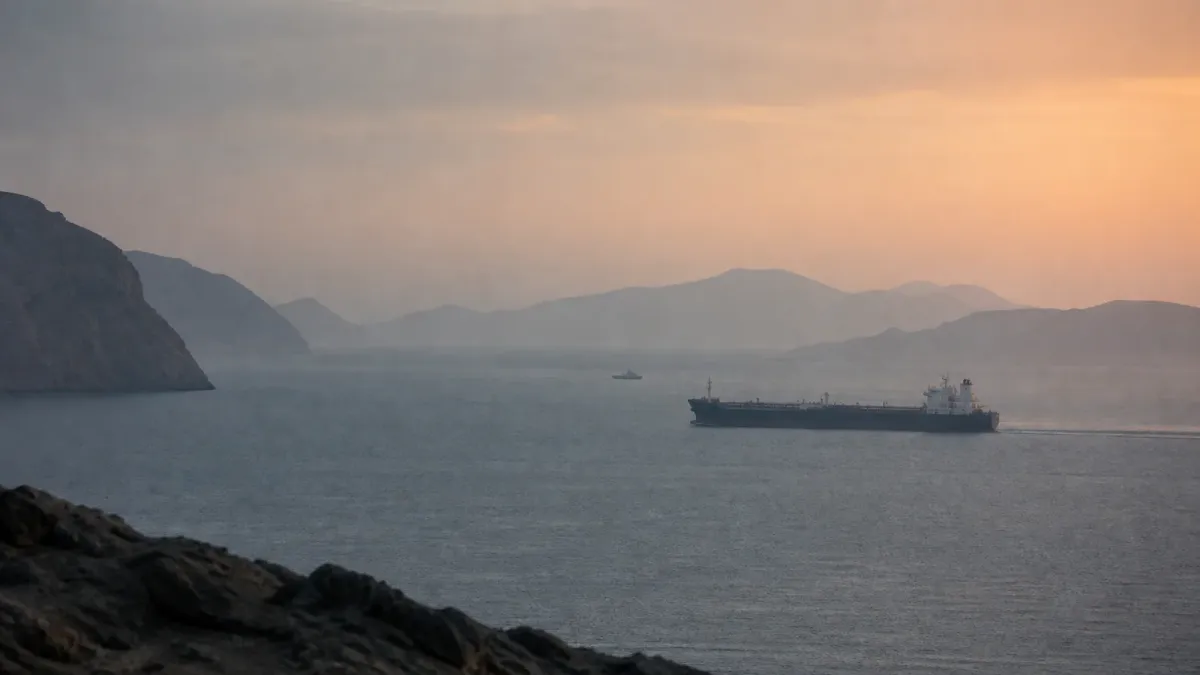
The United States is demanding that Iran publicly guarantee safe passage through the Strait of Hormuz and stop attacks on commercial shipping before broader negotiations can move forward, U.S. officials said Friday, July 10. The demand places the waterway—not only Iran’s nuclear program—at the center of the latest diplomatic effort.
President Donald Trump said the United States would continue talks requested by Tehran but would no longer observe the ceasefire. His statement leaves diplomacy open while removing the restraint that had limited direct military action, creating a volatile period in which negotiations and the threat of more strikes are proceeding at the same time.
What changed
U.S. officials told reporters that Iran must make a public commitment that the strait is open to international shipping and that attacks on vessels will stop. They also said any eventual nuclear agreement would require Iran to surrender its stockpile of highly enriched uranium.
Iran, however, is presenting a sharply different view of the strait. Its U.N. ambassador said activity there, including reopening and demining, rests exclusively with Tehran. Iran has also argued that it should control the passage and collect fees from ships, challenging the longstanding treatment of Hormuz as an international waterway.
The dispute matters far beyond the region. Roughly one-fifth of globally traded oil and natural gas moved through the strait before the war, according to reporting by The Associated Press. Disruption during the conflict helped drive oil as high as $120 a barrel before prices retreated from those wartime peaks.
Diplomacy is still active
Qatari mediators traveled to Iran on Friday in coordination with Washington, according to Axios, as regional governments tried to restore the earlier memorandum of understanding. Another U.S.-Iran negotiating round could take place next week, possibly in Switzerland, though no meeting has been formally announced.
The talks face an immediate credibility problem: Washington says Iran must end attacks and guarantee navigation first, while Tehran says outside efforts to dictate control of the strait would undermine the interim arrangement. That gap is large enough to derail negotiations even before the two sides return to nuclear restrictions, sanctions and reconstruction terms.
What remains unclear
No party claimed responsibility for airstrikes reported in Iran on Friday after the United States said its latest operations had ended. U.S. Central Command said it had no new operational update. It is also unclear whether Tehran’s political and military factions can enforce a single position after the death of Supreme Leader Ayatollah Ali Khamenei and months of conflict.
The most important unanswered question is whether commercial traffic can move safely without another cycle of ship attacks and retaliatory strikes. A public Iranian guarantee could create room for talks; another attack could rapidly narrow it.
What happens next
Watch for confirmation of a new negotiating session, any Iranian statement on commercial passage, and independent evidence that shipping through Hormuz is normalizing. The presence or absence of new U.S., Iranian or Israeli strikes will be the clearest near-term test of whether diplomacy is containing the conflict or merely running alongside it.


