
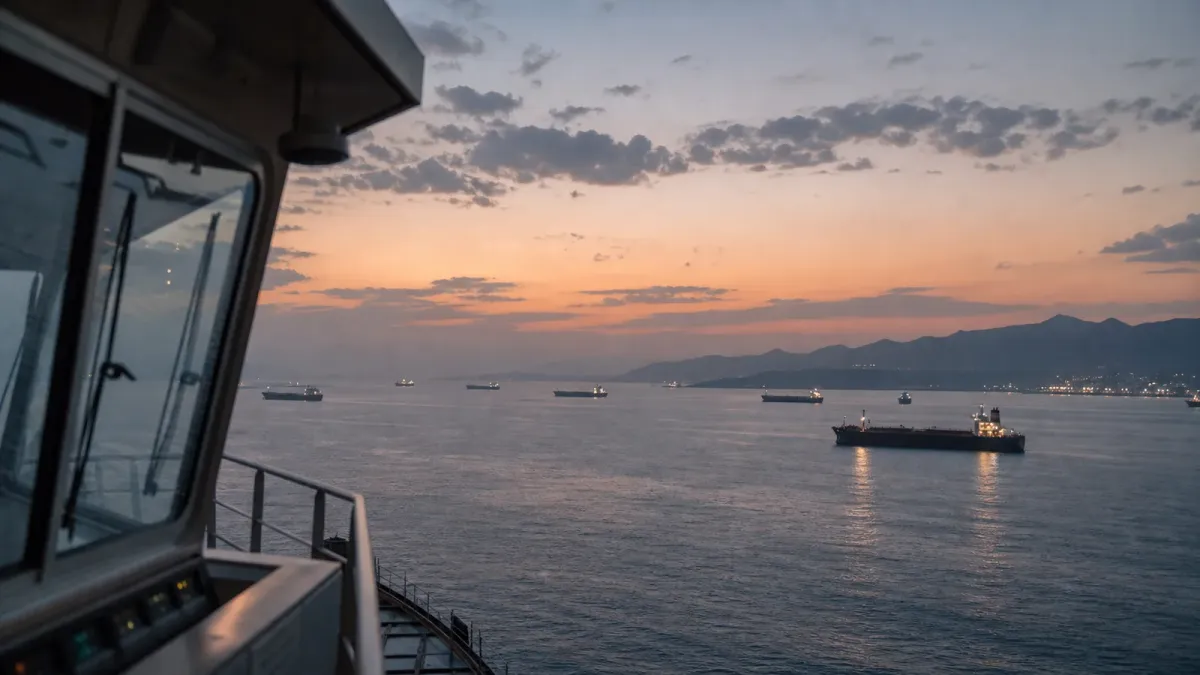
The United States has restarted a naval blockade against Iranian ports after renewed attacks on vessels around the Strait of Hormuz, according to reporting Tuesday, July 14, and a U.S. Central Command release describing the military move.
The decision sharpens a crisis around one of the world’s most important energy chokepoints. The immediate questions are whether shipping risk keeps rising, whether oil prices hold their latest gains, and whether diplomats can stop a wider cycle of retaliation.
What changed
The Associated Press reported that U.S. forces restored the blockade after three more attacks on vessels in or near the Strait of Hormuz. The move follows days of pressure over how to secure commercial traffic without turning the waterway into a permanent flashpoint.
The Wall Street Journal reported that President Donald Trump reversed course from a proposed 20% Strait of Hormuz toll and moved instead to restart the blockade against Iranian ports. That shift matters because a toll would have been a commercial pressure tactic, while a blockade is a direct military and maritime-security step.
MarketWatch reported that oil prices climbed above $83 a barrel as traders reacted to the renewed blockade and the risk of disruption. Prices can move quickly on Hormuz headlines because tankers carrying crude and liquefied natural gas pass through the narrow waterway between Iran and Oman.
Why it matters
For shipping companies, the practical issue is route risk. A blockade can affect insurance costs, vessel scheduling and decisions about whether ships wait for escorts, reroute when possible or pause movement until clearer guidance arrives.
For households and businesses, the first visible effect would likely be energy prices. A short disruption may only create market volatility, but a longer standoff can feed into gasoline, diesel, jet fuel and freight costs, especially if traders believe exports from the Gulf could be constrained.
For U.S. and regional officials, the harder problem is escalation control. Military pressure can deter attacks, but it can also narrow the space for negotiations if either side treats the blockade as a point of national prestige rather than a temporary security response.
What we do not know yet
Officials have not resolved how long the blockade will remain in place, what conditions would end it, or whether Iran will try to challenge the operation directly. Those details will determine whether this becomes a short security measure or a broader confrontation over Gulf shipping.
What happens next
Watch for updated guidance from U.S. Central Command, shipping advisories, oil-market reaction at the next trading sessions, and any diplomatic statements from governments that rely heavily on Gulf energy exports. Those signals will show whether the blockade is containing the crisis or widening it.


