
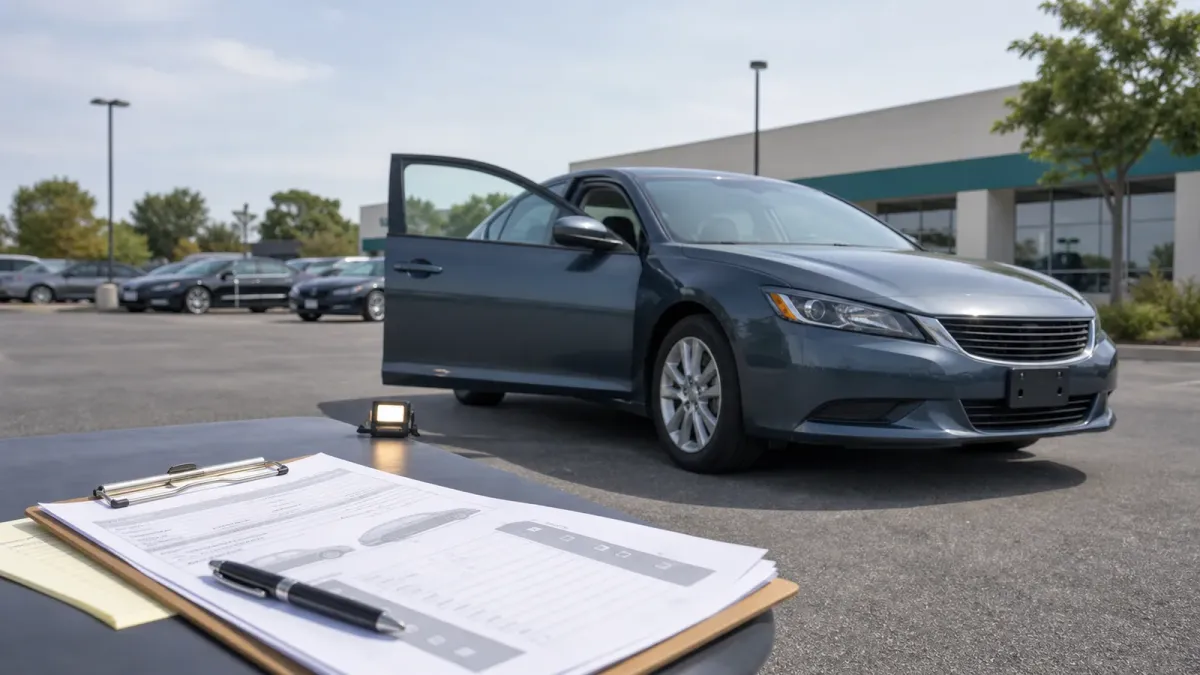
A used car can look clean, drive well on a short test loop, and still carry an expensive problem you could have checked before buying. The most useful starting point is the vehicle identification number, or VIN: the 17-character code that follows the car through recalls, title records, insurance claims, and many history reports.
No single lookup catches everything. A clean report does not guarantee a clean car, and a seller's confidence is not the same as documentation. But a few checks can reduce the chance that you buy a vehicle with an unrepaired safety recall, undisclosed flood history, or a title problem that makes resale harder later.
Use this as a pre-purchase checklist before you leave a deposit, sign financing paperwork, or waive inspection rights.
Do this first
- Find the VIN yourself. Check the lower-left windshield area, the driver-side doorjamb label, registration, title, or insurance documents. Make sure the VIN matches across documents and the vehicle.
- Run the VIN through NHTSA. The National Highway Traffic Safety Administration's recall tool can show open safety recalls for a specific vehicle when you search by VIN or license plate.
- Ask who pays for the fix. NHTSA says an open safety recall should be repaired for free at a local dealership. Confirm whether parts are available and whether the repair has already been completed.
- Check title and loss history. The FTC recommends getting a vehicle history report before buying. The National Motor Vehicle Title Information System can point buyers to approved history providers.
- Use NICB VINCheck for theft or salvage clues. The National Insurance Crime Bureau offers a free lookup for records reported by participating insurers, including unrecovered theft and salvage records.
Check these details
An open recall is not always a dealbreaker, but it changes the negotiation. A minor software update is different from a safety defect with no immediate remedy. Before buying, call a dealer service department for that brand with the VIN and ask whether the recall repair is available, how long it takes, and whether there are parts delays.
Title history deserves the same skepticism. A branded title, salvage record, rebuilt title, odometer issue, or prior total-loss claim can affect financing, insurance, resale value, and safety. If a seller says the title is clean, ask to see the actual title and compare it with the history report.
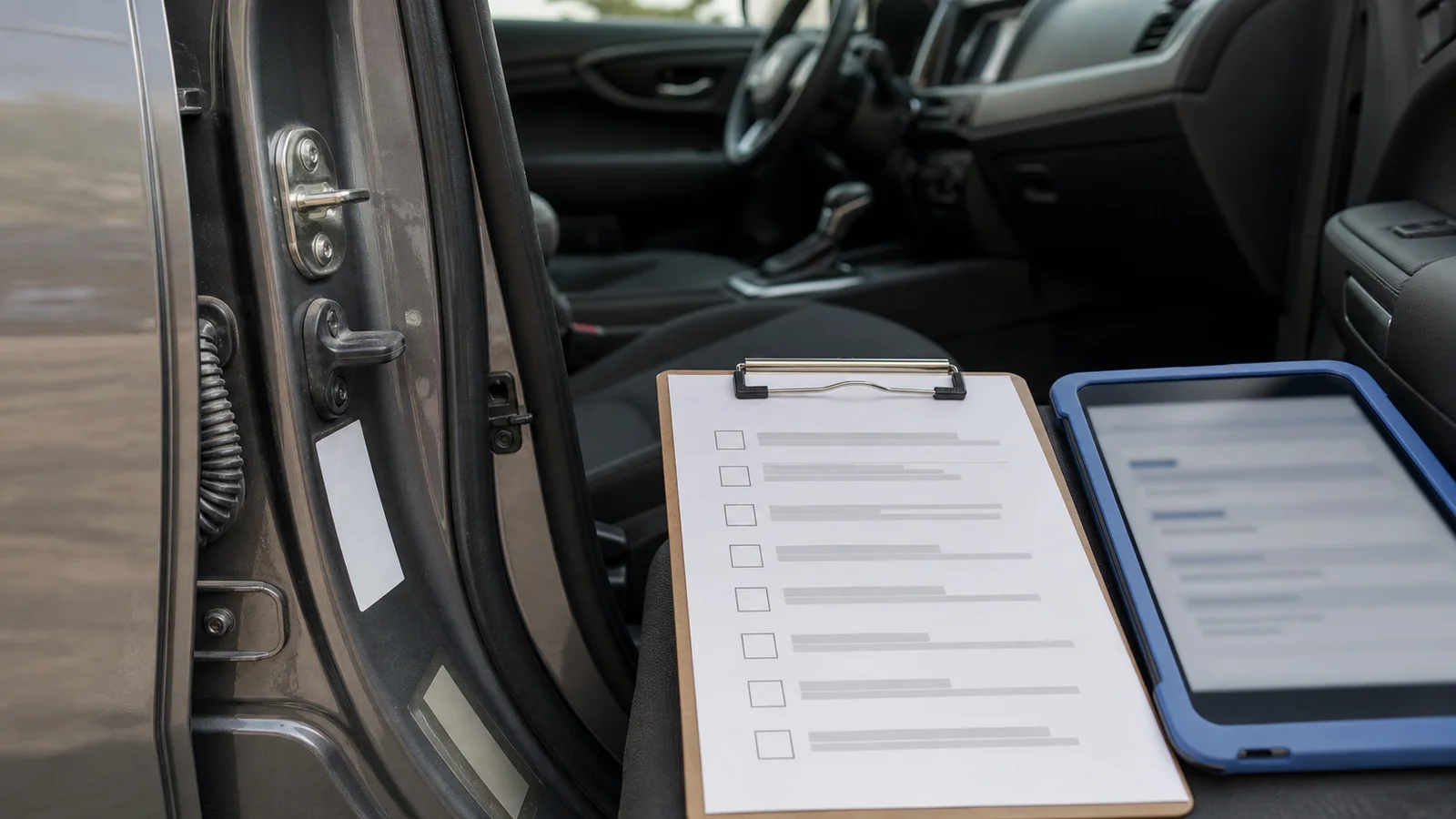
Save what you find. Keep screenshots or PDFs of recall results, vehicle history reports, seller messages, inspection reports, and any written repair promises. If a problem appears after purchase, those records make it easier to explain what the seller represented and what you relied on before signing. Keep copies offline too.
Common mistakes
The biggest mistake is treating one clean database result as a full inspection. NICB notes that its VINCheck depends on records from participating insurers. FTC guidance also points buyers toward vehicle history reports and independent inspection because not every problem appears in a free lookup.
Flood damage is especially tricky. A vehicle may smell clean after detailing, and electrical problems may not appear during a short drive. Look for musty odors, water lines, mismatched upholstery, foggy lights, corrosion under seats, brittle wiring, sand or silt in hidden areas, and unusual warning lights. If anything feels inconsistent, slow down.
Do not let timing pressure replace inspection. A seller may have other buyers, but a legitimate seller should still allow enough time for a VIN check, title review, and mechanic visit. If the deal only works when you skip those steps, the risk has shifted onto you.
When to walk away
Walk away if the seller will not provide the VIN, the VIN does not match across the car and paperwork, the title story changes, or you are pressured to buy before an independent mechanic can inspect the vehicle. Also be careful when a price is far below similar listings without a clear reason.
If you still want the car after a warning sign, put the issue in writing before money changes hands: recall status, promised repairs, title condition, inspection rights, return window, and any dealer fees. The safest used-car deal is not the cheapest listing. It is the one where the VIN, title, inspection, and seller promises all tell the same story.


