
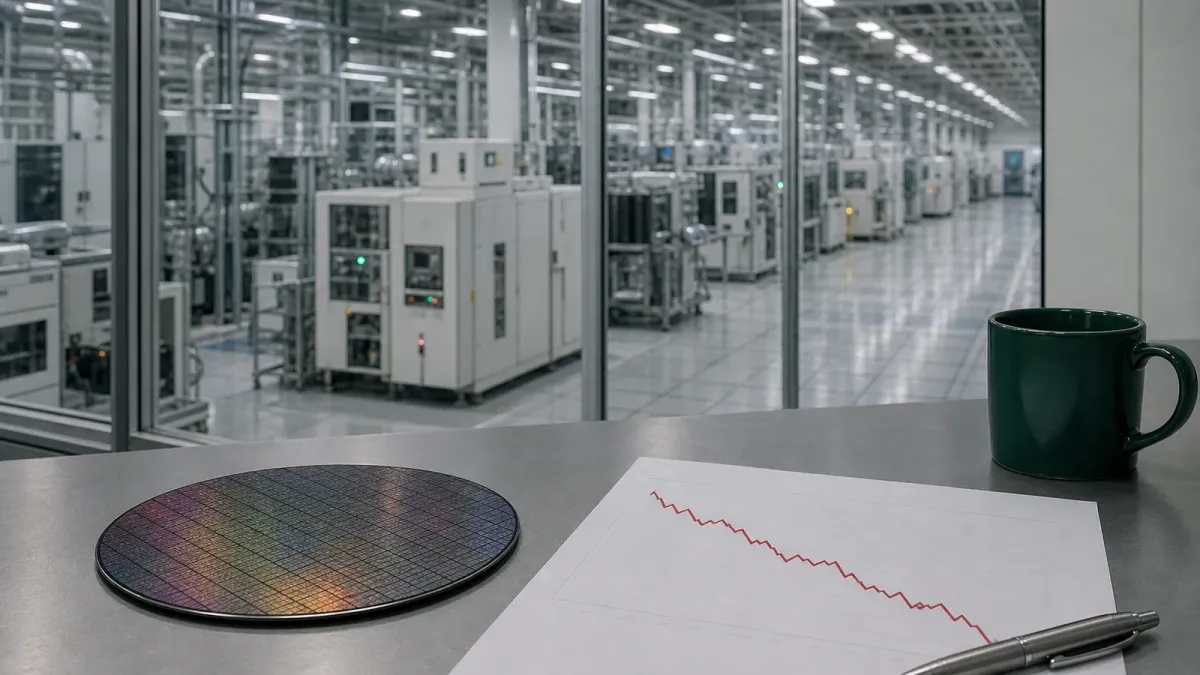
Intel shares fell about 7% in afternoon trading on Monday, July 13, dropping to roughly $102 even after the company announced a major new investment in its European manufacturing network. The decline was part of a broad retreat in semiconductor and artificial-intelligence stocks rather than a clear reaction to one new Intel-specific setback.
The immediate pressure came from a global reassessment of the chip rally. SK Hynix plunged more than 15% in Seoul after its U.S. market debut, while Micron, AMD, Nvidia and other semiconductor names also moved lower. At the same time, sharply higher oil prices and rising Treasury yields made expensive growth stocks less attractive.
The numbers
Intel traded near $101.90 late Monday afternoon, down about $7.95, or 7.2%, from Friday's close. The shares had traded as high as $107.30 earlier in the session before falling toward the day's low.
The damage was not limited to Intel. The Philadelphia Semiconductor Index was down about 5% late in the session, while the Nasdaq Composite fell roughly 1.5%. The Associated Press reported that Nvidia, Micron and other AI-linked stocks were among the market's biggest drags.
Why Intel fell with the chip sector
The clearest catalyst was the reversal in SK Hynix. Its Seoul-listed shares recorded their worst day since trading began in 1997 as investors took profits after a powerful rally and questioned how long today's tight memory-chip supply and elevated pricing can last. The company's new U.S. shares also fell after jumping in their Friday debut.
That reversal landed in a semiconductor market already vulnerable to profit-taking. Reuters reported that investors are debating whether aggressive factory expansion could eventually turn a shortage into oversupply. A separate Reuters analysis noted that Intel, AMD and Marvell were trading well above their longer-term forward valuation averages, leaving less room for disappointment.
Oil added another layer of pressure. Brent crude rose nearly 8% as conflict around the Strait of Hormuz intensified. Higher energy prices can keep inflation and interest rates elevated, and higher bond yields reduce the present value investors assign to profits expected far in the future. That tends to hit high-valuation technology shares hardest.
Why the Ireland announcement did not lift the stock
Intel's company news was constructive. The chipmaker announced a €5 billion, or about $5.7 billion, program to upgrade its Leixlip campus in Ireland. The work will expand output for Xeon 6 and next-generation Xeon processors built on Intel 3, add advanced equipment and use existing cleanroom capacity. IDA Ireland said the program began earlier in 2026 and is expected to support specialized construction work and permanent high-tech jobs.
But large factory commitments also require substantial cash and execution. On a day when investors were reducing chip exposure across the board, the long-term capacity plan was not enough to offset concern about valuations, spending and the durability of AI demand.
The caveat
Daily stock moves rarely have one provable cause, and Intel did not announce a new earnings warning Monday. The most defensible reading is that the shares were pulled lower by a sector-wide reset, with Intel's high valuation and capital-intensive turnaround making it especially sensitive to shifts in risk appetite.
What to watch next
Intel's next quarterly report will be the bigger company-specific test. In April, Intel forecast second-quarter revenue of $13.8 billion to $14.8 billion and non-GAAP earnings of 20 cents per share. Investors will focus on whether server demand, Intel Foundry progress and manufacturing spending are producing stronger revenue and cash flow.
Before then, watch whether SK Hynix and other memory shares stabilize, whether oil and Treasury yields retreat, and whether the semiconductor index finds support. A rebound across those gauges would strengthen the case that July 13 was mainly a market-driven selloff. Continued weakness would suggest investors are demanding a lower valuation for the entire AI hardware trade.


