
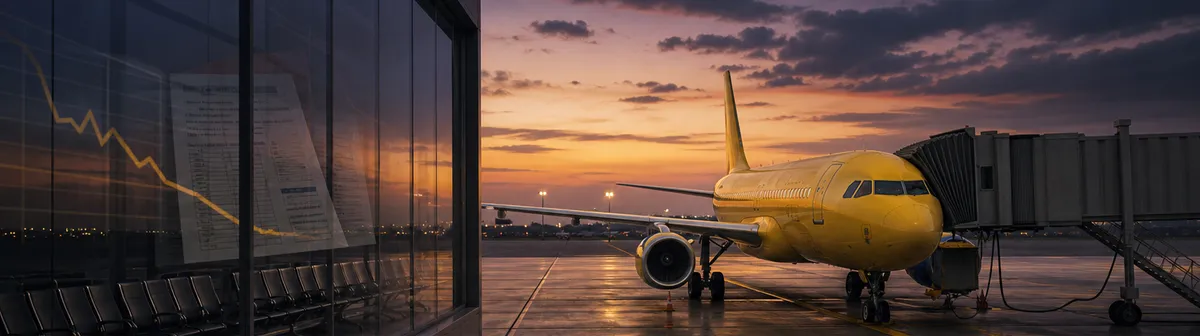
Spirit Airlines did not go bankrupt because of one bad quarter, one blocked merger or one jump in fuel prices. Its collapse was the result of several pressures arriving at once: a low-fare model under strain, heavy debt and lease obligations, grounded aircraft, intense competition and a liquidity squeeze that left the carrier with few ways to buy time.
The company filed Chapter 11 on November 18, 2024, emerged from bankruptcy on March 12, 2025, and filed Chapter 11 again on August 29, 2025. On May 2, 2026, Spirit Aviation Holdings, Spirit Airlines' parent company, announced an orderly wind-down, cancelled all flights and told customers not to go to the airport.
Spirit's final statement cited a recent material increase in oil prices and other business pressures. That was the last push. The deeper problem was that the airline had already spent years losing the financial flexibility that a carrier needs when fuel, labor, financing or demand moves against it.
The business model lost its cushion
Spirit was built around the ultra-low-cost carrier model: sell very low base fares, fly dense aircraft, keep costs down and charge separately for bags, seats and other services. That model helped bring down prices across many U.S. leisure routes. It also left Spirit highly exposed when costs rose and customers became more selective.
After the pandemic, larger airlines competed harder for budget travelers while also earning more money from premium cabins, loyalty programs and business travel. Spirit had less pricing power. Raising fares or bundling more services risked making the airline look less different from bigger rivals, but keeping fares low made it harder to absorb higher operating costs.
The company's own restructuring materials pointed to many of the same forces: domestic capacity pressure, inflation, weaker-than-expected demand in parts of the leisure market, higher labor and fuel costs, and a business model that was harder to repair quickly once liquidity became tight.
The JetBlue deal would not have solved everything, but losing it mattered
Spirit had one obvious strategic exit: JetBlue's planned $3.8 billion acquisition. A federal judge blocked that deal on January 16, 2024, after the Justice Department argued the merger would remove a major low-fare competitor. JetBlue and Spirit terminated the merger agreement on March 1, 2024, and JetBlue paid Spirit a $69 million termination fee.
For consumers, the antitrust case was about preserving low-fare competition. For Spirit, the failed merger removed a potential buyer just as the standalone business was becoming harder to finance. The breakup payment was not large enough to solve Spirit's debt maturities, operating losses or fleet problems.
Grounded aircraft made a bad situation worse
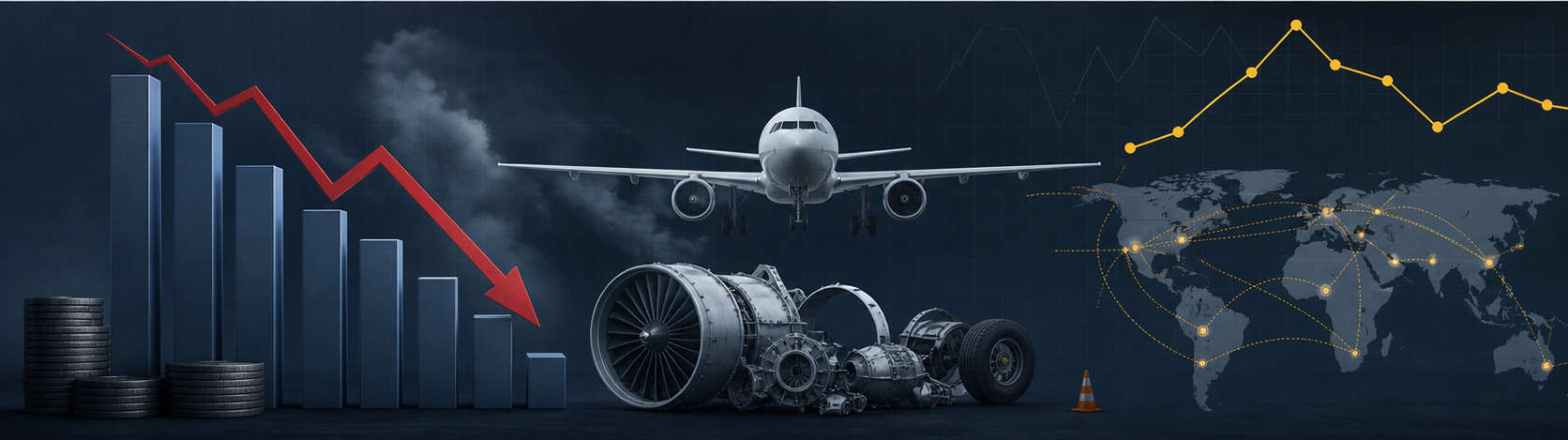
Spirit also faced a fleet problem outside its direct control. Pratt & Whitney geared turbofan engine inspections forced aircraft out of service across the industry, and Spirit was especially vulnerable because it depended heavily on Airbus A320-family aircraft powered by those engines. In SEC filings, Spirit said lower capacity from manufacturer or supplier issues could have a significant adverse impact on its financial position and results.
That mattered because airlines carry large fixed costs. An aircraft that cannot fly still creates lease, financing, staffing and maintenance complications, but it does not produce route revenue. Spirit received credits tied to aircraft-on-ground days, including $93.9 million through June 30, 2024, but compensation did not fully offset the operational damage of having capacity unavailable while the airline needed cash.
Debt and liquidity turned pressure into bankruptcy
By late 2024, Spirit needed a balance-sheet restructuring. The first Chapter 11 was designed to reduce debt and raise capital. Spirit said the deal would equitize $795 million of funded debt, bring in $350 million of new equity investment from existing bondholders and provide $300 million in debtor-in-possession financing.
That bought time, but it did not fix the whole airline. When Spirit filed again in August 2025, the company said the earlier case had focused on debt and equity capital while a broader operational restructuring was still needed. The second case aimed to redesign the route network, optimize the fleet, cut costs and negotiate with lessors.
The liquidity squeeze grew more severe because airlines depend heavily on credit card sales for future travel. When a carrier looks risky, processors can demand collateral or hold back cash to protect against refunds if flights are not operated. Spirit's September 2025 quarterly filing described new arrangements that included a $50 million pledged account and daily holdbacks of up to $3 million. For a distressed airline, that kind of cash restraint can make recovery harder by pulling liquidity away just when it is most needed.
The final shutdown was the end of a long decline
By May 2026, Spirit said it had pursued restructuring and transaction options but could not secure the additional funding needed to keep operating. The fuel-price shock mattered because jet fuel is one of an airline's biggest variable costs. But the fact that a fuel spike could force an immediate wind-down showed how little margin for error remained.
The clearest explanation is not that Spirit's model suddenly stopped working overnight. It is that the model became fragile under post-pandemic conditions. The airline had too much debt, too many fixed obligations, too many aircraft unavailable, too little pricing power and too few rescue options after the JetBlue deal died. Chapter 11 could reduce liabilities, but it could not quickly rebuild the operating cushion Spirit had lost.
That is why Spirit's bankruptcy became a shutdown. The company entered restructuring with a recognizable brand and a long history of pushing fares lower, but it no longer had the liquidity or lender confidence required to survive the next shock.
Sources
This article draws on Spirit's May 2, 2026 wind-down announcement, its August 29, 2025 Chapter 11 statement, its November 18, 2024 restructuring announcement, SEC filings and the Justice Department's statement on the JetBlue-Spirit merger ruling.