
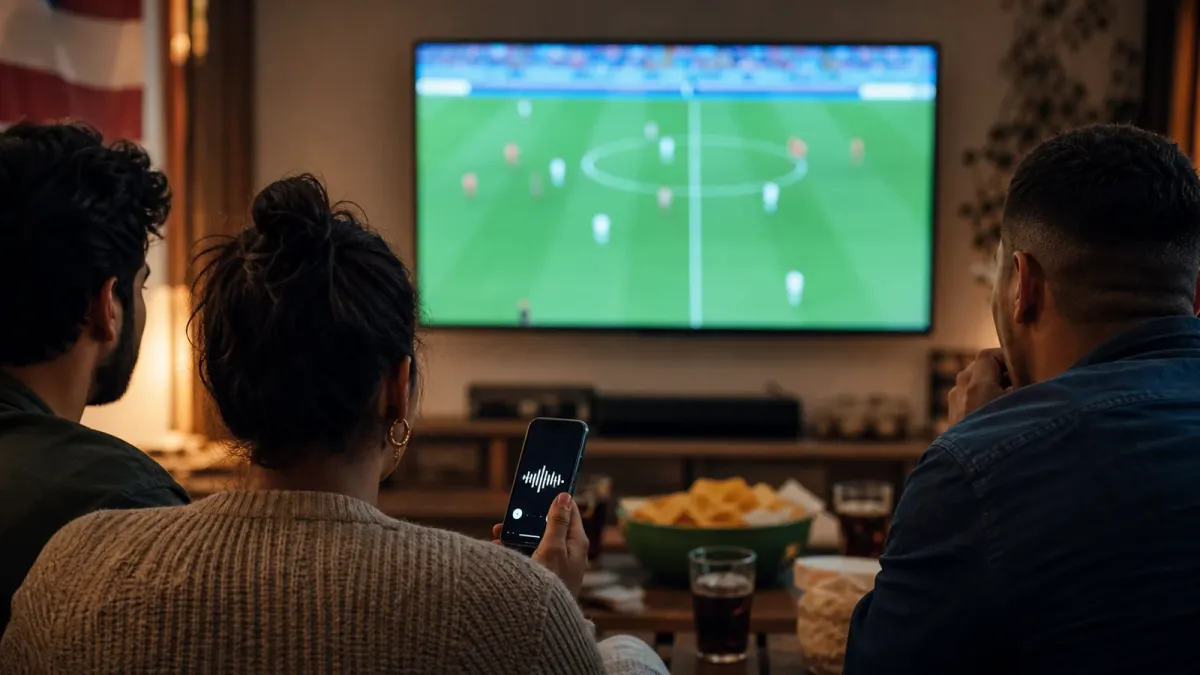
More U.S. World Cup viewers are making an unexpected choice during the 2026 tournament: watching matches in Spanish even when English is their primary language.
The Associated Press reported on July 11 that English-speaking fans have been turning to Telemundo and Peacock for the sound, pace and feel of the broadcasts. Telemundo has pointed to Nielsen data showing that roughly half of U.S. World Cup viewers have watched at least part of some matches in Spanish, even though about one-fifth of the country is Hispanic.
The shift matters because it is not only a language story. It is also about how fans want live sports to feel on television and streaming platforms at a moment when World Cup search interest remains high in the United States, according to Google's dedicated 2026 tournament trends hub.
Why viewers are switching
For some viewers, the appeal is emotional. Spanish-language soccer broadcasts have long leaned into speed, tension and the extended goal call. Fans interviewed by AP said they could follow the drama through tone and rhythm, even when they understood only pieces of the commentary.
For others, the decision is practical. Every match is available in English on Fox or FS1 and in Spanish on Telemundo or Universo, with streaming through services including Fox One and Peacock. Some viewers have found Peacock's Spanish-language access easier or less expensive than the English-language option.
Hydration breaks have also become part of the argument. AP noted that Telemundo has not cut away for commercials during those pauses in the same way Fox has, which lets viewers keep watching coaches, players and sideline reactions while the match slows down.
The ratings signal
The audience is large enough to matter to broadcasters. NBCUniversal said on July 9 that Telemundo, Universo, Peacock and Telemundo streaming platforms averaged 5.5 million viewers across the first 25 days and 92 matches of the tournament. It also said Mexico vs. England on July 5 delivered 23.2 million viewers, making it the most-watched soccer match in Spanish-language media history by total audience.
AP also reported that Fox Sports described Belgium vs. the United States as the most-watched soccer telecast in U.S. history, with a peak audience of about 41 million. The broader takeaway is clear: World Cup demand is spilling across language lines, platforms and viewing habits.
That does not mean every viewer is abandoning English coverage. It does mean broadcasters are competing on more than analysis. Price, stream reliability, commercial timing and the emotional style of the booth are becoming part of how fans choose where to watch.
What to watch next
The trend could affect the next World Cup rights cycle. If English-language and Spanish-language audiences keep overlapping, media companies may value bundled rights, streaming access and ad-free match moments differently before the 2030 tournament.
For fans, the practical lesson is simpler: if the English broadcast feels flat or expensive, the Spanish feed may be worth trying. Soccer is one of the rare events where emotion, crowd noise and match rhythm can carry the story even when every word does not land.


